The intersection of vintage hardware and specialized film stocks often produces unpredictable results, a phenomenon recently documented through a photographic expedition in Prague involving the Ricoh 500 GX rangefinder and Rollei Retro 400S black-and-white film. This technical exploration highlights the persistent tension between mechanical precision and the inherent volatility of analog mediums, particularly when utilizing equipment with aging components. While the primary objective of the excursion was to capture the architectural and social landscape of the Czech capital, the resulting images serve as a case study in how light leaks and exposure variables interact with high-contrast aerial surveillance film.
Technical Specifications of the Ricoh 500 GX
The Ricoh 500 GX, produced during the mid-1970s, remains a notable example of the compact fixed-lens rangefinder era. It is equipped with a Rikenon 40mm f/2.8 lens, a focal length favored by street photographers for its natural perspective, which sits comfortably between the wide-angle 35mm and the "normal" 50mm standards. The camera features a shutter-priority automatic exposure system as well as full manual control, making it a versatile tool for varied lighting conditions.

However, the mechanical integrity of vintage cameras is often compromised by the degradation of light seals. These seals, typically made of open-cell foam or felt, are designed to prevent stray light from entering the film chamber. Over decades, the chemical composition of the foam breaks down, becoming a sticky residue that fails to provide an opaque barrier. In the Prague series, the failure to replace these seals prior to the trip resulted in significant "light leaks"—non-image light striking the film during or after exposure. Unlike the colorful flares associated with color film, monochrome light leaks manifest as stark white streaks or "burns" across the negative, often obscuring detail and altering the intended tonal balance of the frame.
The Science of Rollei Retro 400S: From Surveillance to Street
The choice of film stock, Rollei Retro 400S, adds another layer of technical complexity to the project. This emulsion is not a traditional consumer film but is derived from Agfa’s Aviphot Pan 200 and 400 series, originally engineered for aerial surveillance and reconnaissance. This heritage dictates several unique physical and chemical properties:
- Synthetic Base: Unlike standard acetate-based films, Rollei Retro 400S is coated on a high-strength, ultra-clear PET (polyethylene terephthalate) polyester base. This ensures dimensional stability—a requirement for aerial mapping—but also facilitates "light piping," where light can travel through the transparent base if the film leader is exposed to bright light during loading.
- Superpanchromatic Sensitivity: The film’s spectral sensitivity extends into the near-infrared spectrum, reaching approximately 750nm. This allows for increased haze penetration and unique tonal renderings of foliage and skin, though it requires careful filtration to achieve true infrared effects.
- High Resolution and Fine Grain: Designed to resolve fine details from high altitudes, the film possesses a resolution and grain structure that exceeds many traditional ISO 400 films, provided it is developed and exposed correctly.
Despite its ISO 400 rating, technical analysis by the global photography community suggests that the film’s "true" speed—the point at which it retains shadow detail—is closer to ISO 200 or 250. This discrepancy requires photographers to adjust their metering to avoid "crushed" blacks, a common characteristic of high-contrast aerial stocks.

Chronology of the Prague Photographic Series
The documentation of Prague followed a specific chronological path, beginning with early morning transit and concluding with a visit to the city’s outskirts. Each environment presented distinct challenges for the Ricoh 500 GX and the Rollei film.
Urban Transit and Morning Light
The first significant exposure occurred on a Prague tram during the morning hours. The soft, directional light entering the vehicle provided a test for the film’s midtone rendering. In this instance, a light leak manifested along the bottom edge of the frame. From a compositional standpoint, the leak acted as a natural vignette, obscuring foreground distractions and drawing the viewer’s eye toward the central subject. This "serendipitous failure" is a frequent theme in analog circles, where mechanical flaws inadvertently enhance the narrative focus of a photograph.
Letná Park: High-Contrast Environments
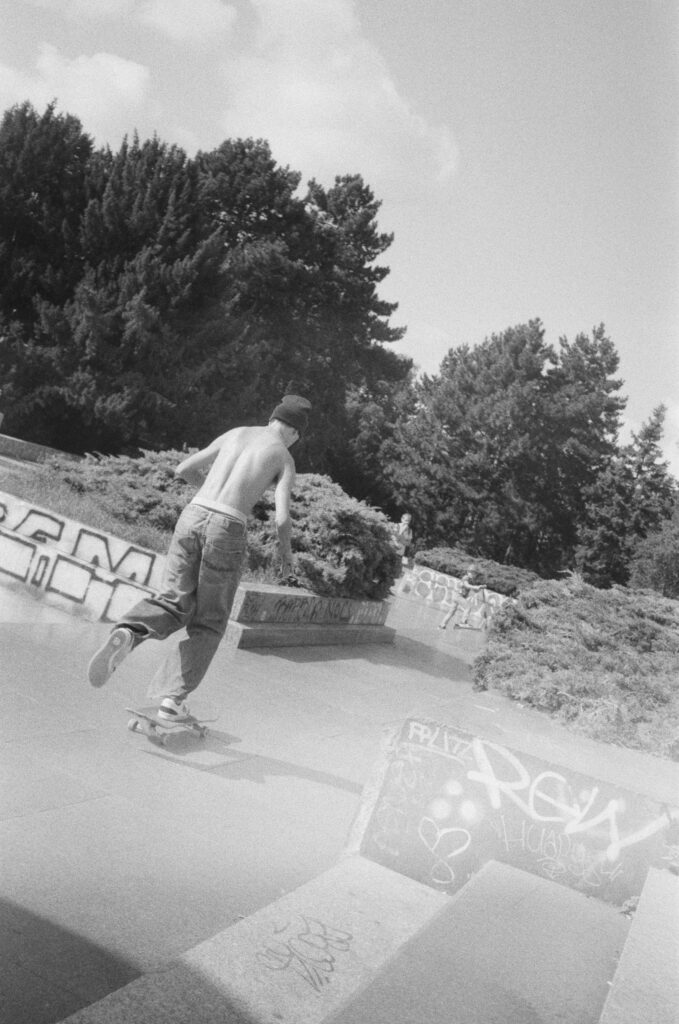
The expedition moved to Letná Park, a large green space overlooking the Vltava River. Under the direct sun of a clear afternoon, the film’s high-contrast nature became more apparent. One frame captured a group of skateboarders, a scene characterized by rapid movement and harsh lighting. Here, the film was rated at a 2/3 stop overexposure (+2/3 EV), a strategy intended to soften the contrast. The results, however, showed a muted tonal range, leading to questions regarding the film’s age or the impact of environmental factors during development.
Dusk and Nighttime Exposures at Charles Bridge
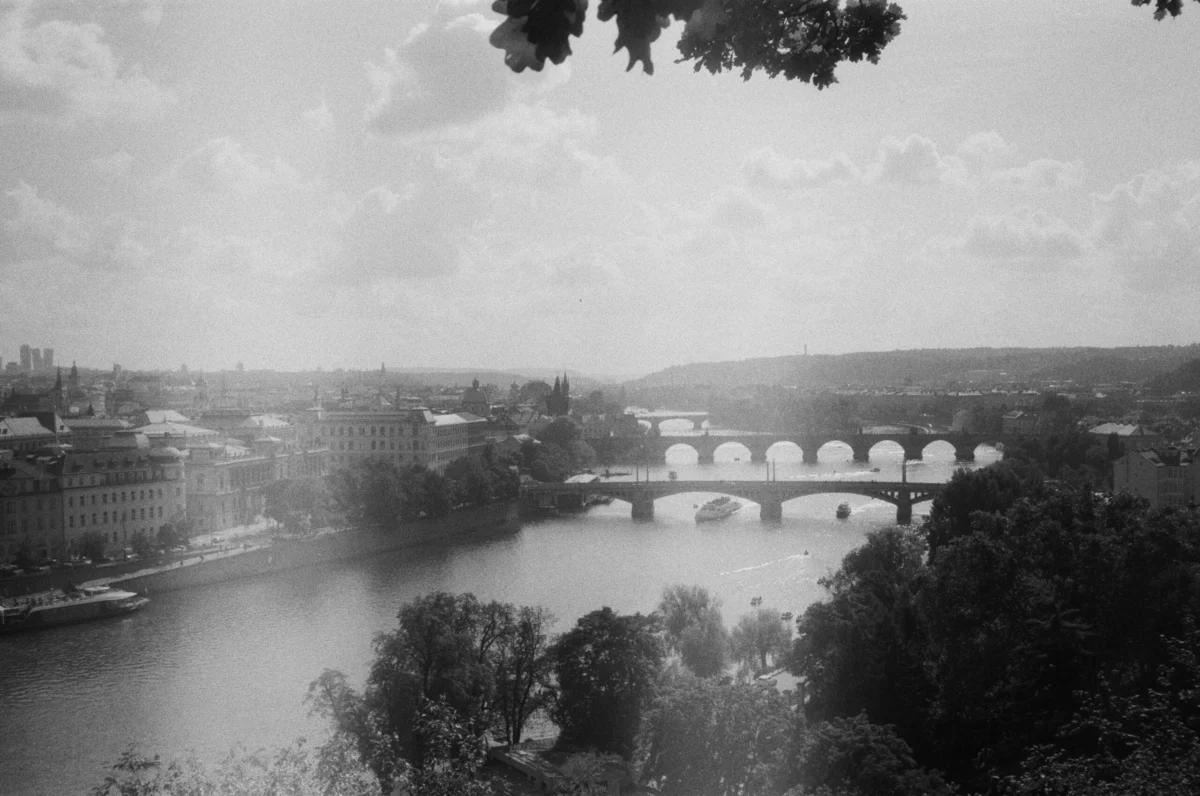
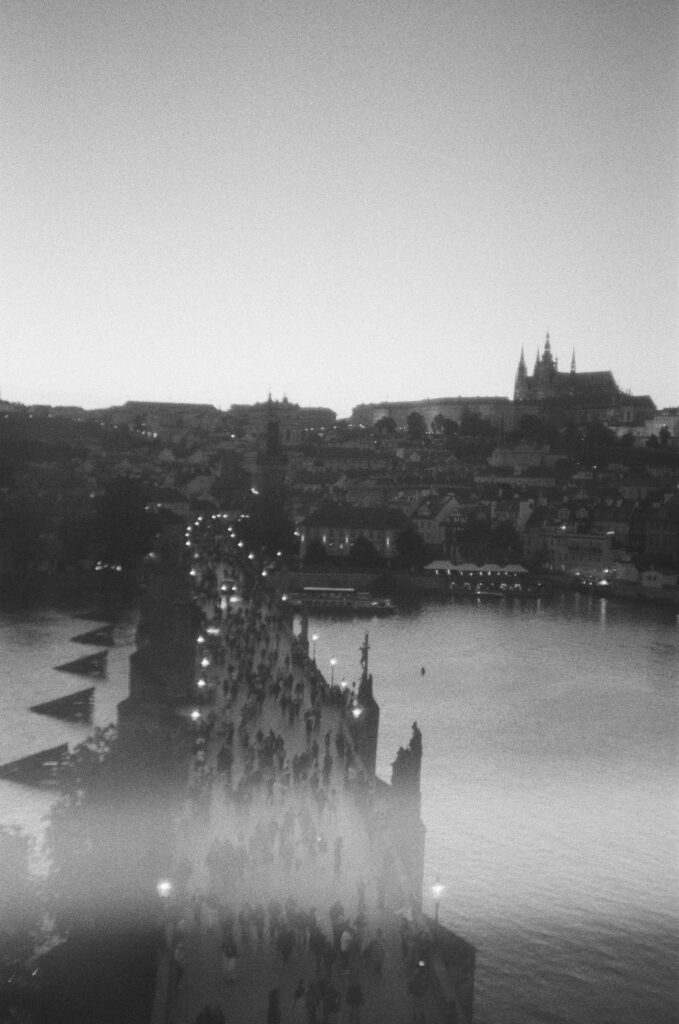
As the sun dipped below the horizon, the photographer utilized a rooftop vantage point to capture the illuminated Charles Bridge and the city’s spires. Night photography on film requires a deep understanding of "reciprocity failure," where the film’s sensitivity decreases during long exposures. Despite the slow shutter speeds necessitated by the fading light, the Ricoh’s 40mm lens maintained sufficient sharpness. The superpanchromatic sensitivity of the Rollei stock assisted in capturing the subtle gradients of the sky, even as the artificial streetlights began to dominate the scene.
The Riverside and Architectural Detail
The resolution of the Agfa-derived emulsion was most visible in shots of the Prague riverside. The stonework of the bridges and the intricate window frames of the historic buildings were rendered with high clarity. This segment of the shoot highlighted the technical capability of the Ricoh 500 GX’s optics. However, the recurring lack of "punchy" blacks—a hallmark of Rollei Retro 400S—suggested that either the overcast conditions or a slight expiration of the film stock may have affected the chemical reaction during processing.
The U Elektry Flea Market and Equipment Acquisition
The final stage of the Prague excursion took place at the U Elektry Flea Market, located approximately 30 minutes from the city center. This market is a significant hub for vintage electronics and historical artifacts from the former Eastern Bloc. Such locations are critical for the preservation of analog photography culture, as they serve as the primary source for rare European cameras and lenses.
During this visit, the photographer acquired a Kodak Retinette Type 022. The Retinette series, produced by Kodak AG in Germany, represents a more simplified version of the famous Retina rangefinders but remains a popular choice for enthusiasts of mid-century mechanical design. This acquisition underscores the cyclical nature of the analog hobby: using one vintage tool to document the discovery of another.
Data Analysis: Exposure and Contrast Variables
An analysis of the metadata and visual results from the Prague roll reveals several key findings:
- Exposure Rating: Rating the film at ISO 250 (a 2/3 stop increase from box speed) successfully prevented the loss of shadow detail, which is the primary risk with Rollei Retro 400S. However, this also contributed to a flatter contrast profile when combined with the overcast light typical of Central Europe in autumn.
- Mechanical Influence: The light leaks observed were consistent with a failure in the rear door seals of the Ricoh 500 GX. The white streaks suggest light entered from the back of the camera, striking the emulsion side of the film directly.
- Film Aging: The "faded" appearance of several frames, despite the film’s high-contrast reputation, strongly suggests the use of expired stock. Over time, the silver halide crystals in the emulsion can lose sensitivity, and the base fog level increases, resulting in a reduction of the maximum density (D-max) and a "grayer" overall image.
Broader Impact on the Analog Photography Community
The documentation of this trip has been shared within the 35mmc community, a global platform for film photography enthusiasts. This network, which includes contributors like Chris Pattison, Phil Shemming, and Simon King, emphasizes the collaborative nature of modern analog practice. By comparing results from the same film stock across different cameras and geographical locations, photographers can build a comprehensive understanding of how specific emulsions behave under various conditions.
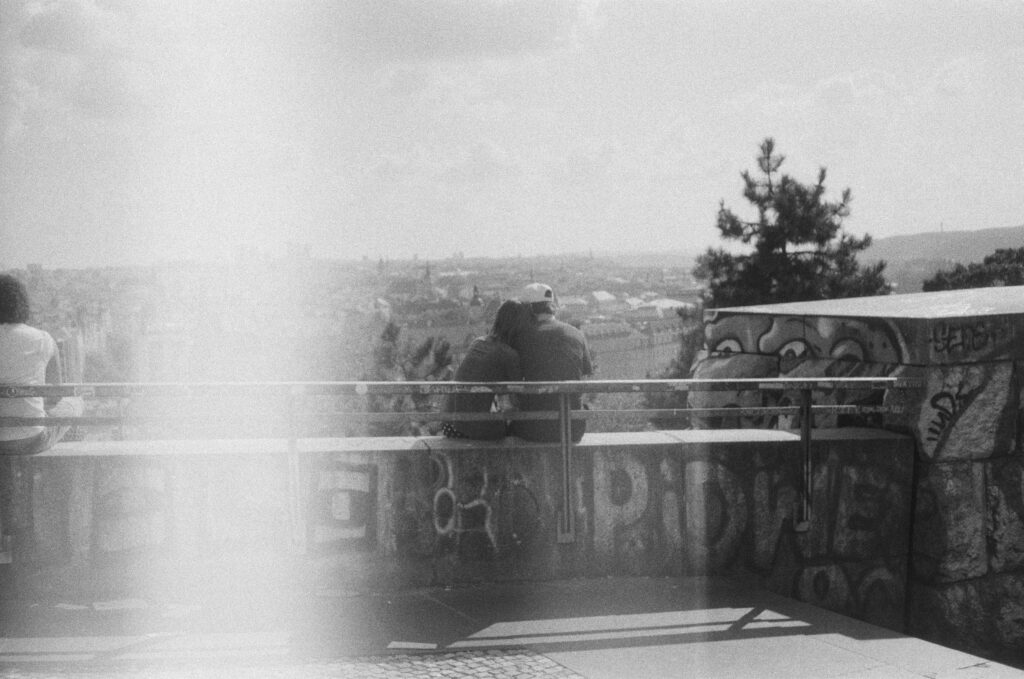
The resurgence of film photography in the 21st century is driven not by a desire for technical perfection—which digital sensors have long since mastered—but by an appreciation for the "struggle for control." The Prague series exemplifies this, demonstrating that even a roll "plagued with light leaks" carries historical and aesthetic value.
Implications for Future Fieldwork
The findings from this expedition suggest that for photographers using Rollei Retro 400S in urban environments, several precautions are necessary:
- Light Seal Maintenance: Vintage rangefinders must undergo a light seal replacement every 5 to 10 years to ensure consistent results.
- Precise Metering: Given the film’s surveillance origins, using an external light meter or a well-calibrated internal meter is essential to navigate its aggressive contrast curve.
- Development Choice: To maximize the "punchy" look of this film, developers like Rodinal (at higher dilutions) or HC-110 are often recommended over standard lab processing, which may use more generic, "safe" developers.
As the photographer prepares to test the newly acquired Kodak Retinette, the Prague series stands as a reminder of the inherent unpredictability of the medium. The city’s history, captured through a lens of mechanical failure and specialized chemistry, reflects a broader trend in contemporary art: the embrace of the imperfect as a means of authentic expression. The next phase of this project will likely continue to explore the limits of vintage hardware, further bridging the gap between historical technology and modern urban documentation.