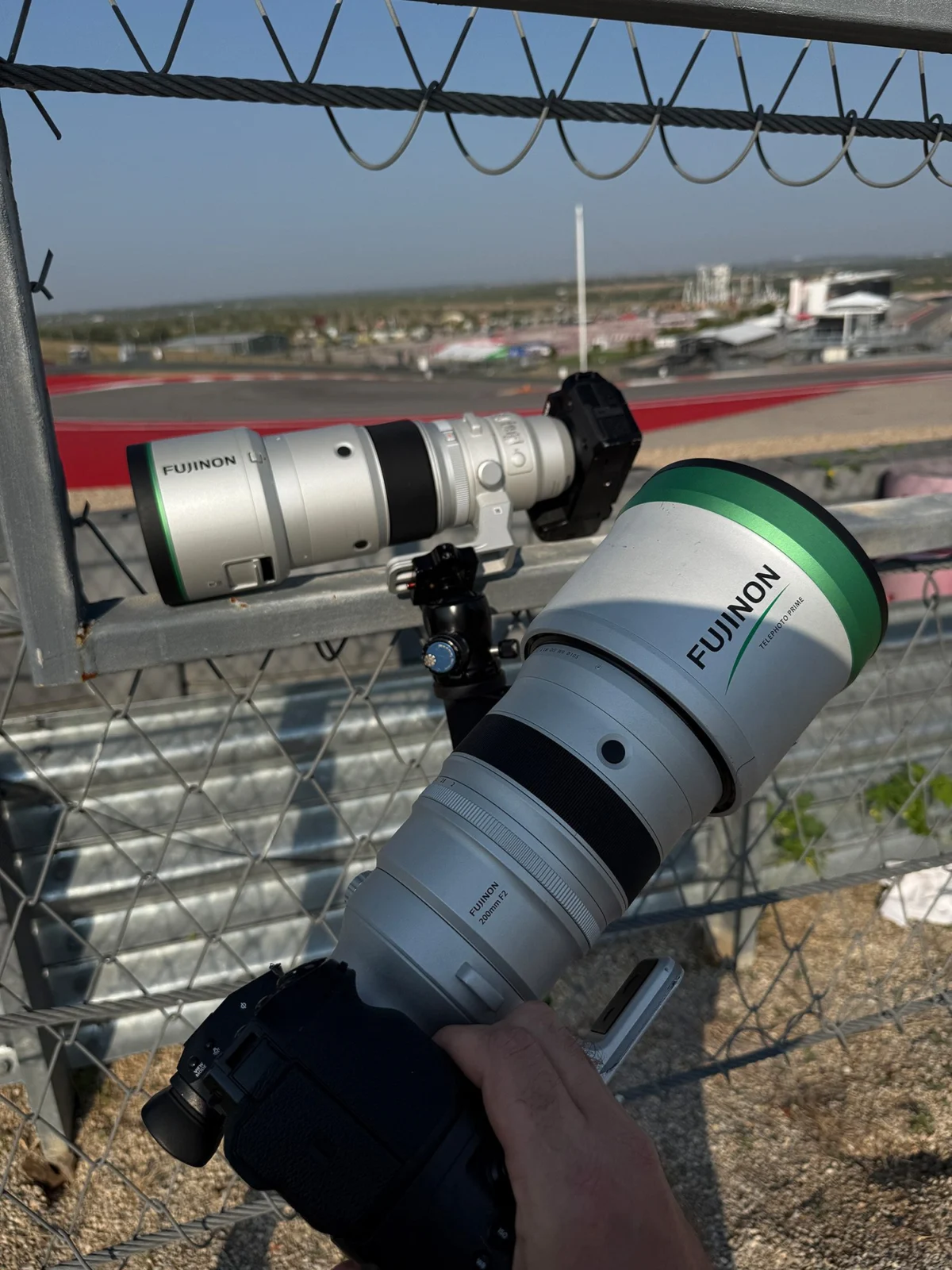
Over the past four years, the landscape of professional photography has seen a notable shift towards specialized equipment, particularly in high-demand fields such as motorsport. For photographers increasingly focused on capturing the dynamic world of racing, the need for lenses capable of delivering speed, precision, and optical excellence across varying distances and light conditions has become paramount. While versatile zoom lenses often serve as the initial practical solution, a deeper commitment to the craft invariably leads to the exploration of prime lenses engineered for uncompromising performance. The Fujifilm XF100-400mm f/4.5-5.6, for instance, has long been a staple for many professional motorsport photographers operating within the Fujifilm X Series, offering a robust and reliable tool for comprehensive trackside coverage at venues like the Circuit of the Americas. Its utility is undeniable, solidifying its position as an indispensable component in many photographers’ bags. However, the pursuit of ultimate image quality and specialized performance necessitates a different class of optic—a lens not merely versatile, but singular in its purpose and execution. This article delves into the capabilities and implications of the Fujifilm XF200mm f/2, a lens that has rapidly established itself as a benchmark for optical fidelity and a favorite among those who demand the absolute best from their equipment, regardless of system.
Evolution of a Professional Workflow: From Versatility to Specialization
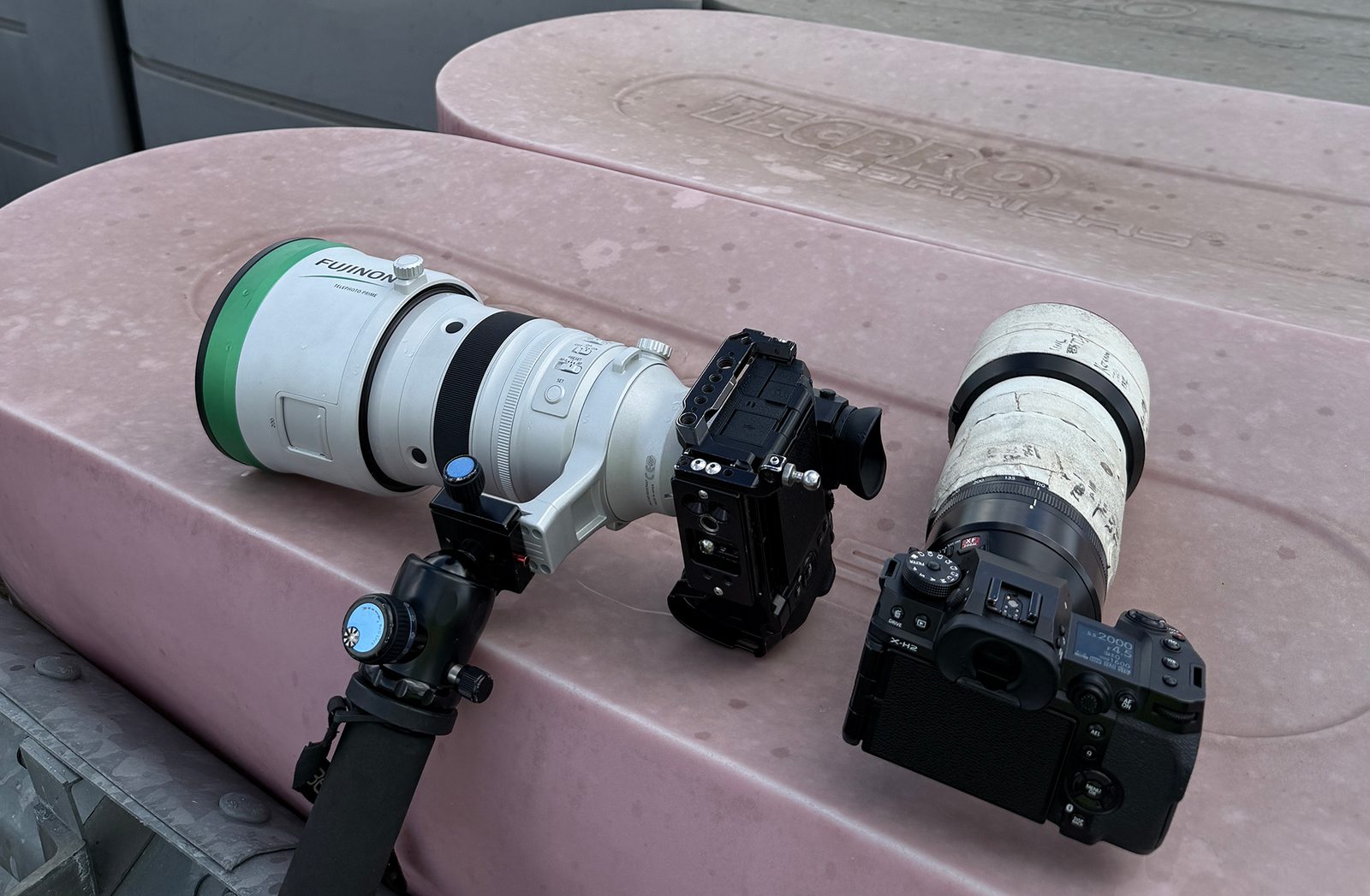
The journey into professional motorsport photography is often characterized by a gradual refinement of equipment choices, driven by the unique challenges presented by high-speed subjects and often unpredictable environments. Initially, the Fujifilm XF100-400mm f/4.5-5.6 R LM OIS WR provided an excellent entry point, offering a broad telephoto range crucial for covering large tracks and diverse shooting positions. Its optical image stabilization (OIS) and weather resistance made it a reliable workhorse, allowing photographers to adapt to various scenarios without constantly changing lenses. This foundational experience highlighted the strengths of the Fujifilm X Series—its compact form factor, advanced sensor technology, and robust build quality—while simultaneously underscoring the potential for even greater specialization. As photographers’ skills and artistic vision evolve, so too does the demand for lenses that can deliver an unparalleled level of detail, background separation, and low-light performance. This natural progression often leads to the adoption of fast prime lenses, which, despite their fixed focal length, offer significant advantages in image quality and creative control. The Fujifilm XF200mm f/2 represents the culmination of this evolution, serving as a testament to Fujifilm’s commitment to supporting professional photographers with tools that push the boundaries of what is possible within the APS-C format.
Technical Mastery: Unpacking the Fujifilm XF200mm f/2
The Fujifilm XF200mm f/2 OIS WR, often accompanied by the XF 1.4x TC WR teleconverter, is an engineering marvel designed to meet the rigorous demands of professional photography. From a technical standpoint, the lens offers an angle of view equivalent to approximately 305mm on a full-frame system, providing significant reach for capturing distant subjects. When paired with its dedicated 1.4x teleconverter, this reach extends further to roughly 427mm (full-frame equivalent), with a corresponding maximum aperture adjustment to f/2.8. Crucially, the integration of this teleconverter is seamless, exhibiting no discernible impact on the lens’s exemplary optical performance or its autofocus speed and accuracy. This capability provides photographers with enhanced flexibility without compromising image quality, a critical factor in dynamic shooting environments.
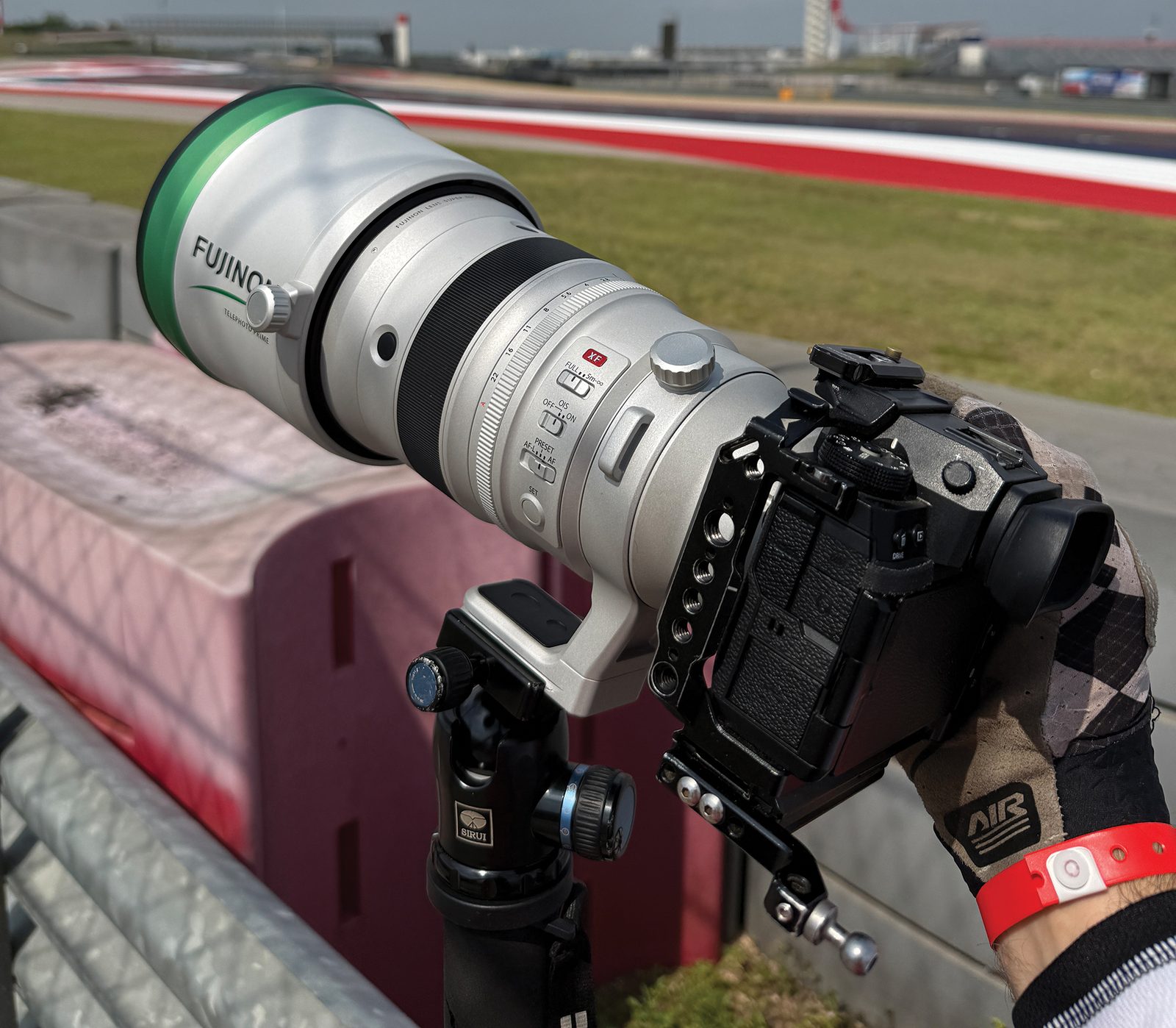
The physical design of the XF200mm f/2 makes an immediate and lasting impression. Its full-metal construction signifies durability and a premium build quality, essential for gear that endures challenging field conditions. A distinctive feature is its matte silver coating, a practical innovation from Fujinon designed to minimize heat absorption. This thoughtful design choice is particularly beneficial during prolonged shooting sessions in direct sunlight, where excessive heat can potentially degrade image quality and affect lens performance. The autofocus mechanism is powered by a twin linear motor system, engineered for both exceptional speed and near-silent operation—a significant advantage when capturing fleeting moments or when discretion is required. Furthermore, the inclusion of a robust optical image stabilization system, rated at an impressive five stops, provides critical assistance for handheld shooting, allowing photographers to achieve sharp images even at slower shutter speeds, which is invaluable for creative motion blur techniques or in low-light scenarios.
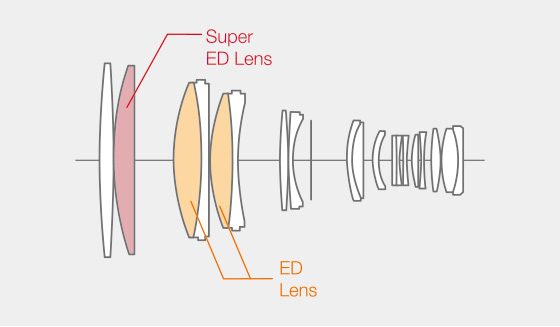
Optically, the XF200mm f/2 reflects a no-compromise design philosophy. It is constructed from an intricate arrangement of 19 elements in 14 groups, a configuration that includes one Super ED (Extra-low Dispersion) element and two ED elements. These specialized glass elements are strategically employed to effectively control chromatic aberration, ensuring images are rendered with exceptional color fidelity and sharpness across the entire frame. The lens is fully weather-sealed, offering robust protection against dust and moisture, a non-negotiable feature for outdoor professional assignments. The front element boasts a fluorine coating, designed to repel water, dirt, and smudges, simplifying maintenance and preserving image clarity in adverse conditions. For aesthetic considerations, the lens features nine rounded aperture blades, which contribute to the production of smooth, circular bokeh, rendering out-of-focus areas with an appealing softness that beautifully isolates the subject. Ergonomically, the lens incorporates a one-third EV step aperture ring for precise exposure control and an integrated rotating tripod collar with multiple strap attachment points, underscoring its professional intent and ease of use with support systems.
Performance in the Field: The X-H2S Synergy
In the demanding environment of a race track, where milliseconds can define a shot, the pairing of the Fujifilm XF200mm f/2 with the Fujifilm X-H2S camera body emerges as a formidable combination. Professional photographers often employ dual camera bodies for redundancy and to equip different lenses simultaneously; the X-H2S, with its stacked sensor and advanced processing capabilities, proves to be the ideal companion for this high-performance prime. The synergy between these two components results in a level of speed, autofocus reliability, clarity, and sharpness that feels remarkably effortless. When subjects are hurtling past at triple-digit speeds, the ability to acquire and maintain focus with unwavering precision is not merely desirable, but absolutely critical. The X-H2S’s advanced autofocus system, particularly its subject tracking capabilities, complements the XF200mm f/2’s rapid twin linear motors, allowing photographers to capture sharp, decisive moments with confidence.
While the XF200mm f/2 also delivers commendable results on the Fujifilm X-H2, a camera body renowned for its high-resolution sensor, comparative field tests reveal a noticeable difference in autofocus acquisition and consistency when dealing with extremely fast-moving subjects. The X-H2S, optimized for speed, excels in these dynamic scenarios, making that difference significant for professional motorsport photographers who cannot afford to miss a shot due to focus hunting or inconsistent tracking.
Beyond technical performance, the XF200mm f/2 offers a unique photographic experience. There is typically an acclimation period when transitioning to a dedicated long prime lens, requiring photographers to adjust their shooting positions and compositional discipline. However, once this rhythm is established, the experience becomes profoundly rewarding. Reviewing images captured with this lens often elicits audible reactions from photographers, particularly regarding the exceptional separation between subject and background. When shot wide open at f/2, the bokeh is described as rich and creamy, providing a luxurious backdrop that makes the subject stand out with critical sharpness. This aesthetic quality is a hallmark of fast prime lenses and is a key reason for their adoption in fields where artistic subject isolation is valued as much as technical precision.

Several design details further enhance the daily usability of the XF200mm f/2. The programmable autofocus buttons strategically placed on the lens barrel are genuinely useful, especially when shooting handheld. These buttons provide an additional point of stable interaction and can be customized to trigger specific autofocus modes or functions, allowing for quick adjustments without repositioning the hand. The lens hood, a critical accessory for managing flare and protecting the front element, is equally impressive: large, rigid, and secured with a pressure screw, ensuring it remains firmly in place. Professional motorsport photographers often employ techniques such as cupping the edge of the hood when working with a monopod, leveraging its robust construction for added stability and control.
Practical Considerations and Strategic Investment
Despite its many advantages, the Fujifilm XF200mm f/2, like any high-end professional tool, comes with practical considerations. Weighing approximately 2,265 grams (nearly 5 pounds), it is a substantial piece of equipment. While manageable for short bursts of handheld shooting, a monopod becomes a welcome companion during long shooting days. Extended periods of handheld work, especially when combined with dynamic speed panning techniques, can lead to significant physical strain, making the use of support gear not merely convenient but often necessary for sustained performance.

Another practical consideration involves the lens’s massive front element, which necessitates the use of dedicated 105mm filters. Given that the lens retails for approximately $6,000 new, the cost of compatible filters represents a non-trivial additional investment. Professional photographers typically build a small, specialized filter kit for this lens, including a UV filter for constant protection against dust and scratches, a circular polarizer (CPL) for managing reflections and enhancing color saturation in bright trackside conditions, and a variable neutral density (ND) filter. A high-stop ND filter, such as a 32-stop variant, is particularly useful for allowing wide-open shooting at f/2 in intense daylight conditions, enabling creative depth-of-field control even when ambient light levels would typically demand a much smaller aperture.
Market Positioning and Broader Implications for the Fujifilm X Series
The Fujifilm XF200mm f/2 occupies a unique and significant position within the X Series ecosystem and the broader photography market. While many lens reviews often highlight its suitability for commercial and wildlife photography, its profound impact on motorsport photography is particularly noteworthy. This lens is not merely another telephoto option; it is what some photographers describe as an "umami lens"—it offers a unique, profound, and exceptionally satisfying photographic flavor that is difficult to achieve with other lenses in the Fujifilm lineup.
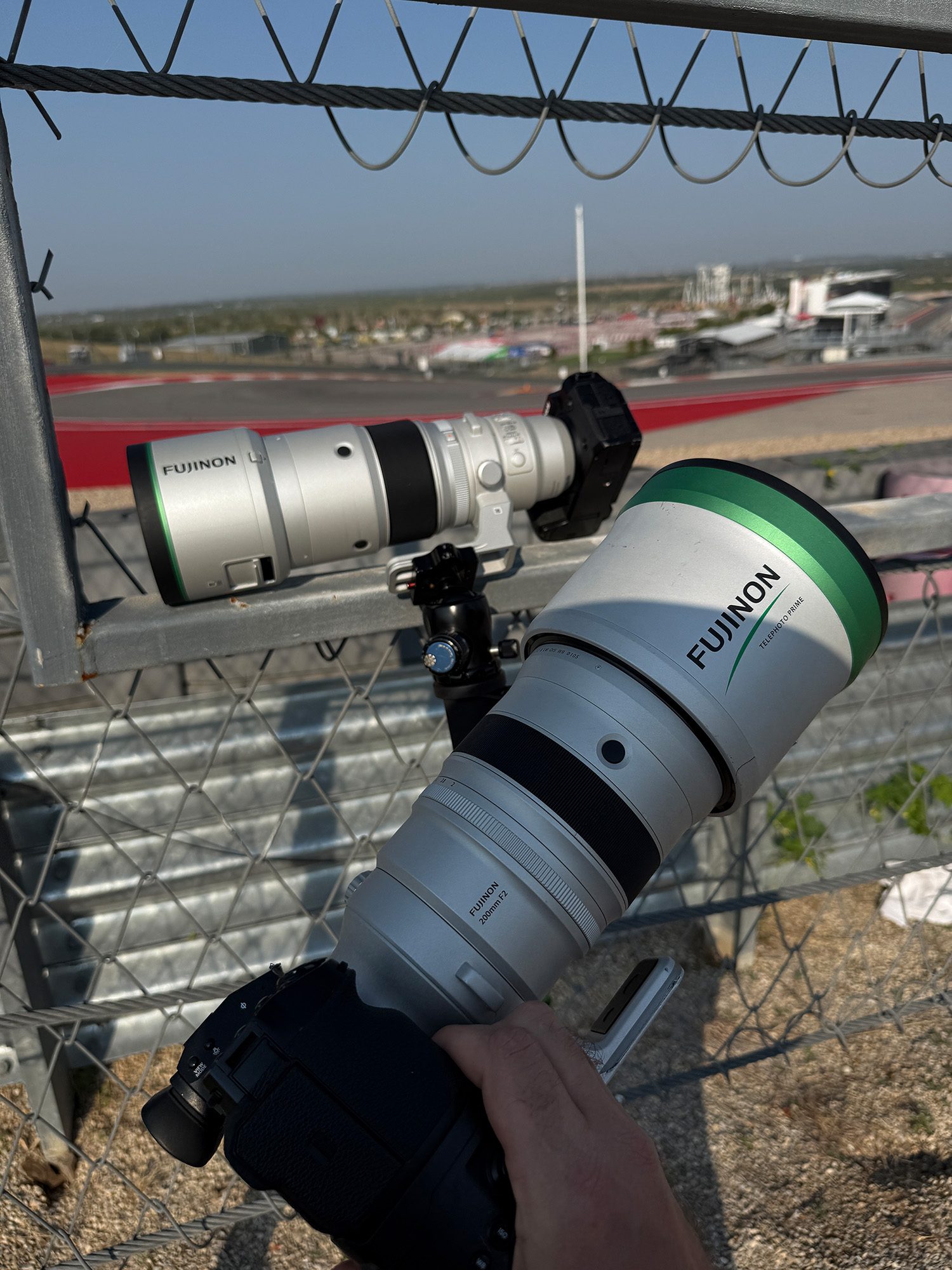
It is typically not a photographer’s first or most flexible lens purchase. Instead, it assumes the role of a third, essential lens in a professional kit. For everyday flexibility in the paddock or general trackside coverage, versatile zoom lenses like the Fujifilm XF50-140mm f/2.8 R LM OIS WR or the XF100-400mm f/4.5-5.6 R LM OIS WR continue to perform the heavy lifting, offering adaptability across various focal lengths. However, when specific conditions arise—when ambient light levels drop, when the artistic rendering of backgrounds becomes a paramount concern, or when absolute clarity and sharpness are the ultimate priorities—the XF200mm f/2 steps forward as the undisputed heavyweight champion.
The introduction and continued success of such a high-performance prime lens by Fujifilm carries significant implications for the professional photography market. It demonstrates Fujifilm’s unwavering commitment to building a comprehensive and competitive professional system, directly challenging the traditional dominance of full-frame systems in demanding genres like sports and wildlife. By offering an APS-C lens with such exceptional optical and build quality, Fujifilm empowers its professional users with a lighter, often more compact system that does not compromise on image fidelity or performance. This strategic offering helps solidify the X Series’ reputation as a viable and highly capable platform for the most rigorous professional applications.
In conclusion, while the Fujifilm XF200mm f/2 is not a mandatory purchase for every X Series shooter, its acquisition represents a strategic investment for professionals seeking to elevate their craft. Its unique blend of optical excellence, robust construction, and specialized performance makes it an indispensable tool for those operating in demanding fields such as motorsport. For professional Fujifilm photographers, it stands as a testament to the pinnacle of what the system can offer, delivering images with a distinctive quality that is both technically superb and aesthetically compelling. Once integrated into a professional workflow, its absence becomes unimaginable, cementing its status as a vital component for those who pursue photographic perfection.