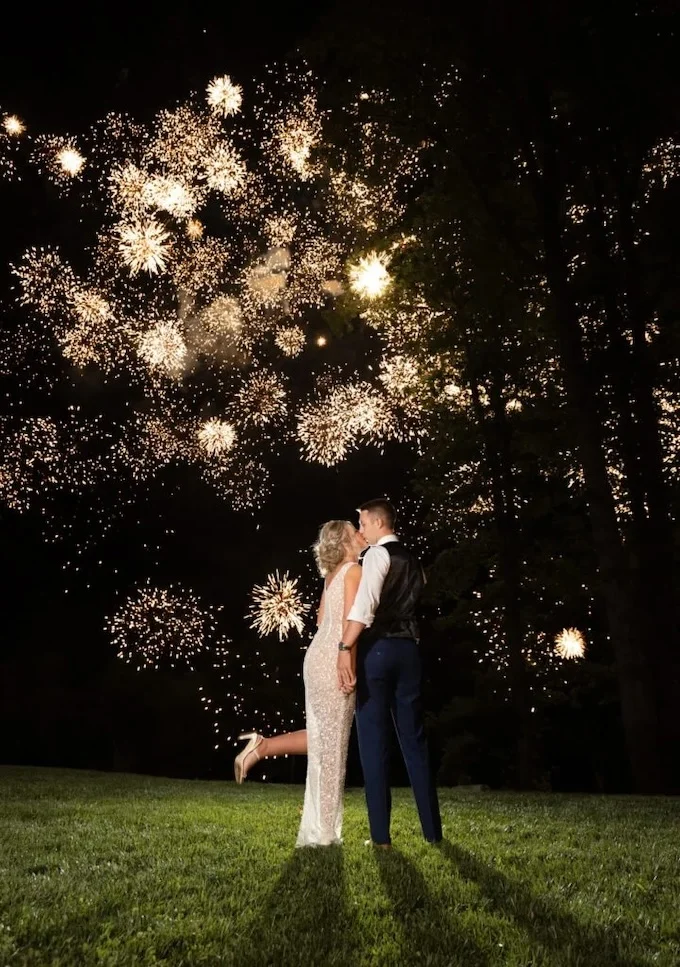
Fireworks are no longer confined to the Fourth of July. Their dazzling spectacle now graces theme parks, sporting events, and, perhaps surprisingly, weddings. For photographers, fireworks offer a unique and breathtaking backdrop for capturing unforgettable couples portraits. This article delves into the essential techniques and considerations for photographers aiming to freeze these ephemeral moments, ensuring their work mirrors the grandeur and excitement of a fireworks finale. The accompanying images, provided by photographers from Wedding Maps and used with their permission, illustrate these principles in practice.

Mastering the Moment: Planning and Preparation for Fireworks Photography
The fleeting nature of fireworks displays, often lasting mere minutes, necessitates meticulous planning and efficient execution. Success hinges on understanding the optimal timing, location, and technical settings to capture both the explosive brilliance of the pyrotechnics and the intimate connection of the couple. Photographers must anticipate the brief window of opportunity and be fully prepared to maximize it.
Securing the Perfect Vantage Point: Location Scouting
When a wedding or event features a fireworks display, photographers must proactively identify the best vantage points. This involves early communication with the couple, wedding planner, and venue staff to ascertain the precise launch locations and anticipated trajectory of the fireworks. Scouting these potential sites well in advance is crucial.

The ideal angle is subjective and depends on the desired photographic outcome. A wide-open area might be chosen to capture the vast expanse of the sky illuminated by fireworks, with the couple as a silhouetted element against the vibrant display. Alternatively, incorporating foreground elements such as trees, buildings, or architectural features can create depth and context, framing the couple and the celestial spectacle. Strategic composition, achieved through thorough location scouting, is paramount for impactful fireworks portraits.
Maximizing Detail: RAW Capture and Exposure Settings
Photographing fireworks presents a significant lighting challenge: a dark ambient environment contrasted with the intensely bright bursts of light. To preserve detail in both the shadows and highlights, photographers must prioritize capturing RAW files. Unlike compressed JPEGs, RAW files retain a broader spectrum of image data, offering greater flexibility during post-processing for recovering subtle nuances in the fireworks and the couple’s features.

Understanding RAW vs. JPEG:
- RAW Files: These are unedited, unprocessed image files that contain the maximum amount of data captured by the camera sensor. This data is crucial for extensive editing, allowing for significant adjustments to exposure, white balance, and color without degrading image quality.
- JPEG Files: These files are compressed and processed in-camera. While convenient for immediate sharing, they contain less data, limiting the ability to make substantial edits without introducing artifacts or losing detail.
Optimizing Exposure Settings:

A recommended starting point for fireworks photography involves adjusting aperture, shutter speed, and ISO to balance the ambient darkness with the brilliance of the fireworks. While specific settings will vary based on camera equipment and ambient light conditions, a general guideline might include:
- Aperture: f/8 to f/11. This range offers a good balance of sharpness and depth of field, ensuring both the couple and the fireworks are reasonably in focus.
- Shutter Speed: 5 to 10 seconds. This longer exposure allows sufficient time to capture the trails and bursts of multiple fireworks, creating a dynamic and layered effect. Shorter exposures (2-5 seconds) will capture less detail in the fireworks themselves.
- ISO: 100 to 400. Keeping the ISO as low as possible minimizes digital noise, particularly important in low-light conditions.
Photographers should diligently monitor their camera’s histogram. An ideal histogram for fireworks will show data distributed across the spectrum, avoiding extreme spikes on the right side (indicating blown-out highlights) or the far left (indicating underexposed shadows). A balanced histogram suggests that details are being captured effectively.

Harmonizing Colors: White Balance Management
Achieving a consistent and pleasing color rendition is critical. For fireworks, the Tungsten white balance setting often serves as a useful starting point. This setting typically renders the scene with a warmer tone, which can complement the vibrant colors of the fireworks.
If supplemental lighting is used to illuminate the couple, such as flashes or continuous lights, a CTO (Color Temperature Orange) gel can be applied to the light source. In conjunction with this, setting the camera’s white balance to approximately 3200 Kelvin can help harmonize the color temperature of the artificial light with the camera’s perception of the fireworks. Fine-tuning these settings is essential to match the photographer’s artistic vision.

Selecting the Right Tool: Lens Choice
The choice of lens significantly impacts the composition and the overall feel of the photograph.
- Wide-Angle Lenses: These lenses are ideal for capturing the expansive grandeur of fireworks, allowing the photographer to include both the couple and a significant portion of the night sky. They facilitate broader compositions, ensuring the fireworks are a dominant element.
- Zoom Lenses: While a zoom lens can offer flexibility, it’s crucial to consider its practical application. When working closely with a couple, a zoom lens at a wide setting might make communication challenging. However, when positioned further from the subjects, a zoom lens can be used to compress the scene, making the fireworks appear larger and more imposing within the frame.
Ultimately, the decision between wide-angle and zoom lenses depends on the desired field of view and the photographer’s working distance. It’s also worth noting that shooting slightly wider than necessary and cropping in post-production is a viable strategy to achieve the perfect framing.

The Art of Stillness: Long Exposures and Tripod Use
Longer shutter speeds are indispensable for capturing the dynamic trails and vibrant bursts of fireworks. Exposures ranging from 5 to 10 seconds allow the light to paint across the sky, creating a sense of motion and depth. This technique, however, demands absolute camera stability.
- Tripod Essential: A sturdy tripod is non-negotiable for long exposures. It prevents camera shake, ensuring sharp images even with extended shutter speeds.
- Triggering Mechanisms: To further minimize vibration when pressing the shutter button, photographers should utilize a cable release, a remote control, or the camera’s self-timer function (a 2-second delay is typically sufficient).
Illuminating the Subjects: Strategic Lighting
Unlike typical fireworks photography where subjects are often secondary or absent, couples portraits require intentional illumination. The goal is to balance the ambient light of the fireworks with artificial light on the couple, ensuring they are well-exposed and their features are clearly visible.

The process of lighting the couple can be established before the fireworks commence, allowing for precise adjustments to flash power and exposure. A common approach involves positioning the primary light source at a 45-degree angle to the couple and camera, often with a slight top-down orientation. This creates dimension and definition.
- Adding Depth: A backlight can be employed to further separate the subjects from the background and add a subtle rim light.
- Controlling Light Spill: Using modifiers like snoots or grids helps to focus the light directly onto the couple, preventing it from illuminating unnecessary areas of the scene and maintaining the focus on the fireworks. The specific lighting setup will ultimately be guided by the photographer’s creative vision and the couple’s dynamic.
Precision Focus: Manual Focus is Key
Autofocus systems can struggle in low-light conditions and when confronted with rapidly changing light sources like fireworks. This can lead to missed shots or out-of-focus images. Therefore, switching to manual focus is paramount.

Before the fireworks begin, photographers can use autofocus to initially lock focus on the couple. Once achieved, the lens should be switched to manual focus mode, and this setting should be maintained. Utilizing the camera’s live view feature can assist in precisely focusing on the couple’s eyes or a specific point on their attire, ensuring sharpness.
The Power of Post-Production: Creating Composites
For photographers seeking ultimate control over the final image, creating a composite offers a powerful solution. This technique involves capturing separate images of the couple and the fireworks and then combining them in post-processing.

- Capturing the Couple: A well-lit and perfectly posed portrait of the couple is captured first, ensuring their exposure and details are optimal. This shot serves as the foundation for the composite.
- Capturing the Fireworks: Multiple images of the fireworks display are then captured, utilizing long exposures to record the bursts and trails.
Post-Processing Workflow:
- Lightroom: Begin by editing the batch of images intended for the composite in Lightroom (or any preferred editing software). Consistency is key; therefore, edit the couple’s portrait first and then apply those same edits to the fireworks images through a batch process.
- Photoshop: Import all edited images into Photoshop and stack them within a single document. Set the blend mode of the fireworks layers to "Lighten." This blend mode reveals the brightest pixels (the fireworks) from the layers above, effectively layering the fireworks onto the couple’s portrait. Layer masks can then be used to refine the integration, selectively masking out unwanted areas and ensuring a seamless blend.
Beyond the Grand Finale: Photographing Sparklers
While not technically fireworks, sparklers are a popular element in wedding photography, often used for grand exits. Capturing these moments requires a slightly different approach.

The Advantage of Size: Choosing Larger Sparklers
When recommending sparklers for wedding photography, advise couples to opt for longer sparklers, such as 36-inch varieties, over shorter ones (e.g., 10-inch). The extended burn time of larger sparklers provides photographers with more opportunities to arrange subjects, capture multiple poses, and ensure everyone is adequately included in the frame.
Adjusting for Light: ISO and Aperture
Sparklers provide a localized light source, which can be insufficient for well-exposed photographs, especially in dimly lit environments. Photographers may need to supplement with artificial light or adjust camera settings to compensate.

- Boosting ISO: Increasing the ISO setting can help brighten the overall exposure.
- Wide Aperture: Using a wider aperture (lower f-number) allows more light to enter the lens, contributing to a brighter image.
Suggested Settings (Reference):
- Moving Subjects:
- Shutter Speed: 1/100s to 1/200s (to freeze motion)
- Aperture: f/2.8 to f/4 (for shallow depth of field and light gathering)
- ISO: 400-1600 (or higher, depending on ambient light)
- Static Subjects:
- Shutter Speed: 1/30s to 1/60s (allowing for longer exposure if needed)
- Aperture: f/4 to f/8 (for greater depth of field)
- ISO: 200-800
Experimentation with these settings is crucial, adjusting them based on the ambient light and the desired effect.

Safety First: The Importance of a Safety Bucket
Working with open flames necessitates a strong emphasis on safety. A bucket of water or sand should always be readily available to safely extinguish used sparklers. This simple precaution mitigates the risk of accidental fires and ensures a safe environment for everyone involved.
Conclusion: A Symphony of Light and Love
Photographing couples amidst fireworks or sparklers offers a unique opportunity to create truly magical and enduring images. By meticulously planning locations, mastering camera settings, employing strategic lighting, and embracing post-processing techniques, photographers can transform fleeting moments of pyrotechnic brilliance into timeless portraits of love. The provided examples serve as a testament to the potential for stunning visual narratives when technical skill meets artistic vision under a sky ablaze with light.