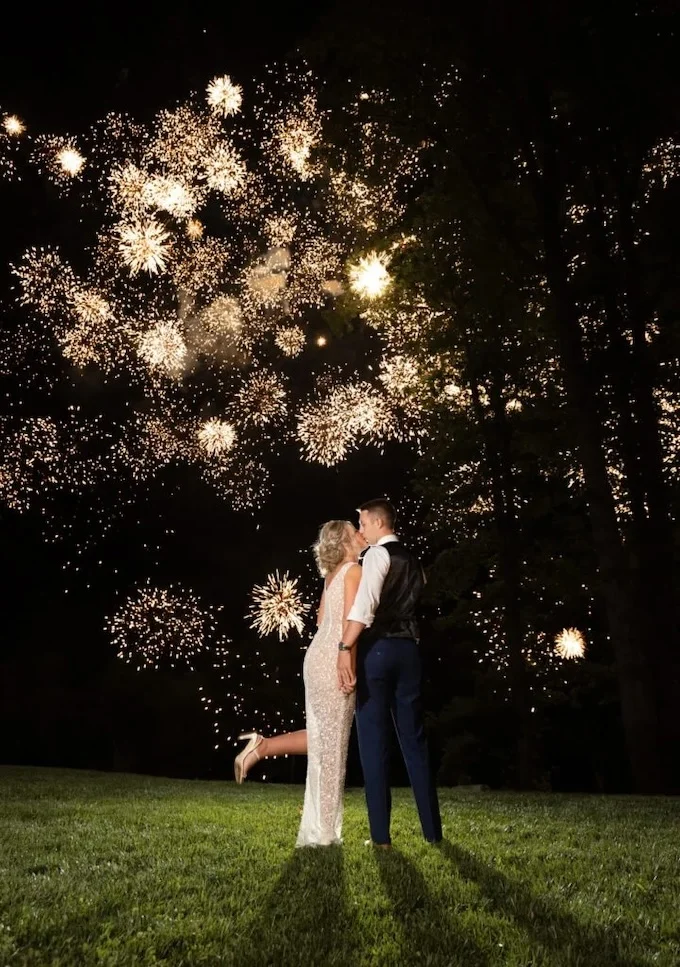
Fireworks, often synonymous with national holidays and grand celebrations, are increasingly finding a place in the most intimate of events – weddings. Beyond their dazzling visual spectacle, fireworks offer photographers a unique and dramatic backdrop, transforming standard couples’ portraits into extraordinary works of art. However, harnessing this ephemeral beauty requires a strategic approach, blending technical photographic expertise with an understanding of event dynamics. This article delves into the essential techniques and considerations for photographers aiming to capture breathtaking couples portraits amidst the explosive artistry of fireworks.

The Challenge and Opportunity of Wedding Fireworks
The inclusion of fireworks in wedding celebrations is a growing trend, driven by couples seeking to elevate their special day with unforgettable moments and visually striking photography. This trend is supported by the increasing availability of professional pyrotechnic services for private events and a desire among couples to create unique, shareable memories. For photographers, this presents a significant opportunity to deliver truly exceptional images that stand out. However, the transient nature of fireworks, typically lasting only a few minutes, demands meticulous planning and efficient execution. The brief window for capturing these explosive displays, often between five to eight minutes, necessitates that photographers be fully prepared before the first spark ignites. This preparation involves not only understanding camera settings but also coordinating with the couple, wedding planner, and venue to secure the optimal vantage point and timing.

Strategic Planning for Success
The success of a fireworks couples’ portrait session hinges on comprehensive pre-event planning. Photographers must proactively gather information regarding the pyrotechnics schedule, anticipated duration, and specific launch locations. This crucial intel, typically obtained from the couple or their wedding planner, allows for thorough location scouting.

Finding the Optimal Vantage Point
Location scouting is paramount. Photographers should seek out areas that offer a clear view of the fireworks while simultaneously framing the couple effectively. This might involve identifying open spaces that allow the fireworks to dominate the sky, creating a sense of grandeur. Alternatively, incorporating foreground elements such as trees, architectural structures, or natural landscapes can add depth and context to the image, leading the viewer’s eye towards the couple and the celestial display. The "best" angle is subjective and depends on the desired aesthetic, but a well-composed shot is always the goal. This proactive approach ensures that when the fireworks commence, the photographer is already in position, ready to capture the decisive moment.
Mastering Exposure and Dynamic Range
Photographing fireworks presents a significant lighting challenge: balancing the ambient darkness with the intense, fleeting bursts of light. To preserve detail in both the shadows and the highlights, shooting in RAW format is non-negotiable. RAW files retain significantly more image data than JPEGs, offering greater flexibility during post-processing to recover details that might otherwise be lost.

RAW vs. JPEG: The Importance of Uncompressed Data
The distinction between RAW and JPEG files is critical in high-contrast scenarios like fireworks photography. JPEGs are compressed image files, meaning some data is discarded during the saving process. This compression limits the ability to recover details in underexposed (shadow) or overexposed (highlight) areas. RAW files, on the other hand, are essentially unprocessed sensor data. They provide a much wider dynamic range, allowing photographers to adjust exposure, contrast, and color balance significantly in post-production without sacrificing image quality. This is particularly important when trying to capture both the details of the couple and the intricate patterns of the fireworks.
Exposure Settings for Fireworks Portraits
A foundational starting point for exposure settings when photographing fireworks with a couple involves a low ISO, a narrow aperture, and a relatively slow shutter speed.

- ISO: Begin with a low ISO, such as 100 or 200, to minimize digital noise, especially in the darker areas of the image.
- Aperture: A narrower aperture, typically between f/8 and f/11, is recommended. This ensures a greater depth of field, keeping both the couple and the fireworks acceptably sharp. It also helps to manage the intensity of the bright light sources.
- Shutter Speed: This is where the magic of long exposure comes into play. Shutter speeds ranging from 5 to 10 seconds, or even longer depending on the camera’s capabilities and the intensity of the fireworks, are ideal. This extended exposure time allows the light trails of the fireworks to be captured as they streak across the sky, creating dynamic streaks of color. Shorter exposures (2-5 seconds) will reveal less detail and motion in the fireworks.
The camera’s histogram is an invaluable tool for fine-tuning exposure. Photographers should monitor the histogram to ensure that the data isn’t heavily skewed to the far right (indicating blown-out highlights that have lost detail) or too far to the left (indicating crushed shadows that are devoid of detail). The goal is to achieve a balanced distribution of data across the histogram.
Managing White Balance for Accurate Color
Achieving accurate and aesthetically pleasing colors during fireworks photography requires careful white balance management. A good starting point is often the "Tungsten" white balance preset, which can counteract the predominantly warm, orange tones of fireworks. If artificial light is being used to illuminate the couple, such as a flash or continuous light source, a CTO (Color Temperature Orange) gel can be applied to the light. In this scenario, setting the white balance to approximately 3200 Kelvin can help synchronize the color temperature of the artificial light with the scene, allowing for a more cohesive image. Adjustments can then be made in post-production to achieve the desired artistic vision.

Selecting the Appropriate Lens
The choice of lens significantly influences the composition and the perceived scale of the fireworks.
- Wide-Angle Lenses: For capturing the grandeur of the fireworks alongside the couple, a wide-angle lens (e.g., 16-35mm) is often preferred. This allows for a broad field of view, encompassing both the couple and a significant portion of the sky filled with pyrotechnics. This is particularly useful if the photographer needs to maintain communication with the couple, as wider shots often allow for more natural interaction without needing to shout across a distance.
- Zoom Lenses: While a zoom lens can offer flexibility, its effectiveness depends on the shooting scenario. In tight spaces, a zoom lens might be the only practical option. However, when aiming for a tighter composition that emphasizes the fireworks’ impact on the couple, a zoom lens can excel at compressing the scene, making the fireworks appear larger and more dramatic in the frame. It’s also worth noting that it’s acceptable to shoot with a wider lens and crop the image slightly during post-processing if a tighter perspective is desired.
The Power of Long Exposures
As previously mentioned, long exposures are fundamental to capturing the dynamic trails and vibrant colors of fireworks. By keeping the camera’s shutter open for an extended period, the sensor records the movement of light as the fireworks explode and descend. This technique transforms static bursts into luminous streaks, adding a sense of motion and energy to the photographs.

Essential Tools for Long Exposures
Executing long exposures reliably requires specialized equipment to prevent camera shake, which can ruin an otherwise perfect shot.
- Tripod: A sturdy tripod is indispensable. It provides a stable platform for the camera, eliminating any movement that could blur the image. The tripod should be capable of supporting the weight of the camera and lens and should be placed on a stable surface.
- Remote Shutter Release or Timer: Pressing the shutter button directly can introduce vibrations. Using a cable release, a wireless remote, or the camera’s built-in self-timer (a 2-second delay is usually sufficient) ensures that the shutter is activated without any physical disturbance to the camera.
Illuminating Your Subjects with Precision
Unlike traditional fireworks photography, where subjects are often secondary or absent, couples portraits require intentional lighting of the individuals. The goal is to illuminate the couple adequately without overpowering the ambient light or the fireworks themselves.

Balancing Flash and Ambient Light
The process of lighting the couple should ideally be done before the fireworks begin, allowing ample time to adjust flash power and exposure settings. The approach should mirror how one would light subjects in any other challenging lighting condition, focusing on achieving a balanced exposure.
- Light Placement: A common and effective technique is to position the primary light source (e.g., a speedlight or strobe) at approximately a 45-degree angle to the couple, relative to the camera’s position. A slightly top-down angle can also be flattering.
- Controlling Light Spill: To prevent light from spilling onto the background or the fireworks and to concentrate illumination precisely on the couple, modifiers such as snoots or grids are highly recommended. These tools help to create a more focused beam of light, ensuring that the couple remains the primary subject while the fireworks provide the dramatic backdrop.
- Backlighting: For added dimension and to help separate the couple from the background, a backlight can be employed. This technique creates a subtle rim of light around their hair and shoulders, enhancing their definition.
The specific lighting setup will ultimately depend on the photographer’s creative vision and the overall mood they aim to evoke.

The Necessity of Manual Focus
Autofocus systems can struggle in low-light conditions and when faced with the rapid, unpredictable movement of fireworks. Therefore, switching to manual focus is essential. Once the couple is in focus (which can be achieved using autofocus initially before switching to manual), it is crucial to lock that focus. Using the camera’s live view feature can aid in precise focusing on the couple. Once focus is set, it should remain fixed for the duration of the fireworks display to ensure consistent sharpness.
The Art of the Composite Image
For photographers seeking ultimate control over the final image, creating a composite is a viable and often highly effective strategy. This technique involves combining multiple images: one perfectly lit and posed portrait of the couple, and several separate shots capturing the fireworks.

Workflow in Lightroom and Photoshop
- Lightroom Preparation: Begin by importing all captured images into Adobe Lightroom. It is vital to edit the batch of photos intended for the composite consistently. The most efficient method is to first edit the portrait of the couple to perfection, adjusting exposure, color, and tone. Then, use Lightroom’s batch editing capabilities to apply these same adjustments to all the fireworks images. This ensures a unified look across all elements of the composite.
- Photoshop Integration: Transfer the edited images to Adobe Photoshop. Stack these images into a single document, with the couple’s portrait as the base layer. For the fireworks layers, set the blend mode to "Lighten." This blend mode allows only the brightest pixels (the fireworks) to show through from the upper layers, effectively overlaying the explosions onto the couple’s portrait.
- Refinement with Masks: Utilize layer masks in Photoshop to meticulously edit out any unwanted elements from each layer. This allows for precise control over where the fireworks appear and ensures that the couple remains clearly visible and well-defined. This technique offers unparalleled creative freedom in composing the final artwork.
Photographing Sparklers: A Related Art Form
While not technically "fireworks," sparklers are a popular element in wedding photography, particularly for grand exits. Their inclusion offers a similar, albeit more intimate, opportunity for creative portraiture.
Maximizing Sparkler Impact
- Choose Larger Sparklers: Photographers should advise couples to opt for larger sparklers, such as 36-inch varieties, over smaller ones (e.g., 10-inch). The longer burn time of larger sparklers provides more time for posing and capturing multiple shots, increasing the chances of securing the perfect image.
Technical Considerations for Sparkler Shots
- Boosting ISO and Wide Aperture: Sparklers are relatively weak light sources. To capture them effectively, especially in dim conditions or when subjects are in motion, photographers will need to increase their ISO sensitivity and utilize a wide aperture (e.g., f/2.8 or f/4). This combination allows more light to reach the sensor, resulting in a brighter exposure.
- Exposure Settings for Sparklers:
- Moving Subjects: For dynamic shots with subjects moving through sparkler trails, a faster shutter speed (e.g., 1/60s to 1/125s) might be necessary to freeze motion, compensated by a higher ISO and wider aperture.
- Static Subjects: For posed shots where subjects remain still, lower shutter speeds (e.g., 1/15s to 1/30s) can be used, allowing more ambient light to be captured and potentially capturing more of the sparkler’s glow. Adjustments to ISO and aperture will be necessary to achieve proper exposure.
Safety First: The Essential Bucket of Water
Handling sparklers involves an open flame, making safety paramount. A readily accessible bucket of water is crucial for safely extinguishing used sparklers, preventing any potential fire hazards. This simple precaution ensures the well-being of the wedding party and the venue.

Conclusion: Illuminating Love Stories
Photographing fireworks and sparklers for couples portraits is a challenging yet immensely rewarding endeavor. By meticulously planning, mastering technical settings, and employing creative techniques, photographers can transform fleeting moments of pyrotechnic brilliance into timeless visual narratives of love and celebration. The examples provided throughout this guide offer a glimpse into the stunning possibilities that arise when couples and photographers collaborate to capture these extraordinary moments, creating images that are as dynamic and memorable as the events themselves. The integration of fireworks into wedding photography is not merely about adding a spectacle; it’s about weaving a luminous thread into the fabric of a couple’s most cherished memories.