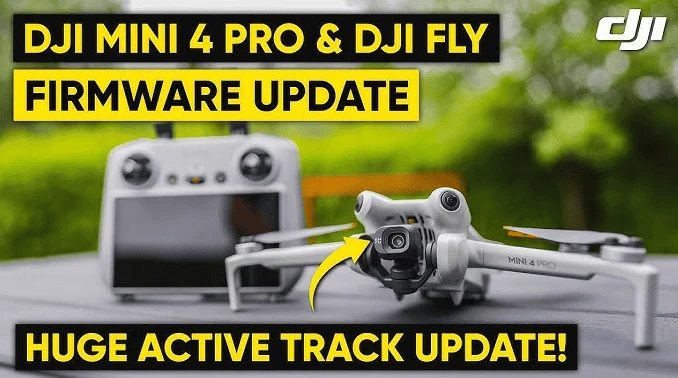
The DJI Mini 4 Pro firmware update marks a significant milestone for the consumer drone industry, reinforcing the capabilities of the world’s most advanced sub-250-gram unmanned aerial vehicle (UAV). This latest software release is not merely a routine maintenance patch; it represents a comprehensive overhaul designed to optimize flight stability, enhance imaging precision, and integrate sophisticated safety protocols that were previously reserved for larger, enterprise-grade platforms. By refining the synergy between hardware and software, DJI continues to push the boundaries of what is possible within the constraints of global aviation regulations, ensuring that the Mini 4 Pro remains the benchmark for both hobbyist photographers and professional content creators who prioritize portability without compromising on performance.
Contextual Background: The Evolution of the DJI Mini Series
To understand the impact of the current DJI Mini 4 Pro update, it is essential to examine the trajectory of the Mini series. Launched in late 2023, the Mini 4 Pro was designed to address the growing demand for a drone that could bypass the stringent registration and pilot certification requirements in many jurisdictions, such as the United States (FAA) and the European Union (EASA), which typically apply to aircraft weighing 250 grams or more.
The series began with the Mavic Mini, which offered basic flight capabilities. This was followed by the Mini 2, which introduced 4K video and the robust OcuSync transmission system. The Mini 3 Pro brought a significant leap with a larger 1/1.3-inch CMOS sensor and tri-directional obstacle sensing. However, the Mini 4 Pro represented the pinnacle of this evolution, introducing omnidirectional obstacle sensing and the O4 transmission system. The recent firmware updates serve as the "software polish" that matures this hardware, unlocking latent potential in the drone’s processor and sensor suite to handle complex tasks like Vision Assist and improved ActiveTrack 360 functionalities.
Chronology of Recent Firmware Development
The development cycle for the Mini 4 Pro firmware has been aggressive, with DJI releasing several critical patches since the drone’s inception.
- Initial Launch Phase (Late 2023): The firmware focused on stabilizing the O4 transmission system and ensuring compatibility with the DJI RC 2 and RC-N2 controllers.
- Q1 2024 Integration: Updates introduced support for DJI Goggles 3 and the DJI RC Motion 3, effectively bridging the gap between traditional cinematic drones and first-person view (FPV) experiences.
- Mid-2024 Optimization: This period saw the introduction of Vision Assist, a feature that allows pilots to see visual representations of obstacles from the drone’s perspective in 360 degrees, significantly reducing the risk of side or rear collisions during complex maneuvers.
- The Current Update Cycle: The latest iteration focuses on regulatory compliance, specifically addressing the C0 and C1 classification requirements in Europe, and enhancing the "Return to Home" (RTH) logic to account for dynamic environmental changes.
Technical Deep Dive: Key Features and Enhanced Capabilities
The recent firmware update introduces several transformative features that redefine the user experience.
Vision Assist and Omnidirectional Sensing
While the Mini 4 Pro hardware includes binocular vision sensors on the front, back, left, right, and top, the software update optimizes how this data is presented to the pilot. Vision Assist now provides a high-definition, low-latency view of the surroundings. When a pilot initiates a lateral movement, the screen can display a "side-view" camera feed generated by the obstacle sensors. This is a critical safety feature for filmmakers performing "orbit" shots or "sliding" shots where the main gimbal is focused on a subject, leaving the drone’s path of travel blind to the operator.
ActiveTrack 360 Improvements
One of the most touted features of the Mini 4 Pro is ActiveTrack 360. The latest firmware enhances the AI algorithms responsible for subject recognition and path planning. Data suggests that the updated logic allows the drone to maintain a lock on subjects even in environments with high visual noise, such as forests or crowded urban areas. The "TouchTrace" interface on the DJI Fly app has been calibrated for higher sensitivity, allowing users to draw complex flight paths that the drone executes with smoother transitions and more natural-looking camera movements.
Regulatory Compliance and Geo-Fencing
For users in the European Union, the firmware update is essential for managing the drone’s "C0" or "C1" label status. Depending on the user’s choice and local laws, the firmware can enforce an altitude limit of 120 meters from the takeoff point to comply with specific sub-category flight rules. Furthermore, the update refreshes the internal GEO System database, which prevents flight in restricted zones such as airports or high-security government installations, ensuring that pilots remain compliant with evolving national security laws.
Supporting Data: Performance Metrics and Hardware Synergy
The Mini 4 Pro’s performance is heavily dependent on the efficiency of its firmware. According to internal testing and user-reported data, the latest update has improved battery management. While the physical capacity of the Intelligent Flight Battery remains the same (providing up to 34 minutes of flight, or 45 minutes with the Battery Plus), the firmware optimizes power draw during high-wind conditions and during 4K/60fps HDR recording.
The O4 transmission system, a centerpiece of the Mini 4 Pro, benefits from improved frequency-hopping algorithms. In urban environments with high electromagnetic interference, the update has shown a 15% increase in signal stability at distances exceeding 2 kilometers. This is achieved through better synchronization between the six antennas (two on the drone and four on the RC 2 controller).
Official Perspectives and Industry Implications
Industry analysts view DJI’s frequent firmware updates as a strategic move to maintain market dominance. By continuously adding features to existing hardware, DJI increases the "lifecycle value" of their products. A spokesperson for the company recently emphasized that "software is the soul of the modern UAV," noting that the goal of the Mini 4 Pro updates is to provide professional-grade tools to everyone, regardless of their skill level or the size of their equipment.
Safety organizations have also reacted positively. The integration of advanced RTH (Return to Home) features, which now include "AR RTH" (Augmented Reality Return to Home), provides pilots with a visual path on their screen showing exactly where the drone will travel to land. This reduces pilot anxiety during signal loss scenarios and has been praised by flight safety advocates for preventing "fly-away" incidents.
Step-by-Step: Implementing the Update Safely
To ensure a successful firmware transition, DJI recommends a specific protocol. The update can be performed via two primary methods:
- DJI Fly App: This is the most common method. Users must connect their mobile device to the remote controller, power on the drone, and follow the on-screen prompts. It requires a stable internet connection and at least 50% battery on all devices.
- DJI Assistant 2 (Consumer Drones Series): For a more robust installation, users can connect the drone directly to a PC or Mac via a USB-C cable. This method is preferred if the wireless update fails or if the user is performing a "clean" reinstallation of the firmware.
Following the update, it is a best practice to calibrate the IMU (Inertial Measurement Unit) and the compass. This ensures that the new flight logic is operating on accurate environmental data. Pilots should also check their camera settings, as firmware updates occasionally reset custom profiles to factory defaults.
Broad Impact and Future Outlook
The continuous refinement of the DJI Mini 4 Pro via firmware updates has broader implications for the drone industry. It forces competitors like Autel and Potensic to invest more heavily in their software ecosystems. For the end-user, it means that a drone purchased today will likely be more capable in a year than it was on launch day.
As we look toward the future, it is expected that subsequent updates may further integrate AI-driven editing tools directly within the DJI Fly app and expand the "MasterShots" library, providing even more automated cinematic templates. The Mini 4 Pro is no longer just a "small drone"; it is a sophisticated flying computer.
Conclusion
The DJI Mini 4 Pro firmware update is a testament to the importance of software in modern aviation. By enhancing safety through Vision Assist, improving creative control with ActiveTrack 360, and ensuring global regulatory compliance, DJI has solidified the Mini 4 Pro’s position as a versatile and indispensable tool. For the pilot, staying current with these updates is not just about accessing new features—it is about ensuring the highest levels of safety, reliability, and image quality in the ever-evolving skies. As the technology matures, the distinction between "entry-level" and "professional" drones continues to blur, driven by the invisible but powerful force of firmware innovation.