The transition of street photography from traditional 35mm film to the sophisticated computational systems of the modern smartphone represents one of the most significant shifts in the history of visual journalism and art. As mobile devices become the primary tool for both amateur and professional creators, the iPhone has emerged as a dominant force in the genre of street photography, particularly in the realm of black and white imagery. By stripping away the distraction of color, photographers are able to focus on the core elements of a scene: light, shadow, form, and emotion. To master this medium, photographers must understand both the technical capabilities of their hardware and the classical principles of composition that have defined the genre for over a century.
The Evolution of the Mobile Darkroom
The history of street photography is inextricably linked to the portability of equipment. In the early 20th century, the introduction of the Leica camera allowed photographers like Henri Cartier-Bresson to move through crowds undetected, capturing what he termed "the decisive moment." Today, the iPhone fulfills a similar role but with significantly more advanced technical capabilities. Since the launch of the original iPhone in 2007, Apple has progressively integrated larger sensors, faster apertures, and sophisticated Image Signal Processors (ISPs).
Market data suggests that the "democratization of photography" via the smartphone has fundamentally altered the industry. According to industry reports from 2023, over 90% of all consumer photos are now taken with smartphones, and the iPhone remains the most popular device on photography-sharing platforms like Flickr. This ubiquity has led to a resurgence in street photography, as the best camera is frequently the one already in the photographer’s pocket.
Technical Foundation: The Case for Pre-Visualization
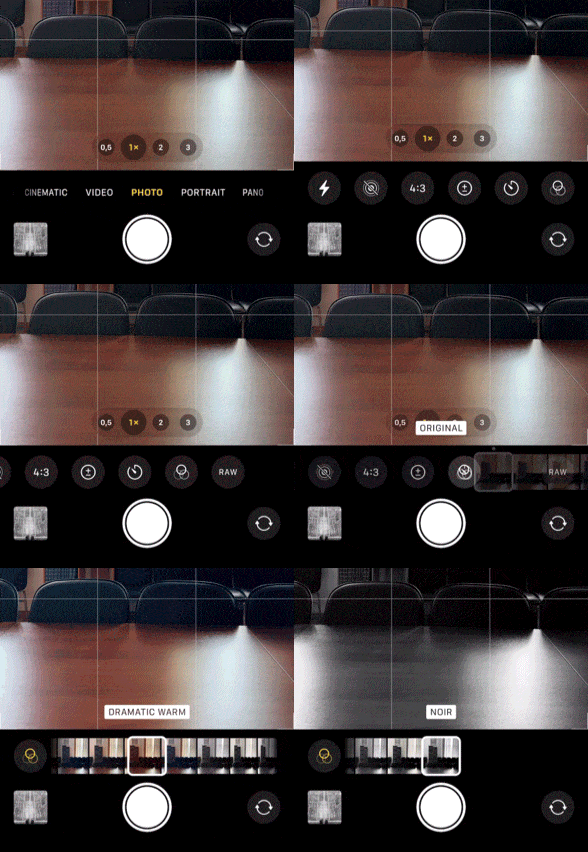
A fundamental error many novice mobile photographers make is shooting in color with the intent to convert to black and white during the editing phase. While the iPhone’s non-destructive editing allows for this, professionals argue that shooting in a monochrome mode—specifically the "Noir" filter—is essential for pre-visualization. When the viewfinder displays the world in grayscale, the photographer is forced to see the environment in terms of tonal values rather than hues.
To activate this, users must access the Filters icon within the Camera app and select Noir. This technical choice highlights patterns and textures that might be obscured by vibrant colors. Because the iPhone uses a non-destructive workflow, the original color data remains available in the Photos app, allowing for a "safety net" while encouraging the artistic discipline of seeing in black and white.
The Chronology of Composition: From Minimalism to Leading Lines
The development of a photographer’s eye often follows a specific chronology, moving from simple subjects to complex environmental interactions.
1. The Power of Minimalism and Negative Space
Minimalism in an urban environment requires a conscious effort to exclude distracting elements. In the context of city squares, parks, or cultural sites, the use of negative space—empty areas surrounding the subject—serves to focus the viewer’s attention entirely on the human element. Data from eye-tracking studies in visual arts suggests that simplified compositions reduce cognitive load, making the image more striking and memorable. To achieve this, photographers are encouraged to use Google Maps or street-view data to scout locations with expansive, clean backgrounds before arriving on site.
2. Structural Depth Through Leading Lines
As a photographer moves beyond basic minimalism, the use of structural elements becomes paramount. Urban environments are rich with leading lines: roads, bridges, tunnels, and architectural markings. When these lines originate from the corners of the frame and converge toward a subject, they create a sense of three-dimensional depth on a two-dimensional screen. The iPhone’s wide-angle lens is particularly adept at exaggerating these perspectives, though photographers must often crop their images post-capture to ensure the lines hit the corners with mathematical precision.
Advanced Architectural Interactions
The interplay between human subjects and the built environment provides the narrative backbone of street photography.
The Rhythmic Pattern of the City
Modern architecture frequently utilizes repetitive shapes, pillars, and windows. These patterns create a visual rhythm. In black and white, these repetitions become more pronounced, as the lack of color emphasizes the geometric consistency of the structure. Industry experts suggest that the most effective pattern-based photos include a "break" in the repetition—typically a human subject—which provides a focal point and a sense of scale.
Framing and the Internal Narrative
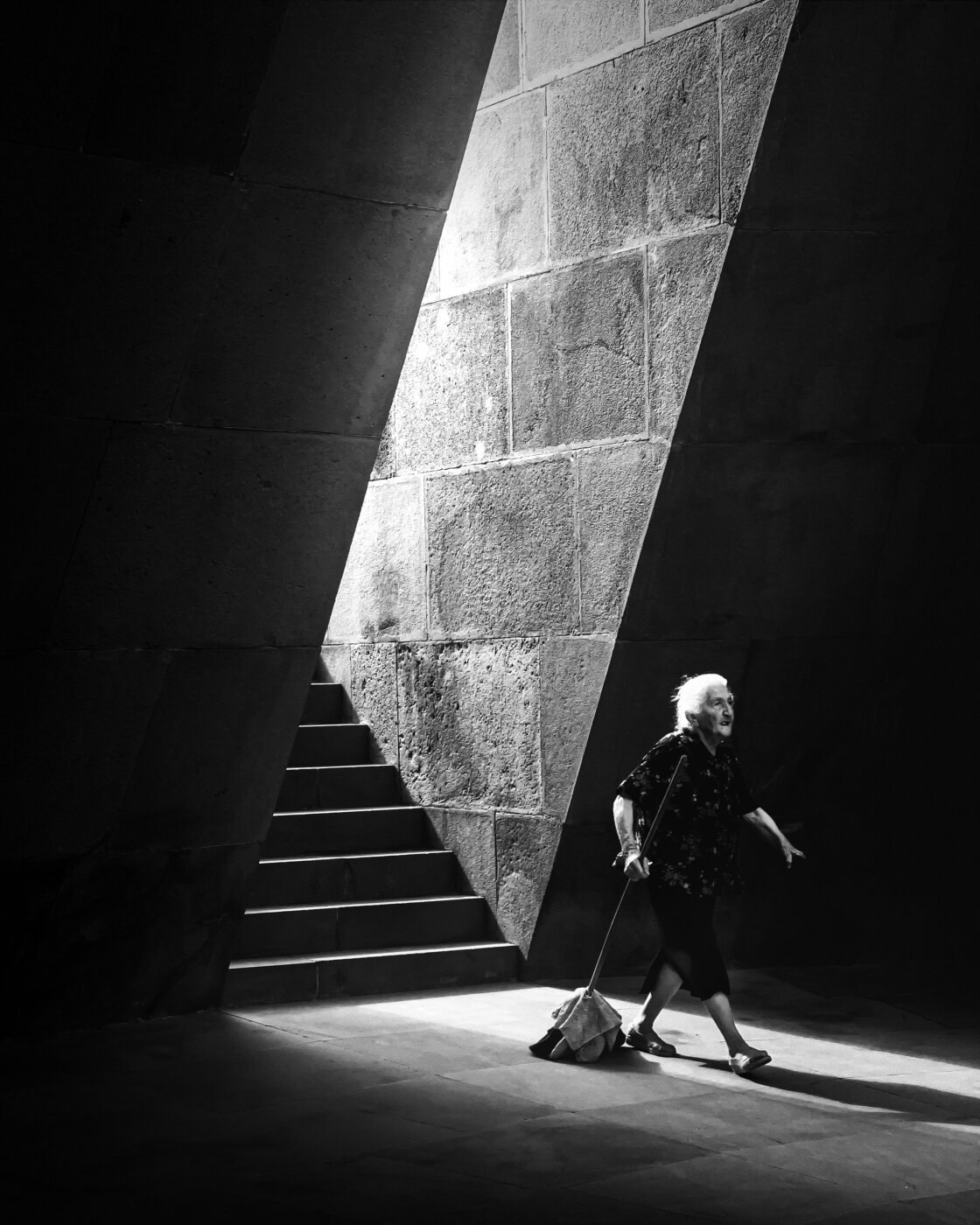
Architectural elements such as archways, doorways, and windows can be used as internal frames within the photo. This technique adds layers to the image and directs the eye inward. To capture the perfect interaction within a frame, professional street photographers rely on "Burst Mode." By dragging the shutter button to the left (on newer iPhone models) or holding the volume-up button, the camera captures multiple frames per second. This allows the photographer to select the precise millisecond when the subject’s gait or posture is most aesthetically pleasing.
The Physics of Light: Silhouettes and Shadows
Light is the literal and metaphorical "paint" of the photographer. In monochrome photography, the absence of light is just as important as its presence.
High-Contrast Silhouette Photography
Silhouettes are achieved by shooting toward a light source, placing the subject between the lens and the light. This technique is most effective during the "Golden Hour"—the period shortly after sunrise or before sunset when the sun is low on the horizon. By manually reducing the exposure (EV) to -1 or -2, the photographer ensures that the subject is rendered as a dark, anonymous shape. This adds a layer of mystery and focuses the viewer on the subject’s silhouette and the quality of the light.
The Drama of Long Shadows
Shadows serve as secondary subjects in street photography. During periods of direct sunlight, long shadows can stretch across a frame, acting as temporary leading lines or abstract shapes. Reducing exposure in these scenarios deepens the blacks, a technique known in classical art as chiaroscuro. This high-contrast look is a hallmark of professional black and white street photography and is a primary reason why many photographers prefer shooting in harsh, direct light rather than on overcast days.
The Digital Darkroom: Post-Processing Implications
While the iPhone’s internal hardware handles much of the heavy lifting, the final 10% of a stunning image is often crafted in post-processing. The use of professional-grade applications like Adobe Lightroom Mobile or the native iOS Photos app allows for fine-tuning of the tonal range.
Tonal Range and Contrast
In black and white imagery, "true black" and "true white" are essential. Increasing contrast or adjusting the "Black Point" ensures that the image does not appear as a flat, muddy gray. This technical adjustment adds "snap" to the photo, making the textures of stone, metal, and fabric more tangible to the viewer.
Retouching and Geometric Correction
Modern software has introduced powerful "Healing" and "Retouching" tools. Objects that distract from a minimalist composition—such as trash cans, signs, or stray pedestrians—can be removed with AI-driven algorithms. Furthermore, the "Crop and Straighten" tools are vital for correcting tilted horizons or architectural distortion, ensuring that the final output meets professional standards.
Industry Impact and Broader Implications
The rise of high-quality iPhone street photography has significant implications for the world of art and journalism. It has lowered the barrier to entry, allowing individuals from diverse socioeconomic backgrounds to document their environments with professional-grade clarity. This "citizen journalism" aspect has become vital in documenting social movements and urban evolution.
Furthermore, the shift toward mobile photography has forced traditional camera manufacturers like Nikon, Canon, and Sony to pivot toward the high-end enthusiast and professional markets, as the consumer point-and-shoot market has been entirely absorbed by the smartphone.
Conclusion: The Path Forward for the Mobile Artist
As Maksim Kyshtymov, a professional designer and founder of a prominent design studio, has noted, the transition from heavy DSLR equipment to the iPhone is driven by the desire for portability and creative freedom. The ability to walk through a city with nothing but a pocket-sized device allows for a more intimate connection with the environment.
The success of a black and white street photo is not determined by the price of the sensor, but by the photographer’s ability to observe the world through a lens of geometry, light, and human interaction. By mastering the 8 fundamental tips—ranging from the use of the Noir filter to the strategic application of shadows and negative space—iPhone users can produce work that stands alongside the classics of the genre. As computational photography continues to advance, the gap between the smartphone and the professional film camera will continue to close, leaving the vision of the photographer as the final, most important variable.