The Shift from Aesthetic Preference to Functional Necessity
For decades, the vehicle wrap industry was divided into two distinct camps. High-gloss finishes were favored for their ability to mimic factory paint and provide vibrant color saturation, while matte finishes gained popularity in the luxury and custom markets for their understated, modern appeal. However, as the density of commercial messaging on public roadways has increased, both singular finishes have revealed inherent limitations.
High-gloss wraps, while visually striking in overcast conditions, frequently suffer from "white-out" effects under direct sunlight. This phenomenon occurs when specular reflection—the mirror-like reflection of light from a surface—overpowers the printed pigment, rendering company names, phone numbers, and QR codes illegible to passing motorists. Conversely, full-matte wraps, while excellent at diffusing light, often lack the "visual pop" required to capture attention from a distance, sometimes appearing flat or muddy in low-light environments.
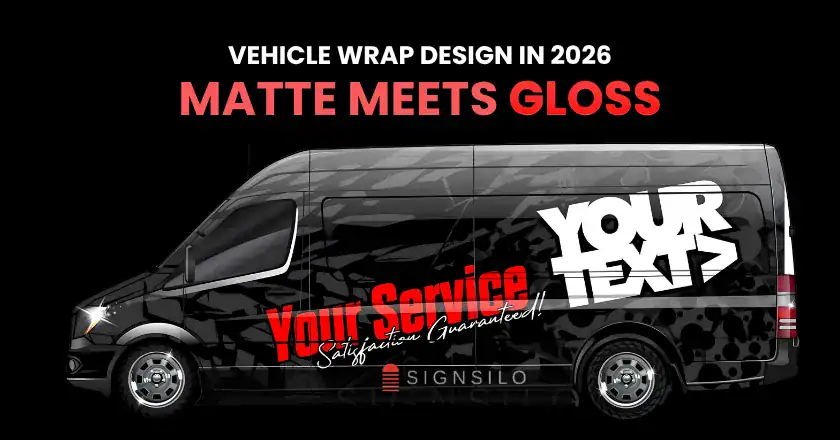
The hybrid approach solves these challenges by utilizing matte backgrounds to absorb ambient light and eliminate glare, while applying high-gloss overlays to critical branding elements. This creates a tactile, three-dimensional effect that ensures essential information remains legible regardless of the sun’s position or the angle of the viewer.
A Chronology of Vehicle Wrap Technology
To understand the rise of hybrid finishes in 2026, it is necessary to examine the technological milestones that led to this point:
- 2000–2010: The Era of Cut Vinyl. Branding was largely limited to plotter-cut lettering and basic logos. Multi-texture designs were rare due to the complexity of hand-layering different vinyl types.
- 2010–2018: The Digital Printing Revolution. The advent of wide-format eco-solvent and latex printers allowed for full-color photographic wraps. During this period, the industry focused almost exclusively on gloss laminates to protect the ink.
- 2018–2023: The Rise of Specialized Laminates. Manufacturers began introducing reliable matte, satin, and "frozen" laminates. Designers started experimenting with "spot gloss" effects, though the process remained expensive and technically demanding for large fleets.
- 2024–2025: Material Standardization. New adhesive technologies and thinner, more conformable films made it possible to overlap different finishes without the risk of edge lifting or "silvering."
- 2026: The Hybrid Standard. Software and design resources have caught up with material science, allowing for the rapid deployment of multi-texture designs across national fleets.
The Science of Visibility and Specular Reflection
The move toward hybrid surfaces is grounded in optical physics. When light hits a gloss surface, it reflects at a consistent angle, creating a bright spot that can obscure the underlying image. In a matte finish, the surface is microscopically irregular, causing light to scatter in multiple directions (diffuse reflection).

By strategically placing gloss elements on a matte field, designers utilize "visual hierarchy." The human brain is naturally drawn to contrast—not just contrast in color, but contrast in light reflectivity. A gloss logo on a matte black van creates a "shimmer" effect as the vehicle moves, which acts as a secondary motion cue to the observer. This increases the likelihood of brand recall without requiring the use of neon colors or aggressive imagery that might alienate certain demographics.
Data-Driven Insights: The Value of Fleet Branding
The economic impetus for adopting advanced wrap designs like hybrid finishes is supported by significant market data. According to industry reports, a single intra-city truck can generate between 30,000 and 70,000 impressions daily.
- Cost per Thousand (CPM): Vehicle wraps remain the most cost-effective form of outdoor advertising. While a billboard may have a CPM of $3.50 and a local television spot can exceed $20.00, vehicle wraps often hover around $0.75 to $1.30 when amortized over the life of the wrap.
- Brand Recognition: Studies indicate that 95% of Americans are reached by media targeting vehicle drivers and passengers. More importantly, 75% of consumers form an impression about a company based on its fleet appearance.
- Longevity: Modern hybrid wraps, when applied with premium materials, have an expected service life of five to seven years, making the initial design investment a critical factor in long-term brand consistency.
Professional Design Resources: The Role of SignSilo
The complexity of designing for hybrid surfaces requires high-precision tools. It is no longer sufficient to place a logo on a generic vehicle outline; designers must account for the physical contours of the vehicle to ensure that matte and gloss transitions occur at logical body lines.
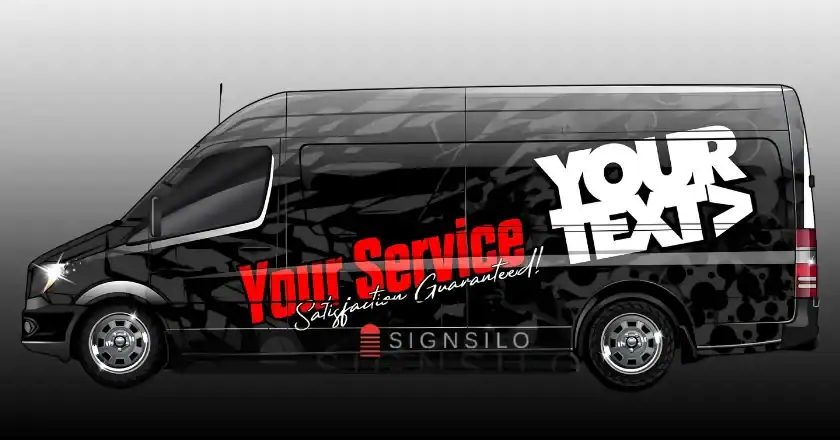
SignSilo has emerged as a pivotal resource in this space, providing the infrastructure necessary for wrap shops to execute these complex designs. Their library includes:
- High-Resolution Vector Graphics: Essential for maintaining crisp edges on gloss overlays where any pixelation would be magnified by the reflective finish.
- Precision Vehicle Templates: These templates provide 1:1 scale accuracy, allowing designers to map out exactly where a matte base will end and a gloss accent will begin.
- Wraps and Backgrounds: A curated collection of textures that can be digitally layered to simulate the hybrid look before a single inch of vinyl is printed.
To accommodate the varying needs of the industry, SignSilo’s subscription models reflect the professionalization of the craft. The "Professional" plan, priced at $149 for one year, offers 25 free downloads and a 50% discount on additional assets, catering to boutique shops. Meanwhile, the "Premium" plan at $349 per year allows for 1,000 downloads, providing the volume required for large-scale commercial printing operations. This tiered access ensures that even small businesses can compete with national brands in design quality.
Industry Reactions and Implementation Challenges
Industry veterans have noted that the shift to hybrid finishes requires a higher level of technical skill during the installation phase. "The challenge isn’t just the design," says one veteran installer based in Chicago. "It’s the registration. When you’re layering a gloss laminate over a matte base, there is zero room for error. If your alignment is off by even an eighth of an inch, the sun will catch that gap and the whole effect is ruined."

Despite these challenges, marketing directors for major service franchises are increasingly mandating hybrid designs. The consensus among brand managers is that the "tactile" look of hybrid wraps conveys a sense of premium quality and attention to detail that a standard gloss wrap cannot match. It suggests a company that is modern, tech-savvy, and willing to invest in superior presentation.
Broader Implications for Urban Aesthetics and Safety
Beyond branding, the rise of hybrid surfaces has implications for urban environments. As cities become more crowded and visual "noise" increases, there is a growing movement toward "quiet" branding. Hybrid wraps allow for sophisticated, monochromatic designs (such as matte charcoal with gloss black lettering) that are highly legible but less visually intrusive than traditional high-contrast wraps.
Furthermore, there is a safety component to consider. By reducing the total surface area of high-gloss vinyl on large trucks, fleet owners can help minimize the risk of momentary "sun blindness" for other drivers. This responsible approach to branding aligns with broader Corporate Social Responsibility (CSR) goals regarding road safety and environmental harmony.

Future Outlook: Sustainability and Beyond 2026
As we look past 2026, the next frontier for hybrid surfaces will likely involve sustainable materials. Manufacturers are currently developing PVC-free films that can achieve both matte and gloss finishes without the use of traditional plasticizers. The integration of "smart" materials—such as films that can change their reflectivity based on ambient light levels—is also in the prototype stage.
In conclusion, the emergence of hybrid surfaces represents a mature phase of the vehicle wrap industry. By balancing the aesthetic appeal of gloss with the functional stability of matte, designers are creating a new language of fleet branding that is more readable, more durable, and more effective. With the support of comprehensive design platforms like SignSilo, this trend is set to redefine the visual landscape of our roadways for the remainder of the decade. Companies that embrace this multi-textured approach today are positioning themselves as leaders in the high-stakes world of mobile marketing.