The whispered warnings were consistent: "Whatever you do, do not venture to the end of the road on the West side of Oahu." For veteran photographer and storyteller Paul Nicklen, accompanied by his partner Cristina Mittermeier, these admonishments served not as deterrents, but as potent invitations. Driven by a National Geographic assignment and an insatiable curiosity for the unvarnished narratives of place, they deliberately steered their rental car towards the very edge of the map, a region rumored to hold the last vestiges of authentic Hawaiian culture, shielded fiercely from the outside world. What they encountered, however, defied the anticipated apprehension, revealing instead a profound generosity, a warmth that transcended initial suspicion, and the forging of bonds that would blossom into a lifelong "ohana," or family.
Their journey began under the cloak of pre-dawn Oahu, a time when the island’s renowned surf breaks, like the infamous Pipeline on the North Shore, begin their formidable dance with the ocean’s raw power. While the rest of the island slowly awoke to the rhythms of coffee, music, and morning commutes, Nicklen and Mittermeier navigated the sparsely populated western shores. The "end of the road" was not merely a geographical marker but a metaphorical frontier, a place where the relentless march of tourism had not yet fully encroached, and where traditional ways of life persisted with a quiet resilience.
A Sanctuary of Tradition: Makaha’s Enduring Spirit
The destination was Makaha, a community on Oahu’s westernmost tip, known for its powerful surf and a deeply rooted connection to Hawaiian heritage. The narrative of Makaha is one often shrouded in a protective veil, a necessary defense mechanism for a community that has historically faced significant societal challenges. Addiction, violence, and homelessness have, at various points, cast long shadows over families, yet the enduring strength of the community lies in its unwavering connection to the land and the sea. This connection is not merely a lifestyle choice; it is an intrinsic part of their identity, passed down through generations.
Makaha is a living testament to the preservation of ancestral knowledge and practices. Here, surfboard shapers continue to honor the meticulous craft of their ancestors, eschewing the mass-produced uniformity favored by global markets. The art of wayfinding, once a critical skill for Polynesian navigation, is being revived, with practitioners learning to read the stars and ocean currents as their forebears did. Surfing, in this context, transcends sport; it is a spiritual discipline, a profound dialogue with the ocean that shapes their very existence. The community is largely comprised of Polynesian descendants and highly respected watermen and women whose lineage is inextricably linked to the coastal environment, a bond so profound that it defies simple articulation.

Encounters with Island Heroes
Nicklen and Mittermeier’s access to this guarded world was facilitated by Brian Keaulana, a figure of considerable influence and respect within Hawaii. A renowned surfer, stuntman, and scion of one of the islands’ most esteemed families, Keaulana served as their guide, bridging the gap between outsider and insider. Through his intercession, they were privileged to meet some of Makaha’s most inspiring individuals.
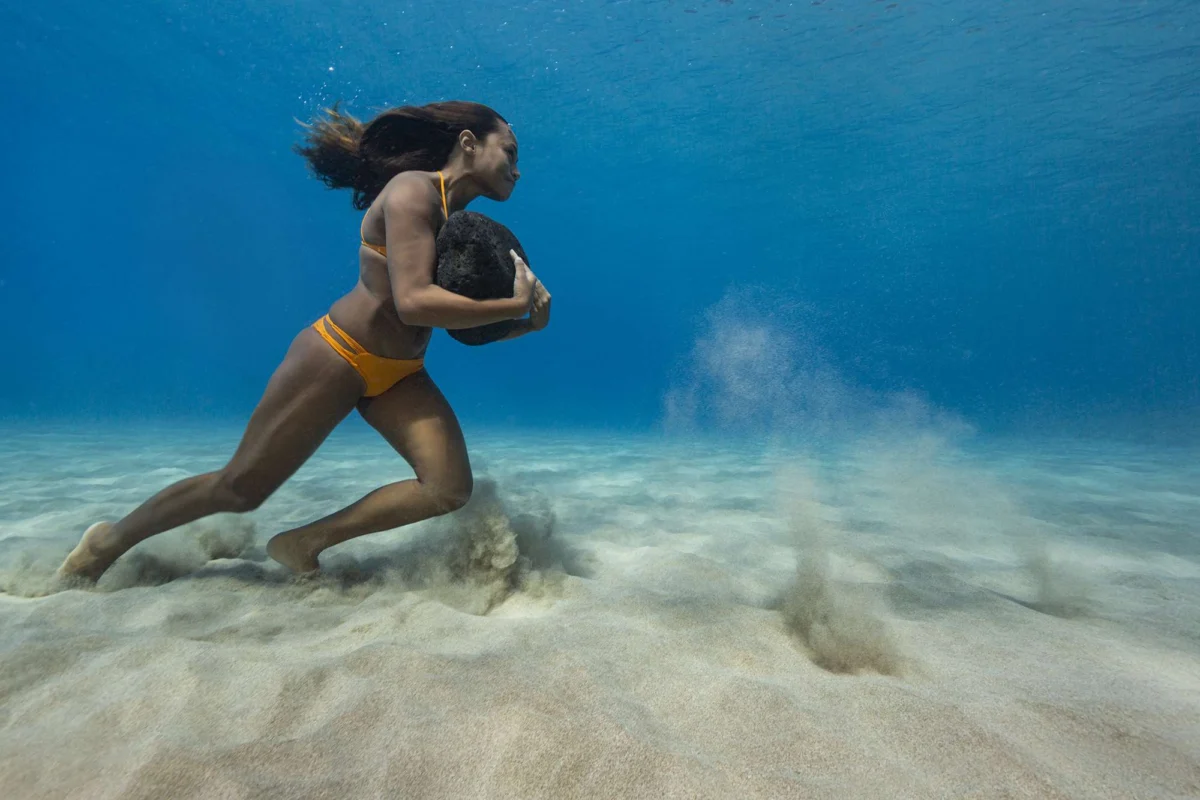
Among these was Ha’a Keaulana, Brian’s daughter and a surfing prodigy in her own right, granddaughter to the legendary Buffalo Keaulana. Ha’a’s rigorous training regimen offered a stark illustration of the dedication embedded within Makaha’s athletic culture. Her daily routine included carrying a fifty-pound boulder underwater for extended periods, with fellow surfers clinging to her for support, a testament to the immense physical and mental fortitude cultivated within the community.
Another pivotal encounter was with Sulu’ape Keone Nunes, a master traditional tattoo artist. Nunes shared the profound symbolism embedded within each intricate design, illuminating how Hawaiians historically wore their stories, their genealogy, and their cultural identity etched onto their skin. These sessions provided Nicklen and Mittermeier with a deeper understanding of the cultural significance of practices that outsiders might perceive merely as aesthetic choices. The more they learned about the community’s rich history and the deeply ingrained traditions, the more they comprehended the fierce protectiveness that outsiders had warned them about.
Historical Context: Resilience in the Face of Adversity
The historical context of Hawaiian culture provides crucial background to the guarded nature of communities like Makaha. Following the annexation of Hawaii by the United States in 1898, the indigenous population faced immense upheaval. Disease, societal disruption, and the erosion of traditional governance led to a dramatic decline in the native Hawaiian population, which had dwindled to an estimated 40,000 by that period. Over the subsequent century, the descendants of these survivors have worked tirelessly to preserve the fragile threads connecting them to their ancestors and their ancestral lands.
The Makaha community, in particular, has navigated a complex socio-economic landscape. While the preservation of cultural heritage remains paramount, the community has also grappled with modern-day challenges. The persistent issues of addiction, violence, and homelessness have impacted families, creating a resilient but often vulnerable social fabric. Despite these adversities, the deep-seated connection to the ocean and the land has served as a constant anchor, a source of strength and identity. This deep connection necessitates a degree of reservation towards those who may not fully grasp or respect the sacredness of their environment and their heritage.

A Decade Later: The Enduring Aloha Spirit
Nearly a decade after their initial visit, Nicklen and Mittermeier felt an irresistible pull to return to the "end of the road." The promise made to their newfound family in Makaha was finally being fulfilled. As they drove across the bridge, the familiar coastline unfurled before them, seemingly unchanged by time. Local surfers and beachgoers dotted the golden shores, their laughter and the distant strains of music painting a scene of vibrant community life.
Nicklen recalled a poignant observation he had made to Mittermeier during their first visit: the locals seemed to possess an innate radar, anticipating their presence and often reserving a parking spot. As if on cue, history repeated itself. Moki, a dear friend and a resident of Makaha, emerged from the roadside, his stroller strategically positioned to guard a space for their vehicle. This simple, yet profound, gesture underscored the enduring nature of the relationships forged years prior.
Upon their arrival, they were met with an outpouring of "Aloha," warm embraces, infectious laughter, and genuine smiles, all under the familiar watch of lifeguard station 47B. This reception, a decade after their initial intrusion into this guarded community, was a powerful testament to the authenticity of the bonds they had formed. It highlighted a generosity that persisted even through hardship, a willingness to ensure that visitors felt welcomed and accommodated, a core tenet of the Aloha spirit.
The Significance of the Aloha Spirit
The Aloha spirit, as embodied by the people of Makaha, is more than a mere greeting; it is a philosophy of life that emphasizes compassion, kindness, unity, and mutual respect. It is a deep-seated cultural value that promotes harmony and interconnectedness. In the context of Makaha, this spirit manifests in the community’s unwavering commitment to supporting one another and extending a genuine welcome to those who demonstrate respect for their way of life.
The act of saving a parking spot, seemingly a minor convenience, symbolizes a larger ethos of care and consideration. It speaks to a community that, despite its own challenges, prioritizes ensuring that others feel at home and are able to share in the beauty and tranquility of their environment. This inherent generosity, even in the face of historical adversity and ongoing struggles, is what makes the people of Makaha so remarkable. Their resilience is not solely defined by their ability to withstand hardship, but by their capacity to maintain their humanity and their spirit of welcome.

Broader Implications: Cultural Preservation and Sustainable Tourism
The experience in Makaha offers a valuable case study in the delicate balance between cultural preservation and the inevitable pressures of globalization and tourism. The community’s success in safeguarding its heritage while fostering genuine connections with select outsiders demonstrates the importance of respecting local customs and engaging with communities on their own terms.
For destinations seeking to promote responsible tourism, the story of Makaha emphasizes the need for an approach that prioritizes authentic engagement over superficial exploitation. Understanding the historical context and the deep-seated values of a community is paramount. The willingness of the Makaha residents to eventually open their hearts and homes to Nicklen and Mittermeier was a direct result of the respect and genuine interest they demonstrated.
The implications extend beyond tourism. In an increasingly homogenized world, the preservation of unique cultural identities like that of Makaha is vital. These communities serve as living archives of human history, offering invaluable insights into different ways of life and fostering a richer global tapestry. The continued efforts of individuals like the Keaulana family and artists like Sulu’ape Keone Nunes are crucial in ensuring that these traditions not only survive but thrive, providing inspiration and a sense of continuity for future generations. The story of the "end of the road" in Oahu is not just about a place; it is about the enduring power of human connection, the resilience of culture, and the profound beauty of the Aloha spirit, a spirit that, when met with genuine respect, can transform the guarded heart into an open embrace.