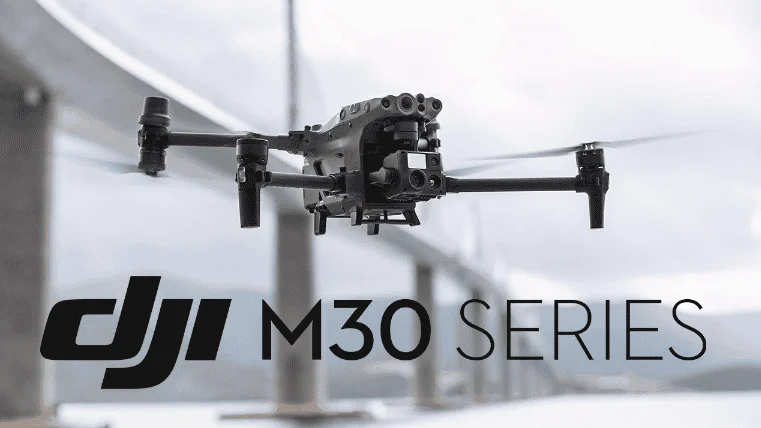
The DJI M30 series, which includes the M30 and the M30T (thermal model), was designed from the ground up to balance the portability of the smaller Mavic series with the rugged, multi-sensor capabilities of the larger Matrice 300 RTK. However, despite its advanced internal redundancies, regulatory bodies such as the Federal Aviation Administration (FAA) in the United States and the European Union Aviation Safety Agency (EASA) have historically restricted flight over human assemblies due to the potential kinetic energy of a falling aircraft. The addition of the PRS-M30 system by Aerial Vehicle Safety Solutions (AVSS) changes this calculus by providing a certified mechanical safety net that drastically reduces the impact force in the event of a total system failure.
Technical Specifications and the Role of the PRS-M30 System
The PRS-M30 is not merely an accessory but a sophisticated safety integration that meets the rigorous ASTM F3322-18 international standard for drone parachutes. This standard requires the system to undergo dozens of successful deployment tests across various failure scenarios, including power loss, motor failure, and erratic flight behavior. The PRS-M30 features an autonomous triggering system that can detect a flight anomaly in milliseconds. Once a failure is detected, the system simultaneously shuts down the drone’s motors to prevent the parachute lines from tangling and deploys the canopy via a spring-loaded or pyrotechnic mechanism.
By slowing the descent of the 3.7-kilogram aircraft to a fraction of its terminal velocity, the parachute ensures that any potential impact with the ground or a person falls below the injury thresholds established by aviation authorities. This technical synergy between DJI’s hardware and AVSS’s safety engineering is what allows the M30 to be classified for Category 2 or Category 3 operations in many jurisdictions, which specifically govern flight over people (OOP).
Advanced Obstacle Avoidance and Environmental Resilience
While the parachute system serves as the ultimate failsafe, the DJI M30 is equipped with a suite of primary safety features designed to prevent accidents from occurring in the first place. The aircraft features a comprehensive six-directional binocular vision system and dual-ToF (Time-of-Flight) sensors. These provide 360-degree obstacle sensing and avoidance, allowing the drone to navigate through complex urban environments, such as narrow alleys or construction sites, without colliding with structures or overhead wires.
Furthermore, the M30 is built to withstand the unpredictable nature of outdoor operations. With an IP55 ingress protection rating, the drone is resistant to dust and low-pressure water jets, meaning it can operate in heavy rain or snowy conditions. Its operating temperature range of -20°C to 50°C ensures that it remains functional in both arctic and desert environments. For public safety agencies, this "all-weather" capability is crucial, as emergencies rarely occur in perfect flying conditions. The combination of environmental resilience and the AVSS parachute system makes the M30 a reliable tool for missions where failure is not an option.
The Multi-Sensor Payload: A Force Multiplier for Public Safety
The ability to fly over crowds is only as valuable as the data the drone can collect while in the air. The DJI M30 series integrates multiple high-performance sensors into a single, stabilized gimbal. The standard M30 includes a 48-megapixel 1/2-inch CMOS zoom camera capable of 5x to 16x optical zoom and up to 200x digital zoom, alongside a 12-megapixel wide-angle camera. The M30T adds a 640×512 resolution radiometric thermal imaging sensor, which is indispensable for search and rescue (SAR) missions and firefighting.
In a scenario involving a large-scale public event, such as a marathon or a music festival, law enforcement can utilize the M30’s zoom capabilities to monitor crowd density and identify potential security threats from a safe altitude. The thermal sensor allows for the detection of "hot spots" in structural fires or the location of missing persons in low-visibility conditions. Because the drone is now authorized to fly over the spectators or residents in these areas, it can maintain a direct line of sight to the objective, rather than being forced to orbit the perimeter of the crowd, which often results in obstructed views.
Chronology of Regulatory Evolution and Industry Adoption
The path to achieving flight-over-crowd status has been a multi-year journey involving manufacturers, third-party safety developers, and regulators.
- 2021: The FAA released its final rule on Remote ID and Operations Over People, establishing clear categories for drone flights based on weight and kinetic energy.
- 2022: DJI launched the M30 series, positioning it as the premier "mid-sized" industrial drone. Almost immediately, AVSS began the engineering process to adapt its parachute technology to this specific airframe.
- 2023: Rigorous testing of the PRS-M30 was conducted to satisfy ASTM F3322-18 standards, involving simulated "dead-stick" drops and motor-kill scenarios.
- 2024-2025: With the certification complete, a wave of public safety agencies began integrating the M30/AVSS package into their standard operating procedures (SOPs).
This timeline reflects a shift in the industry from a "permission-based" model to a "compliance-based" model. Instead of applying for one-time waivers to fly over a specific crowd, operators can now utilize a pre-certified "Means of Compliance" (MOC), significantly reducing the administrative burden on both the operator and the regulator.
Strategic Impact on Infrastructure and Emergency Services
Beyond public safety, the DJI M30’s ability to fly over crowds has profound implications for infrastructure inspection. In major metropolitan areas, inspecting bridges, power lines, or skyscrapers often requires closing down streets or sidewalks to ensure that no one is underneath the drone’s flight path. This leads to massive logistical headaches and increased costs. With the PRS-M30 system, these inspections can be conducted while the city continues to move below. The drone can fly over a busy highway or a crowded plaza to inspect a facade, knowing that the parachute system provides a documented layer of safety for the public.
In the realm of emergency services, the "Drone as a First Responder" (DFR) program is perhaps the biggest beneficiary. DFR programs involve stationing drones on rooftops in urban centers; when a 911 call is received, the drone is dispatched immediately to provide live video to dispatchers before ground units arrive. For a DFR program to be effective, the drone must take the most direct route to the scene, which inevitably involves flying over people and vehicles. The M30, equipped with the AVSS system, meets the safety criteria necessary for these autonomous or semi-autonomous urban transit flights.
Expert Analysis: The Future of Urban Air Mobility
Industry analysts suggest that the success of the DJI M30 and AVSS integration serves as a blueprint for the future of Urban Air Mobility (UAM). As we move toward a world where drones are used for package delivery and eventually passenger transport, the "failsafe" mentality becomes the standard. The M30 demonstrates that industrial-grade performance does not have to be sacrificed for safety.
However, some experts caution that technology is only one half of the equation. "While the parachute system provides the technical means to fly over people, the responsibility still lies with the pilot-in-command to maintain situational awareness," noted a senior consultant in drone regulatory affairs. "The parachute is the last line of defense, not a reason to fly recklessly. The integration of this hardware must be accompanied by robust training and risk management protocols."
Conclusion: A New Standard for Industrial UAV Operations
The integration of the AVSS PRS-M30 parachute system with the DJI M30 is more than a simple hardware upgrade; it is a fundamental expansion of what is possible in the commercial drone sector. By addressing the primary concern of aviation authorities—public safety—this technology unlocks the full potential of the M30’s advanced sensor suite and rugged design.
As cities become smarter and more reliant on real-time aerial data, the presence of drones in urban skies will become increasingly common. The DJI M30, backed by its 360-degree sensors, IP55 rating, and now a certified parachute recovery system, stands at the forefront of this transition. It offers a solution that respects the complexity of urban life while providing the critical tools needed for security, maintenance, and lifesaving missions. For the drone industry, the message is clear: safety and utility are no longer mutually exclusive, and the era of unrestricted, safe urban flight has officially arrived.