The intrinsic mystery surrounding owls has long captivated human imagination, drawing us closer to these enigmatic birds of prey. Their silent flight, piercing gaze, and nocturnal habits imbue them with an almost mythical aura, fostering a deep desire to observe and understand them. Owl photography serves as a powerful medium to unveil these captivating characteristics, showcasing their inherent beauty, grace, and remarkable adaptations, thereby deepening our collective fascination. By combining a profound understanding of owl habitats and behaviors with ethical photographic practices, enthusiasts can significantly enhance their chances of encountering these magnificent creatures and immortalizing their essence in enchanting images.
The Enigmatic Allure of Owls and Their Ecological Significance
Owls, belonging to the order Strigiformes, are more than just intriguing subjects for photographers; they are vital components of ecosystems worldwide. Their global distribution spans diverse environments, from dense forests and vast plains to arid deserts, rugged canyons, frozen tundra, and even bustling urban landscapes. This widespread presence underscores their remarkable adaptability and ecological importance as apex predators. Unlike many avian species with seasonal migrations or restricted ranges, certain owl species exhibit year-round residency in various locations, offering photographers consistent opportunities across all seasons. However, their nocturnal or crepuscular nature, coupled with expert camouflage, often renders them elusive, elevating the challenge and reward of successful photography.
The fascination with owls is deeply rooted in human culture, appearing in folklore, mythology, and art across centuries as symbols of wisdom, mystery, and foresight. This cultural reverence translates into a modern-day eagerness to connect with them in the wild. According to a 2022 survey by the National Audubon Society, interest in birdwatching and bird photography has seen a 15% increase over the past five years, with raptors, particularly owls, ranking among the most sought-after subjects. This growing enthusiasm highlights the critical need for educational resources that promote responsible engagement with wildlife.

The Imperative of Ethical Owl Photography for Conservation
As the popularity of wildlife photography surges, so does the responsibility to practice it ethically. The delicate balance between capturing stunning imagery and ensuring the well-being of the subject is paramount, especially for sensitive species like owls. "Our primary goal as wildlife photographers must be the welfare of the animal," states Dr. Evelyn Reed, a leading ornithologist and conservation advocate at the Wildlife Conservation Society. "Disturbing an owl, especially during its crucial resting or breeding periods, can have detrimental long-term effects, from abandonment of nests to increased vulnerability to predators."
Conservation organizations, such as the Cornell Lab of Ornithology and the World Wildlife Fund, regularly highlight the threats faced by owl populations, including habitat loss, pesticide use, and climate change. Many owl species, such as the Snowy Owl (classified as Vulnerable by the IUCN) and the Northern Spotted Owl (Endangered in parts of its range), are listed as species of concern or endangered in various regions, making every interaction with them a matter of careful consideration. Ethical guidelines for wildlife photography strongly advise against actions that could stress or alter an owl’s natural behavior, such as using flash photography excessively, playing owl calls to lure them, or approaching too closely. The true value of an owl photograph, beyond its aesthetic appeal, lies in its ability to inspire appreciation and support for conservation, a message undermined if the image was obtained through unethical means.

Strategic Locating: Unveiling the Hidden World of Owls
The journey to photographing owls begins long before the camera is even lifted – it starts with diligent research and an understanding of local ecology. The first crucial step is to identify which owl species inhabit your specific geographical area. Numerous free resources are readily available online through ornithological societies, university extension programs, and local birding groups, as well as in public libraries. These resources provide invaluable information on local owl diversity, their relative abundance, and specific habitat preferences. For instance, while Great Horned Owls are ubiquitous across North and Central America, thriving in a variety of environments, species like the Spotted Owl are highly dependent on old-growth forests, making their distribution much more restricted.
Understanding an owl’s abundance in an area doesn’t automatically guarantee ease of sighting. Other factors critically influence detectability. Diurnal activity patterns, seasonal migratory habits, the effectiveness of their natural camouflage, and breeding behaviors all play significant roles. For example, the Tawny Owl, widespread across Europe, remains notoriously difficult to locate due to its secretive nature and exceptional ability to blend into its arboreal surroundings. Equipping oneself with this species-specific knowledge dramatically improves the likelihood of successful encounters.

Deciphering Owl Behavior for Optimal Encounters
While most owl species are predominantly nocturnal, many exhibit heightened activity during crepuscular hours – dawn and dusk. This transition period presents prime opportunities for observation and photography. A highly effective method for locating owls is to listen for their distinctive calls or hoots as the sun sets or shortly thereafter. Consistent listening excursions can attune your ears to their presence, revealing nearby roosts or hunting grounds.

Visual searching requires patience and a trained eye. Scan tree canopies for any unusual shapes or silhouettes that deviate from the natural contours of branches and leaves. Over time, your visual acuity will sharpen, allowing you to instinctively spot camouflaged owls. In low-light conditions, look for silhouettes against the fading sky. Owls typically roost at least halfway up a tree, often on larger branches close to the main trunk, seeking cover. As evening progresses, they may move towards the tree’s periphery in preparation for hunting. Always consult species-specific behaviors, as these patterns can vary.
Once an owl’s general location is identified, especially if its calls are consistently heard in an area, return visits during the day should focus on searching the same vicinity. Owls, particularly when food sources are abundant, may utilize the same roosting tree or even the same branch for days or weeks. Look for indirect signs of their presence:

- Whitewash: Droppings on branches or the ground beneath potential roosts are a clear indicator. Long-eared Owls, known for winter communal roosts, often leave significant whitewash.
- Owl Pellets: These are regurgitated, undigested remains of their prey (bones, fur, feathers). A scattering of pellets beneath a tree strongly suggests an active roost.
It is crucial to approach these daytime roosts with extreme caution. Owls are resting and conserving energy, making them particularly vulnerable to disturbance. Maintain a respectful distance of at least 75 to 100 feet, using a long telephoto lens to capture images rather than approaching directly underneath. Any sign of nervous movement from the owl – head turning, ruffled feathers, or changes in posture – is a clear indication that you are too close and must retreat. Forcing an owl to abandon its roost expends precious energy and can displace it from a safe haven, negatively impacting both the bird and future photographic opportunities.
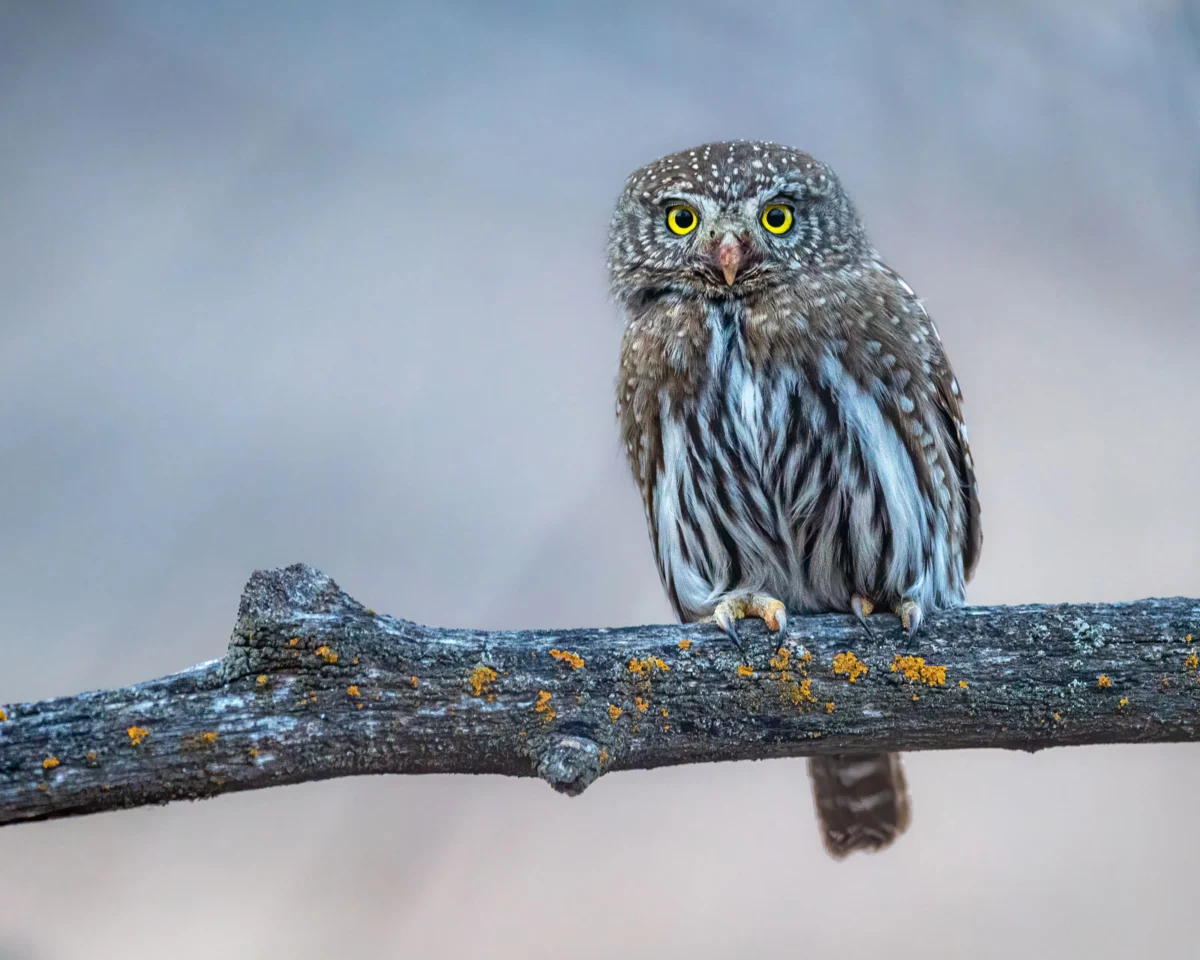
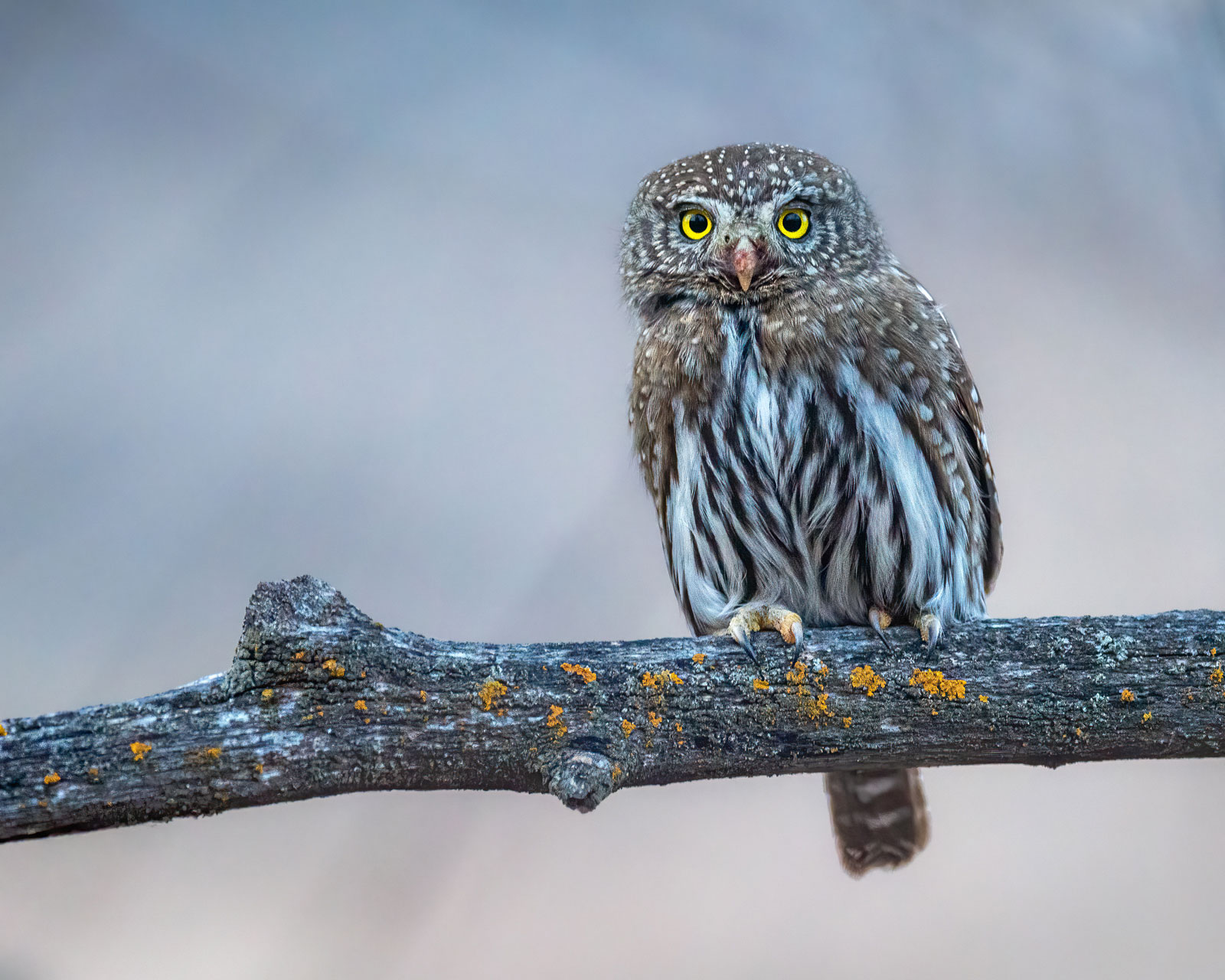
Intriguingly, some owl species are primarily diurnal, actively hunting during daylight hours. Examples include the Burrowing Owl, Northern Hawk Owl, Little Owl, and many pygmy owl species. These owls often rely heavily on eyesight for hunting and may be observed openly perched, surveying the landscape for prey. Other species, employing a combination of sight and hearing, may be active during the day but concentrate their hunting efforts around dawn and dusk. Knowledge of these species-specific hunting behaviors allows photographers to optimize their time and energy, increasing the chances of capturing dynamic images of natural behaviors.

Persistence is key in owl photography. It is not uncommon for a full year of dedicated searching to pass before a photographer secures truly compelling images. However, a deep understanding of owl behavior and ecology significantly shortens this learning curve. For those who continue to struggle, engaging a local wildlife guide specializing in photography can be an efficient solution. These guides often possess intimate knowledge of recent owl sightings and understand the nuanced needs of wildlife photographers, providing invaluable assistance and ensuring ethical practices are maintained. Furthermore, understanding the migratory patterns of target owl species, which are often driven by food availability, snow depth, and population dynamics, can help photographers plan seasonal expeditions for better success.
Essential Equipment for Capturing Nocturnal Predators
Successful owl photography, particularly for both static perching images and challenging birds-in-flight shots, necessitates specialized equipment that maximizes performance in often demanding conditions. Given the crucial ethical imperative to maintain a significant distance from owls (typically 75-100 feet or more), a long telephoto lens is indispensable. Lenses ranging from 300mm to 600mm, or even longer when paired with teleconverters, are commonly employed. This focal length allows photographers to fill the frame with the owl, ensuring it remains the primary subject without causing undue stress. A significant advantage of maintaining distance with a long lens is the ability to achieve a more eye-level perspective, even when the owl is perched high. This creates a far more engaging and natural image than shooting upward from directly below.

Owl photography frequently occurs in low-light conditions, either at dawn, dusk, or even after dark. Consequently, lenses with wide maximum apertures (e.g., f/2.8, f/4, or f/5.6) are highly advantageous. A wider aperture allows more light to reach the camera’s sensor, enabling faster shutter speeds – critical for freezing motion, especially for flight shots – and keeping ISO levels manageable to minimize digital noise. While f/2.8 lenses offer superior light-gathering capabilities, their cost can be prohibitive. Excellent results can still be achieved with f/4 or f/5.6 lenses, often requiring higher ISO settings or a more patient approach for static subjects. When photographing owls, it is generally recommended to start with the widest possible aperture to maximize light intake. Once sufficient light is available, the aperture can be stopped down slightly to increase the depth of field if desired, ensuring more of the owl or its immediate surroundings are in sharp focus.
While not always strictly necessary, a sturdy tripod significantly enhances owl photography, particularly for perched subjects. Owls, when not actively hunting, tend to remain relatively still. A tripod provides stable support for heavy camera and lens combinations over extended periods, reducing fatigue and minimizing camera shake, especially when using slower shutter speeds in low light. This stability also allows the photographer to keep the lens constantly aimed and ready, ensuring no unique moment, such as a head turn or a stretch, is missed. As an alternative, a monopod offers increased mobility while still providing substantial support. Many seasoned wildlife photographers adopt a hybrid approach: using a tripod for static portraits and detaching the camera for handheld shooting when anticipating flight, allowing for greater flexibility and responsiveness.

For low-light scenarios, a remote shutter release device (either wired or wireless) is a valuable accessory. By eliminating direct contact with the camera, a remote release completely negates any camera shake induced by pressing the shutter button, ensuring maximum sharpness for images taken at slower shutter speeds on a tripod. This can be the difference between a tack-sharp image and one marred by subtle blur.
Technological Advancements Enhancing Low-Light Capabilities

The continuous advancement in camera technology further aids owl photographers. Modern mirrorless cameras, for instance, boast exceptional low-light performance, with ISO capabilities reaching levels previously unimaginable, allowing for clear images even in near darkness. Their advanced in-body image stabilization systems (IBIS) and sophisticated animal-eye autofocus capabilities make it easier to track and sharply capture owls in challenging conditions. Sensor technology improvements, such as back-illuminated sensors, have also significantly boosted light gathering efficiency. These technological improvements, coupled with appropriate lens choices, empower photographers to push creative boundaries while adhering to ethical distances.
Beyond the Perch: Unique Photographic Opportunities
Owls’ distinct physiology and behaviors, often surprising to the uninitiated, offer extraordinary opportunities for compelling and unique photographs that set them apart from most other bird species.

One of the most striking features is their facial disc, a parabolic arrangement of stiff feathers around their eyes that acts like a satellite dish, channeling sound to their highly sensitive ears. This prominent facial structure creates a strong central point of interest in portraits, framing their intense, often forward-facing eyes. For behavioral shots, the facial disc and eyes serve as a powerful secondary focal point. Given that an owl’s eyes are typically in the same focal plane as the facial disc, achieving sharp focus on the entire face is relatively straightforward. Photographers should strategically compose their shots to highlight this feature, allowing it to balance other elements within the frame.
Another often-surprising characteristic is the length of many owls’ legs. Hidden beneath their dense plumage, species like Short-eared Owls possess remarkably long legs, far exceeding what one might expect. When these legs are extended during flight, particularly during a dive or while clutching prey, it presents a visually comical yet fascinating moment. Capturing this brief exposure of legs and powerful talons adds significant interest and narrative depth to images, showcasing their predatory adaptations. Photographers observing hunting owls should anticipate these moments, using burst mode to capture a rapid sequence of photos.

Finally, an owl’s wingspan, often disproportionately wide relative to its body, is a testament to its silent, powerful flight. Flight photography should aim to capture the full breadth of these magnificent