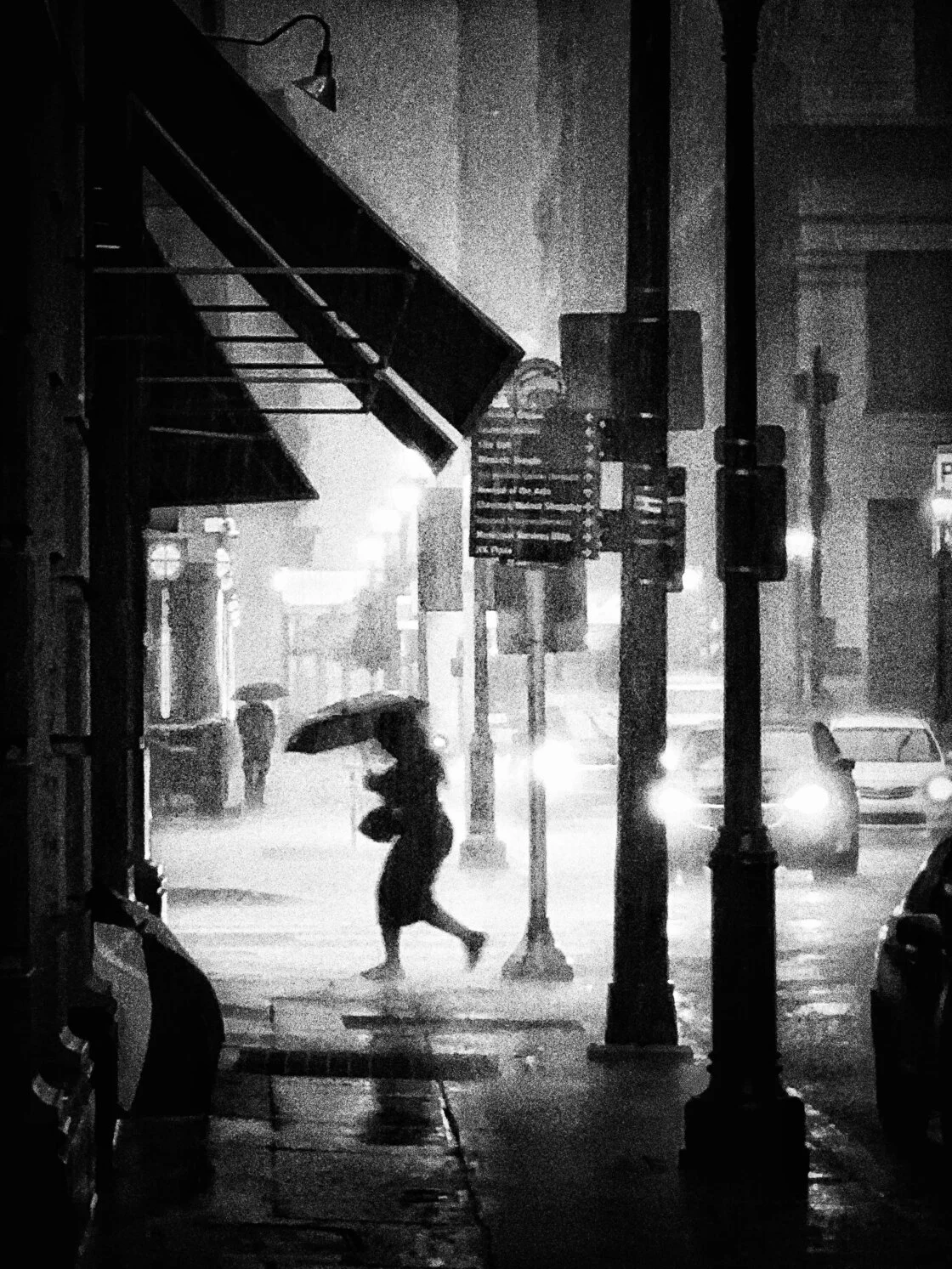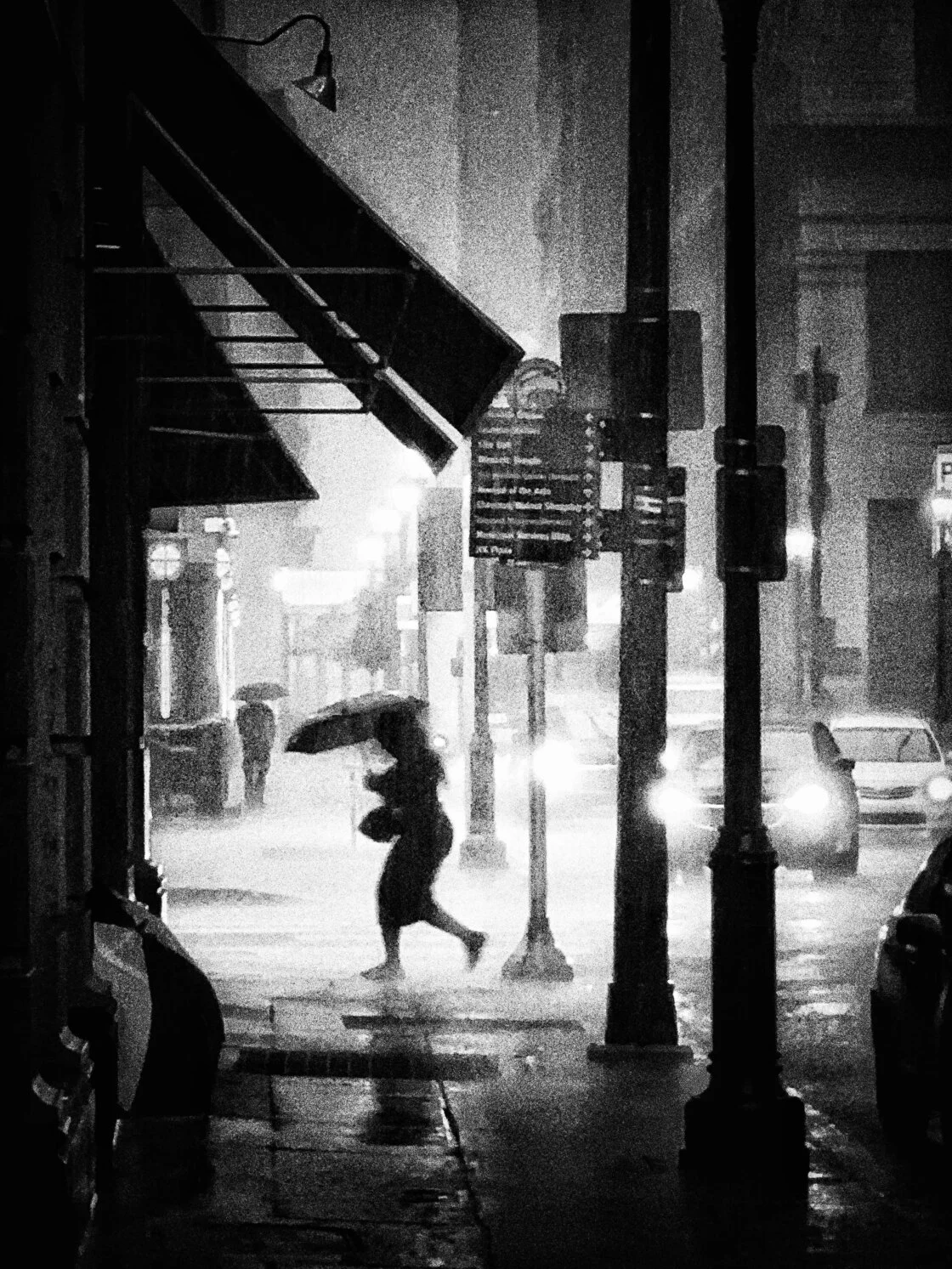
The emergence of high-performance mobile optics has fundamentally altered the landscape of contemporary street photography, transforming the "decisive moment" from a pursuit reserved for those with heavy DSLR kits into a democratic art form accessible to anyone with a smartphone. While traditional photography logic once dictated that inclement weather was a signal to cease operations and protect sensitive equipment, modern mobile technology and evolving artistic sensibilities have reversed this trend. Professional street photographers, such as Philadelphia-based fine art specialist Andrew Gimblet, now argue that rain, snow, and fog represent some of the most fertile environments for capturing compelling urban narratives. By leveraging the specific hardware advantages of the iPhone—such as its high IP water-resistance ratings and sophisticated computational photography engines—artists are redefining the visual language of the city during "bad" weather.
The Strategic Advantage of Inclement Weather in Urban Environments
Street photography, at its core, is the study of human interaction within public spaces. Under clear skies, these interactions are often routine and visually predictable. However, the onset of adverse weather conditions introduces a layer of atmospheric tension and physical drama that elevates a standard snapshot into a cinematic frame. The presence of precipitation changes the way light interacts with the urban surface; asphalt becomes a mirror, air becomes a textured medium, and the movement of people becomes more purposeful and expressive as they navigate the elements.
Market data from platforms like Flickr and Instagram indicate that "moody" or "atmospheric" photography consistently sees higher engagement rates than high-contrast, sunny-day imagery. This shift in aesthetic preference has encouraged a new generation of mobile photographers to view a storm front not as a hindrance, but as a specialized studio lighting setup provided by nature.
1. Leveraging Precipitation for Narrative Depth
The primary challenge and opportunity presented by rain is the introduction of new geometric shapes into the urban environment, most notably the umbrella. From a compositional standpoint, umbrellas serve as mobile focal points that provide both color and structure to a frame. A brightly colored umbrella against a monochromatic, rain-slicked street creates an immediate visual anchor, guiding the viewer’s eye through the composition.
Journalistic analysis of street photography trends suggests that the most effective "rain shots" are those that capture the subject’s struggle or adaptation to the environment. Photographers are encouraged to seek out covered vantage points—such as bus stops, awnings, and architectural archways—to maintain their own dry workspace while documenting the movement of the city. This allows for the use of the iPhone’s advanced sensor without the interference of water droplets on the lens, ensuring clarity while capturing the surrounding chaos.
2. The Abstract Potential of Glass Intermediaries
One of the more sophisticated techniques in modern mobile photography involves shooting through glass barriers. Whether sitting in a café or riding public transit, the presence of raindrops on a windowpane creates a multi-layered composition that blends the foreground (the droplets) with the background (the street scene).
Technically, this requires the photographer to override the iPhone’s autofocus. By tapping the screen to lock focus on the water droplets, the background naturally falls into a soft blur, or bokeh. This creates an abstract quality that emphasizes mood over literal representation. In an era where hyper-realistic imagery is the norm, these impressionistic "window shots" offer a refreshing departure that prioritizes the emotional resonance of a rainy day.
3. Puddle Reflections and the Physics of Low-Angle Shooting
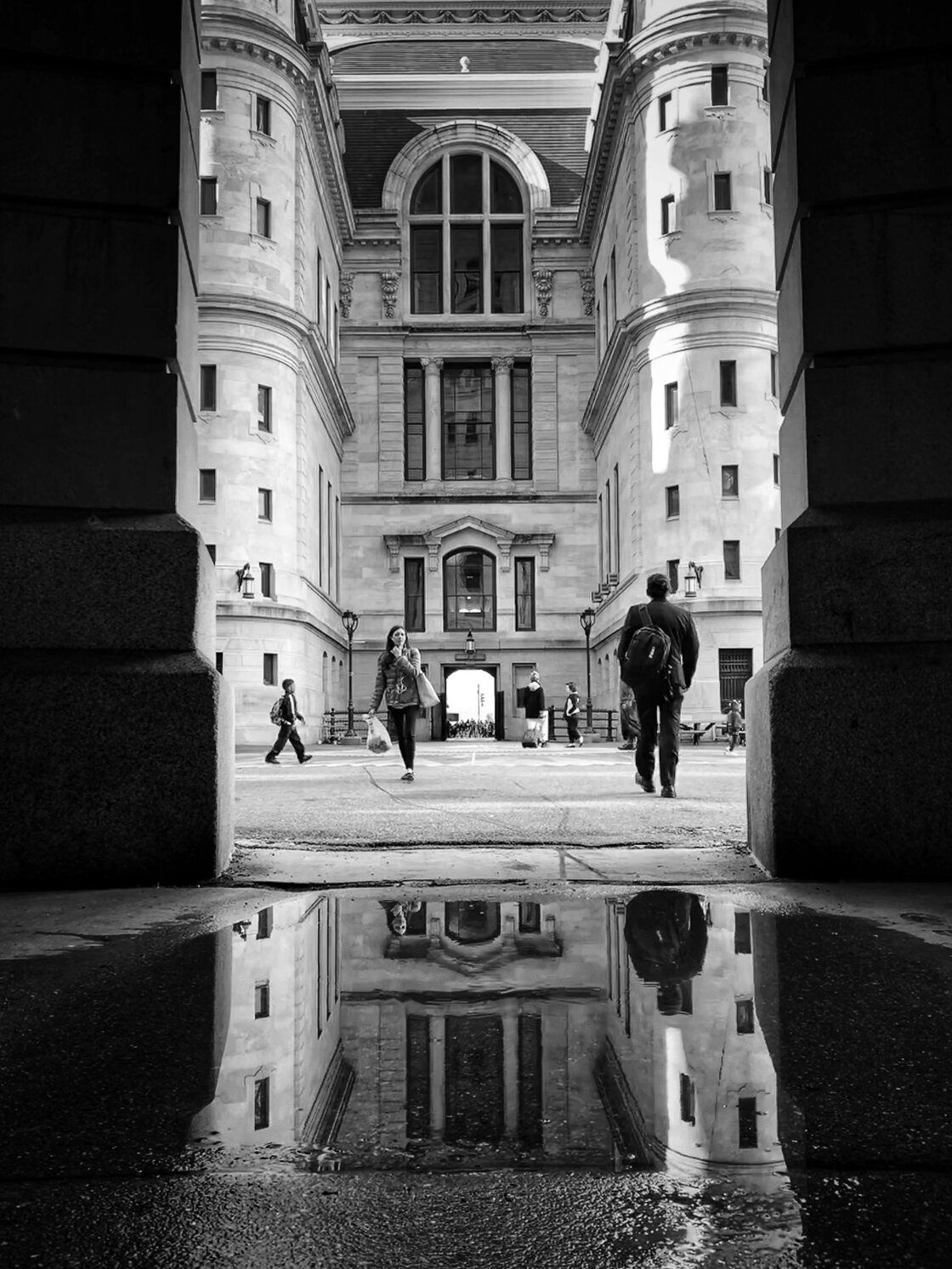
When the rain subsides, the photographic opportunity shifts from the sky to the ground. Puddles serve as natural mirrors, offering a "world within a world" that can be exploited for symmetrical compositions. To maximize this effect, the physical positioning of the camera is paramount.
The iPhone’s design, with its lens located near the corner of the device, allows photographers to capture reflections that would be impossible with a traditional camera. By inverting the phone—placing the lens as close to the water’s surface as possible—the photographer can capture a near-perfect 50/50 split between the real world and its reflected counterpart. This technique often requires the photographer to adopt a low physical profile, crouching or even kneeling, to achieve the necessary angle for a compelling reflection of nearby architecture or passing pedestrians.
4. Chronology of the Shot: Utilizing Burst Mode for Precision
In street photography, timing is the difference between a masterpiece and a discarded file. This is especially true when working with reflections. The "perfect" position for a pedestrian—where their stride is wide and their reflection is undistorted—occurs in a fraction of a second.
Mobile photographers have adopted "Burst Mode" as a standard operational procedure for these scenarios. By dragging the shutter button (on newer models) or holding it down (on older versions), the iPhone captures a rapid sequence of images. This chronological approach allows the artist to review a series of micro-moments after the fact, selecting the specific frame where the subject’s foot hits the pavement or where their silhouette aligns perfectly with a reflected building. This high-speed capture is a hallmark of the digital age, providing a level of precision that 20th-century street photographers could only achieve through immense luck or decades of practice.
5. Transforming the Cityscape Through Snowfall
Snow represents the most dramatic environmental transformation available to a street photographer. It acts as a natural "noise reducer," covering the visual clutter of trash, uneven pavement, and distracting street markings with a uniform white sheet. This simplifies the frame, allowing the photographer to focus on pure form and human movement.
Experienced practitioners often return to "fishing holes"—specific locations with strong architectural lines, such as bridges or crosswalks—and wait for subjects to enter the frame. The storytelling element in snow photography is often found in body language: the hunch of a shoulder against the wind, the heavy tread of a winter boot, or the vibrant contrast of a winter coat against a blizzard.
6. Technical Analysis: Managing Exposure in High-Key Scenes
Snow photography presents a unique technical hurdle for the iPhone’s internal light meter. Because the camera is calibrated to "18% grey," it often interprets a bright, white snowy scene as being overexposed. Left to its own devices, the camera will automatically darken the image, resulting in "grey snow" that looks muddy and underexposed.
To counteract this, photographers must manually intervene using exposure compensation. By tapping the subject and swiping up on the sun icon, the user can force the camera to overexpose the scene slightly, ensuring the snow remains a crisp, brilliant white. This manual control is essential for maintaining the "high-key" aesthetic that makes winter photography so appealing. Conversely, reducing exposure can create a dark, "low-key" mood, highlighting the silhouettes of snowflakes against dark buildings.
7. Fog and the Aesthetic of Mystery
Fog provides a unique set of optical conditions characterized by "atmospheric perspective," where objects lose contrast and detail as they recede into the distance. This creates a natural sense of depth and mystery that is highly prized in fine art photography.
In foggy conditions, the goal is often to find a lone figure or a strong leading line, such as a bridge or a row of streetlamps, that gradually disappears into the mist. This creates a dream-like quality that contrasts sharply with the grit usually associated with urban street photography. The key is to ensure that there is a clear subject in the foreground to provide a point of reference; without a foreground anchor, foggy photos can often feel flat and disorganized.
8. The Monochromatic Solution for Low-Light Environments
A common side effect of "bad" weather is a lack of vibrant color. Rain, snow, and fog often result in a palette of muted greys and browns that can feel uninspiring in a color photograph. The professional response to these conditions is often a transition to black and white.
Converting a photo to black and white strips away the distraction of "muddy" colors and forces the viewer to focus on tone, texture, and contrast. In the context of street photography, this edit enhances the emotional weight of the image. High-contrast black and white photography—where bright highlights meet deep, dark shadows—is particularly effective in weather-heavy scenes, as it emphasizes the glint of rain on a sidewalk or the stark silhouette of a man in a trench coat against a wall of fog.
9. The Post-Processing Ecosystem: From Raw Capture to Fine Art
The final stage of the modern mobile photography workflow takes place in the digital darkroom. While the iPhone’s native "Photos" app offers robust basic editing tools, professional results often require third-party applications like Adobe Lightroom Mobile, Snapseed, or specialized monochromatic tools like Blackie.
These apps allow for granular control over grain, contrast, and selective exposure. For instance, a photographer might use a "graduated filter" to darken a sky that was blown out by fog, or use "healing tools" to remove a distracting piece of litter that the snow didn’t quite cover. The goal of this stage is not to falsify the scene, but to refine the raw data captured by the sensor into a coherent artistic vision.
Broader Impact and the Evolution of the "Flâneur"
The democratization of high-quality photography tools has revived the concept of the "flâneur"—the urban explorer who wanders the city to document its soul. However, the modern flâneur is no longer limited by the weather. The technological resilience of the iPhone, combined with the techniques outlined above, has created a 24/7, all-weather documentation of the human experience.
This shift has significant implications for the world of fine art and journalism. As more individuals capture high-quality imagery of significant weather events and daily life, our collective visual record of the 21st-century city becomes more nuanced and complete. The "bad weather" street photo is more than just a creative exercise; it is a testament to the intersection of human persistence and technological advancement, proving that the most beautiful moments are often found when the conditions are at their worst.