Each year, as the mists recede from the glacial peaks that crown the rugged southwestern Alaskan coastline and carve through its riverine valleys, a primal drama unfolds. This is the season of the annual salmon run, a natural phenomenon of unparalleled spectacle and ecological significance, drawing the magnificent brown bears from their secluded habitats to witness and partake in one of nature’s most vital migrations. Millions of salmon, driven by an ancient imperative, battle their way upstream to their ancestral spawning grounds, a journey that sustains an entire ecosystem and provides a critical lifeline for the region’s apex predators.
The Annual Salmon Run: A Five-Month Feast for Alaska’s Brown Bears
The salmon run, a keystone event in the Alaskan wilderness, spans an impressive five months, commencing in late May and extending through the middle of October. This extended period is not arbitrary; it corresponds with the optimal time for brown bears to replenish their energy reserves and accumulate the essential fat and nutritional stores required to endure the harsh, prolonged winter months. During this period, bears enter a state known as hyperphagia, a biological imperative that compels them to consume vast quantities of food. Their daily caloric intake can surge into the hundreds of thousands, transforming them into formidable eating machines.
The salmon species arrive in a staggered succession, each contributing to the continuous bounty. The sockeye salmon typically initiate the run, followed by the pink salmon, then the coho, and finally, the chinook, the largest and arguably most prized by the bears. This sequential arrival ensures a consistent food source, allowing different bear populations to capitalize on the availability of these protein-rich fish.
Bear Dynamics: A Hierarchy of Hunger in the Rivers
The feeding grounds along the rivers become a complex social arena for the bears. Each individual, shaped by experience and instinct, possesses preferred locations and distinct feeding strategies. The dominant players in this high-stakes environment are the alpha males. These formidable creatures, some reaching weights of up to 1,500 pounds (approximately 680 kilograms), are typically the first to secure the most advantageous fishing spots. Their sheer size and immense strength enable them to stand their ground, braced against the powerful river currents, patiently awaiting the opportune moment to snatch unsuspecting salmon.
In contrast, younger and subordinate bears, including females and younger males, often exhibit a more agile and strategic approach. They are keenly aware of the dominance hierarchy and tend to avoid direct confrontation with the larger, more aggressive males. These subordinate bears might seek out less contested areas or employ quicker, more opportunistic tactics, often retreating to the cover of tall grasses to ambush fish or to evade potential conflict.
The Maternal Imperative: Mothers and Cubs Navigating Perilous Waters
Perhaps the most poignant and vulnerable participants in the salmon run are the mother bears and their cubs. For these maternal figures, the season is a relentless cycle of vigilance, protection, and sustenance. Their primary responsibility is not only to feed themselves but also to ensure the survival of their offspring, who are entirely dependent on their care.
Young cubs, often no more than five to six months old, are particularly defenseless. They rely on their mothers for nourishment, protection, and guidance. The riverbanks, teeming with potential food, also present significant dangers. Mother bears must constantly assess their surroundings, remaining hyper-aware of potential threats while simultaneously teaching their cubs essential survival skills, including how to forage and identify safe feeding areas.
The Shadow of Infanticide: A Stark Reality of the Wild
The Alaskan wilderness, while breathtakingly beautiful, is also a realm where nature’s harsh realities are laid bare. One of the most significant and unsettling challenges faced by mother bears is the specter of infanticide. This grim phenomenon, where male bears—sometimes even their own offspring—kill cubs, is a stark reminder of the brutal competition for resources and reproductive success.
While the precise motivations behind infanticide remain a subject of ongoing scientific inquiry and observation, several theories have emerged. These range from the reduction of competition for scarce food resources, thereby freeing up sustenance for the male’s own survival and potential future reproduction, to the concept of sexual selection, where eliminating offspring from rival males might bring females into estrus sooner. Another disturbing possibility is that cubs themselves can serve as a temporary, albeit grim, food source for desperate males.
Regardless of the underlying reasons, the impact on mother bears is profound. Their primary directive becomes the unwavering protection of their young from these predatory males, especially the dominant alpha males. This constant state of alert adds an immense layer of stress and danger to their already arduous task of survival and reproduction.
A Moment of Serenity and Imminent Danger: An Encounter on the Riverbank
On a tranquil evening in late August, at the zenith of the salmon run, a profound stillness settled over a pristine stretch of riverbank. The air was filled with the distant, rhythmic splashing of salmon fighting their way upstream, a constant reminder of the ongoing natural spectacle. A handful of larger bears were visible further upstream, engrossed in their pursuit of an easy meal.

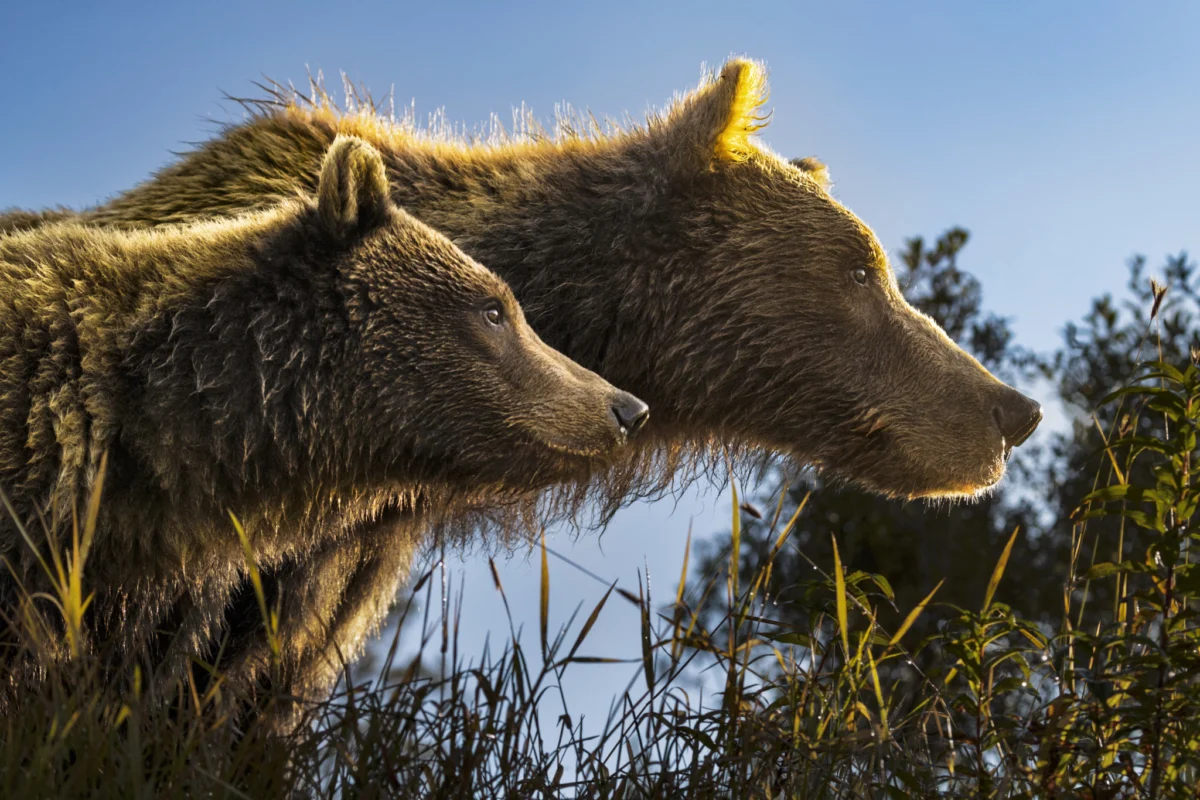
Suddenly, a subtle disturbance in the underbrush, mere feet away, broke the serene quietude. The rustling suggested the presence of something substantial, a silent prelude to a remarkable encounter. It was a mother bear and her cub, emerging cautiously from the dense foliage. The cub, a mere eight months old, was still largely dependent on its mother’s milk, though it had already begun to experiment with foraging on protein-rich grasses, a crucial step in its development.
The observer, positioned on the riverbank, instinctively adopted a posture of deep respect and non-aggression. Breathing slowed, direct eye contact was avoided, and body language conveyed humility, an unspoken apology for intruding upon this sacred space. The photographer, lacking a telephoto lens and equipped only with a wide-angle zoom, prepared for a fleeting, yet potentially profound, photographic opportunity.
The mother bear, her senses heightened and ears alert, stepped deliberately into the open. Her focus was not on the human observer; indeed, it seemed as though she barely registered their presence. Her attention was entirely captivated by a large male bear feeding upstream, oblivious to the drama unfolding nearby. This unwavering focus on the potential threat underscored the constant vigilance required for her cub’s safety.
The Art of Observation: Moving with Respect and Precision
Moments like these, where the boundaries between observer and observed blur, demand an extraordinary level of calm and deliberate action. The photographer, drawing upon years of experience in wildlife observation, emphasized the critical importance of moving with extreme gentleness and slowness. The philosophy espoused is akin to practicing Tai Chi – every motion must be fluid, measured, and deliberate, even under pressure to adjust equipment or reposition. This mindful approach is not merely about obtaining a photograph; it is about fostering an environment of trust and minimizing disturbance to the animals.
With bated breath and steady hands, the camera was raised. Two rapid captures were made, the photographer unsure if the fleeting moment had been truly preserved. Yet, one of those images would later emerge as a deeply cherished testament to the encounter, a visual representation of a profound connection forged in the heart of the wild.
A Moment of Acceptance: The Rules Dictated by Nature
The presence of the bears, particularly the mother and cub, was not an act of aggression or challenge. It was an acknowledgment of the observer’s non-threatening presence. The mother bear, through her calm demeanor and focused attention on the potential danger posed by the male bear upstream, conveyed a silent understanding. The cub, by proximity, also seemed to perceive the absence of threat. This was not a staged encounter but a serendipitous intersection of luck, timing, and happenstance, captured in the fading light of day.
The ocean waters, the very environment that the photographer dedicates his work to protecting, provide the essential habitat for the salmon. Their arduous journey upstream is a testament to the intricate web of life that connects marine ecosystems to terrestrial ones. The health of these marine environments is directly linked to the success of the salmon run, and by extension, the survival of the bears and countless other species that depend on this annual migration.
The data surrounding salmon populations and their role in the Alaskan ecosystem is substantial. For instance, studies by the National Oceanic and Atmospheric Administration (NOAA) consistently highlight the ecological significance of salmon, not only as a food source for predators but also for their role in nutrient cycling. The carcasses of spawning salmon, left behind after reproduction, decompose and return vital nutrients to the freshwater and terrestrial environments, enriching the soil and supporting plant life.
Furthermore, the economic impact of the salmon run is considerable, supporting commercial fishing industries, subsistence lifestyles for indigenous communities, and a burgeoning ecotourism sector. The annual migration draws photographers, wildlife enthusiasts, and researchers from around the globe, contributing significantly to the regional economy. Organizations like the Alaska Department of Fish and Game meticulously track salmon populations, providing crucial data on run sizes, species health, and spawning success, which informs conservation efforts and management strategies.
The implications of disruptions to the salmon run are far-reaching. Climate change, overfishing, habitat degradation, and the introduction of invasive species all pose significant threats to salmon populations. A decline in salmon numbers would have cascading effects throughout the food web, impacting not only bears but also eagles, seals, otters, and numerous other species. The intricate balance of this vital ecosystem is a constant reminder of the interconnectedness of all living things and the critical need for robust conservation efforts.
The photographic documentation of such events, as exemplified by this encounter, serves a dual purpose: it captures the raw beauty and drama of the natural world while also serving as a powerful advocacy tool. Images that convey the vulnerability of wildlife and the critical importance of their habitats can inspire public awareness and galvanize support for conservation initiatives. The personal narratives shared by wildlife photographers often humanize these often-remote and wild subjects, fostering a deeper emotional connection and a greater sense of responsibility towards their preservation. The continued study and protection of these ecosystems are paramount to ensuring that the awe-inspiring spectacle of the Alaskan salmon run, and the magnificent creatures it sustains, will endure for generations to come.