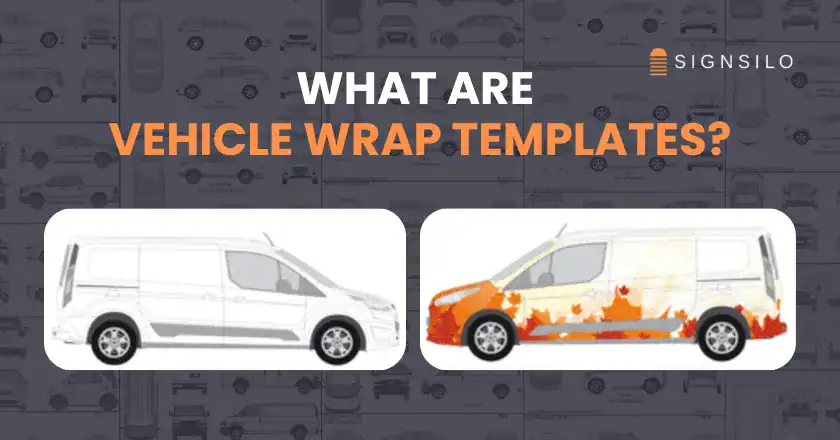
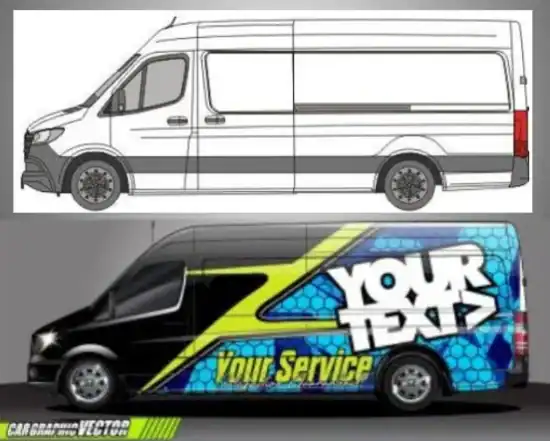
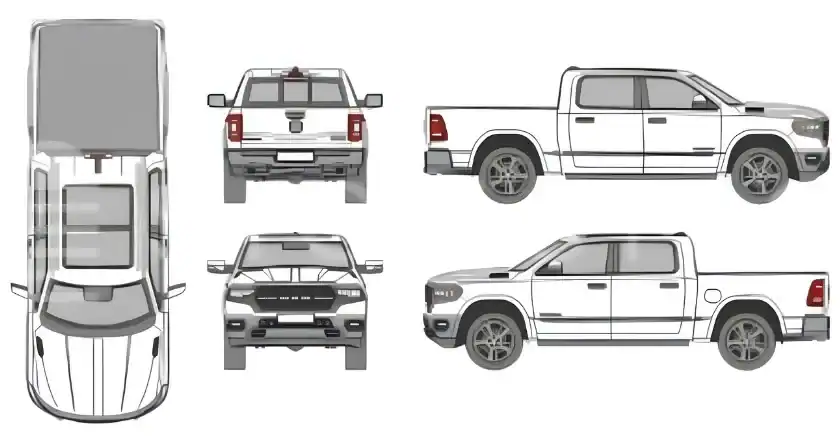
The global vehicle wrap market, currently valued at over $5 billion and projected to grow at a compound annual growth rate (CAGR) of 22% through 2030, relies on a foundation of extreme mathematical precision known as the vehicle wrap template. These templates are not merely illustrations but are sophisticated, dimensionally accurate vector outlines of specific vehicles, serving as the essential architectural blueprints for the multi-billion dollar mobile advertising sector. By providing a scaled representation of every relevant angle—including the sides, front, rear, and roof—these templates allow graphic designers to create complex visual narratives that fit the physical contours of a vehicle with millimeter precision. In a professional design environment, the template acts as the technical substrate upon which all creative assets are layered, ensuring that critical branding elements like logos and contact information are not lost to the structural "dead zones" of a vehicle, such as door handles, fuel ports, or deep recesses.
The Technical Evolution of Vehicle Branding
To understand the current reliance on high-fidelity digital templates, one must look at the transition from traditional sign-painting to modern vinyl application. Before the 1990s, vehicle branding was largely a manual craft, involving hand-lettering and airbrushing directly onto the paint. This process was time-consuming, permanent, and prone to human error. The advent of pressure-sensitive vinyl in the late 20th century, pioneered by companies like 3M and Avery Dennison, revolutionized the industry. However, the shift to digital design necessitated a new way to bridge the gap between a two-dimensional computer screen and a three-dimensional automotive body.
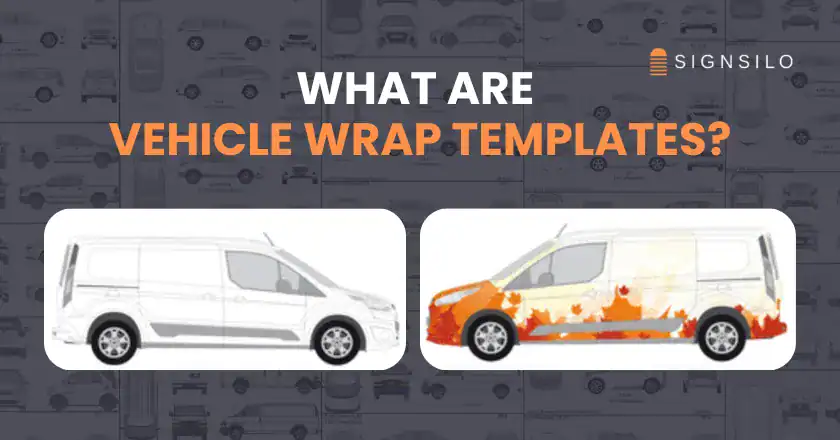
Early digital designs often relied on simple photographs, which failed to account for the curvature of the vehicle or the specific placement of hardware. This led to significant waste in material and labor. The development of vector-based templates solved this by offering "unrolled" layouts. Today, these templates are considered the industry standard, allowing a designer in one part of the world to create a design for a 2024 Mercedes Sprinter or a Ford Transit that can be printed and installed halfway across the globe with total confidence in the fitment.
Anatomy of a Professional Grade Template
A professional vehicle wrap template is a complex file typically delivered in a 1:20 or 1:10 scale. This scaling is crucial because it allows the designer to work within the memory limits of standard graphic design software while maintaining enough resolution to be scaled up to 100% during the printing phase. A comprehensive template package includes several critical layers:
- Vector Outlines: These are the primary paths that define the shape of the vehicle’s panels. Being vector-based (mathematical equations rather than pixels), they can be scaled infinitely without losing clarity.
- Hardware Markers: Templates identify the exact location of door handles, badges, keyholes, radio antennas, and sensors. This allows designers to avoid placing text or faces over areas where the vinyl will be cut away.
- Seams and Body Lines: The template maps out where body panels meet. This is vital for "paneling" a design, ensuring that a graphic flowing from the front door to the rear quarter panel aligns perfectly.
- Safety Zones and Bleeds: Much like print advertising in magazines, vehicle wraps require "bleed" areas—extra design space that extends beyond the edge of the panel to ensure full coverage during the physical installation process.
The Economic Impact of Precision
The use of accurate templates is a primary driver of cost-efficiency in the Out-of-Home (OOH) advertising market. According to the Outdoor Advertising Association of America (OAAA), a single wrapped vehicle can generate between 30,000 to 70,000 impressions daily. The cost per thousand impressions (CPM) for vehicle wraps is estimated at approximately $0.77, significantly lower than television ($23.70) or even digital search ads.

However, these economic benefits are predicated on successful execution. An error in design caused by an inaccurate template can lead to a "re-wrap," which doubles the material cost and labor hours. For a large-format print shop, the investment in a high-quality template library, such as those provided by SignSilo or Pro Vehicle Outlines, is a defensive business strategy. These libraries provide make-and-model-specific files that account for the minute differences between vehicle generations—for instance, the subtle change in a headlight housing between a 2023 and 2024 model year.
Chronology of a Professional Wrap Project
The lifecycle of a vehicle wrap project follows a strict chronological path where the template serves as the central reference point:
- Phase 1: The Site Survey. Even with a template, a professional installer begins by physically measuring the specific vehicle. They check for aftermarket modifications, such as roof racks, specialized bumpers, or trim levels that might deviate from the base model.
- Phase 2: Template Acquisition. The designer sources the exact template for the vehicle’s year, make, model, and wheelbase length. Using a "generic van" template for a specific Ford Transit Long Wheelbase is a common cause of project failure.
- Phase 3: The Design Layout. Working in software like Adobe Illustrator or CorelDRAW, the designer places the template on a locked bottom layer and builds the artwork on layers above it.
- Phase 4: Client Proofing (The Mockup). The 2D technical design is often transferred into a 3D "mockup" or rendering to show the client how the design will look in a real-world environment. This is a psychological tool for sales rather than a technical tool for production.
- Phase 5: Pre-Flight and Production. The design is scaled to 100% size, tiled into printable sections (usually 54 to 60 inches wide), and sent to a large-format inkjet printer.
- Phase 6: Installation. The printed vinyl is applied to the vehicle. If the template was accurate, the graphics will align with the doors, windows, and lights exactly as planned.
Technical Specifications: Vector vs. Raster
A recurring debate in the design community involves the use of vector-based templates versus high-resolution raster files. Journalists and industry analysts note that while Photoshop (raster) is often used for the creative "texturing" of a wrap—such as metallic effects or complex photographic backgrounds—the template itself must remain a vector.
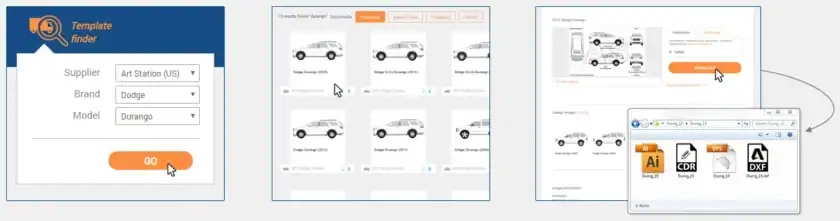
Common file formats include:
- .AI (Adobe Illustrator): The industry standard for layered, editable vector data.
- .EPS (Encapsulated PostScript): A universal vector format compatible with older software.
- .CDR (CorelDRAW): Widely used in the sign-making industry outside of the Adobe ecosystem.
- .PDF (Portable Document Format): Often used for final print delivery if the vector data is preserved.
The reliance on vector data ensures that when a 1:20 scale design is enlarged by 2,000% to fit a real-world van, the lines remains crisp. A raster-based template would suffer from "pixelation," resulting in blurry edges that are unacceptable for high-end corporate branding.
Industry Reactions and Best Practices
Stakeholders across the graphics industry emphasize that templates are a tool, not a total replacement for human oversight. "The template gets you 95% of the way there," is a common sentiment among master installers. The remaining 5% comes from the "post-print" reality of vinyl stretching. Vinyl is a flexible polymer; when heated and stretched into deep channels, the design can distort.
Official responses from wrap material manufacturers like Hexis and Oracal suggest that designers should always allow for "generous bleeds" of at least 3 to 5 inches around the perimeter of the template. This provides the installer with enough physical material to pull and tuck the vinyl around the edges of the doors and hoods without exposing the vehicle’s original paint.
Limitations and the Rise of 3D Modeling
Despite their utility, 2D templates have inherent limitations. They cannot perfectly represent the "compound curves" found on modern sports cars or the complex aerodynamics of new electric vehicles (EVs). As a result, the industry is seeing a gradual shift toward 3D CAD (Computer-Aided Design) data. Some high-end shops now use 3D software to "wrap" a digital model, allowing them to see exactly how a logo will distort over a rounded fender.
Furthermore, templates cannot account for the "Advanced Driver Assistance Systems" (ADAS) found in modern cars. Proximity sensors and cameras are often embedded in bumpers and mirrors—areas frequently covered by wraps. Industry experts warn that designs must be carefully adjusted to ensure that the vinyl does not interfere with these safety systems, a factor that requires the designer to cross-reference the template with the vehicle’s owner’s manual.
Broader Implications for the Advertising Landscape
The standardization of vehicle wrap templates has democratized high-impact advertising. Small businesses can now achieve the same level of brand professionalism as national fleets by utilizing the same technical blueprints. This has led to a surge in "fleet branding," where companies wrap hundreds of vehicles across different regions. Because the templates are standardized, a company can ensure brand consistency across a fleet consisting of different vehicle types, from small sedans to heavy-duty trucks.
In conclusion, the vehicle wrap template is the unsung hero of the modern visual landscape. It is the bridge between digital creativity and physical reality. As vehicle designs become more complex and advertising competition intensifies, the demand for high-fidelity, make-and-model-specific templates will only increase. For the professional designer and the business owner alike, the template is the primary insurance policy against the high costs of technical error, ensuring that every mile driven is a mile of perfectly executed mobile marketing.