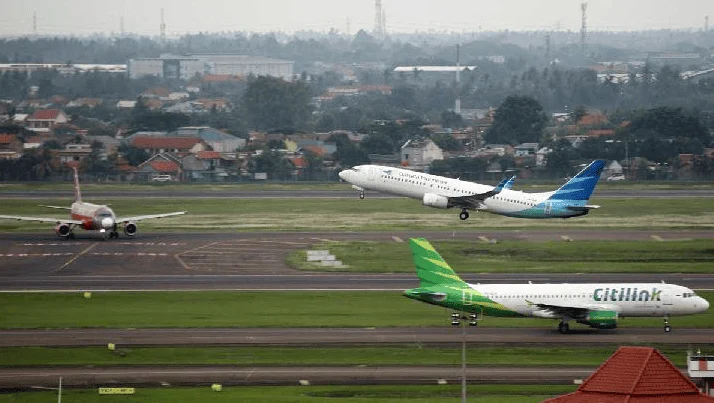
The aviation sector in Indonesia is bracing for a significant surge in activity as the Puncak Pergerakan Pesawat Lebaran 2025 is projected to occur on March 22 and March 28, 2025. These dates represent the critical windows for the annual Eid al-Fitr exodus, a socio-cultural phenomenon known locally as "Mudik," which sees tens of millions of citizens travel across the archipelago to reunite with their families. As the primary mode of long-distance transport for many, the air travel industry is preparing for a logistical undertaking of massive proportions, with Soekarno-Hatta International Airport in Tangerang expected to remain the central hub for these operations.
According to preliminary estimates from aviation authorities and airport operators, the volume of flight movements during the 2025 Lebaran period is expected to surpass previous years, reflecting a full recovery and expansion of the domestic travel market. The specific dates of March 22 and March 28 have been identified based on the 2025 national holiday calendar and the anticipated "Cuti Bersama" (collective leave) days stipulated by the government. March 22 is forecast as the peak of the departure flow, while March 28 is expected to see the highest density of return flights as travelers head back to urban centers before the resumption of the standard work week.
The Scale of Operations: Data and Projections
The sheer scale of the Puncak Pergerakan Pesawat Lebaran 2025 can be understood through the lens of flight movement data. At Soekarno-Hatta International Airport (CGK), which serves as the main gateway to Indonesia, officials are anticipating more than 23,000 aircraft movements throughout the Eid holiday period. On the peak days themselves, the airport is expected to handle between 1,100 and 1,200 flights per day, pushing the facility’s three runways and three terminals to their operational limits.
This increase is not limited to the capital. Secondary hubs such as Juanda International Airport in Surabaya, I Gusti Ngurah Rai International Airport in Bali, and Sultan Hasanuddin International Airport in Makassar are also projecting double-digit percentage increases in passenger traffic compared to the 2024 season. To accommodate this demand, the Ministry of Transportation (Kemenhub) has indicated that it will likely approve hundreds of "extra flight" requests from domestic carriers. Airlines such as Garuda Indonesia, Citilink, Lion Air, and Batik Air are reportedly optimizing their fleet availability, ensuring that aircraft undergoing maintenance are returned to service well before the March 22 deadline.
Chronology of the 2025 Holiday Rush
The timeline for the 2025 aviation surge begins in early March, as the Ministry of Transportation initiates "ramp checks" on all commercial aircraft. These safety inspections are mandatory to ensure that every plane in operation meets the stringent airworthiness standards required for high-frequency holiday scheduling.
By mid-March, the "pre-peak" phase begins. During this time, cargo movements often increase as logistics companies rush to deliver goods before holiday restrictions on heavy transport come into effect. Following this, the first major wave of passenger movement is expected on March 21, leading into the primary peak on March 22. This Saturday marks the start of the mass migration for those taking advantage of the early leave period.
The "quiet period" typically occurs on the day of Eid al-Fitr itself, as families gather for prayer and celebration. However, this lull is short-lived. By March 27, the return flow begins to build, culminating in the second Puncak Pergerakan Pesawat Lebaran 2025 on March 28. During this 24-hour window, air traffic control centers, particularly the Jakarta Air Traffic Services Center (JATSC), will manage a constant stream of arrivals from across the country, requiring precise coordination to prevent airborne holding patterns and ground congestion.
Infrastructure and Technological Readiness
To manage the Puncak Pergerakan Pesawat Lebaran 2025, Angkasa Pura, the state-owned airport operator, has implemented several infrastructure upgrades and technological integrations. One of the primary focuses is the enhancement of the Airport Operation Control Center (AOCC). This facility acts as the "nerve center," integrating data from airlines, ground handling, immigration, and air traffic control to provide real-time situational awareness.
In addition to the AOCC, terminal management has been modernized with the expansion of automated services. Biometric boarding gates and self-service bag drops have been expanded at Terminal 3 of Soekarno-Hatta to reduce queuing times during the March peaks. Furthermore, the integration of the "Travelin" mobile application allows passengers to track their flight status, book parking, and navigate the terminal, which is expected to distribute foot traffic more evenly across the airport’s facilities.
Ground handling services are also scaling up. The surge in flight movements necessitates a corresponding increase in baggage handlers, refueling teams, and cabin cleaning crews. During the peak dates of March 22 and 28, turnaround times for aircraft—the time a plane spends on the ground between landing and taking off again—will be monitored closely to ensure that delays do not cascade through the national flight network.
Official Responses and Regulatory Oversight
The Indonesian government, through the Ministry of Transportation, has taken a proactive stance in managing the 2025 holiday season. Minister of Transportation officials have emphasized that "Safety, Security, Service, and Compliance" (3S+1C) remain the non-negotiable pillars of the Lebaran operation. To prevent price gouging during the Puncak Pergerakan Pesawat Lebaran 2025, the government has reaffirmed its commitment to the "Tarif Batas Atas" (Upper Limit Price) policy. This regulation prevents airlines from raising ticket prices beyond a certain threshold, ensuring that air travel remains accessible to a broader segment of the population.
AirNav Indonesia, the country’s air navigation service provider, has also announced specialized staffing rosters for the March peak. Air traffic controllers will work in optimized shifts to maintain high levels of alertness during the dense traffic windows. "Our priority is to ensure the separation of aircraft remains within safety margins while maximizing the throughput of our runways," an AirNav spokesperson noted in a recent coordination meeting.
Furthermore, security measures are being bolstered. The Aviation Security (Avsec) personnel, in collaboration with the Indonesian National Police (Polri) and the Indonesian National Armed Forces (TNI), will increase patrols in both public and restricted areas of major airports. This heightened security posture is a standard procedure during periods of high national mobility to mitigate any potential threats to public safety.
Socio-Economic Impact and Market Drivers
Several factors contribute to the projected intensity of the 2025 aviation peak. Firstly, the stabilizing economy has increased the purchasing power of the middle class, allowing more families to opt for the speed and comfort of flying over sea or land travel. Secondly, the expansion of regional airports under the government’s infrastructure programs has made air travel a viable option for many who previously lived far from aviation hubs.
The economic impact of the Puncak Pergerakan Pesawat Lebaran 2025 extends beyond the aviation industry. The surge in flights drives significant revenue for the hospitality, retail, and tourism sectors in the destination provinces. Regions such as Yogyakarta, West Sumatra, and South Sulawesi typically see a massive influx of "Mudik" travelers who contribute to local economies through festive spending and tourism activities.
Conversely, the high demand places a strain on resources. Fuel consumption by airlines peaks during this period, requiring Pertamina (the state energy company) to ensure a steady supply of Avtur (aviation turbine fuel) at all major airports. The logistics of ensuring that fuel, spare parts, and personnel are in the right place at the right time is a testament to the maturity of Indonesia’s aviation ecosystem.
Passenger Guidelines for Navigating the Peak
Given the expected congestion on March 22 and 28, aviation experts and airport authorities have issued several recommendations for travelers. The primary advice is for passengers to arrive at the airport at least three to four hours before their scheduled departure. This buffer is necessary to navigate the increased traffic on airport access roads and the longer-than-usual lines at security checkpoints.
Digital preparedness is also emphasized. Passengers are encouraged to utilize online check-in features via airline websites or mobile apps 24 hours in advance. This not only secures seat assignments but also allows travelers with only carry-on luggage to bypass the check-in counters entirely. For those with checked baggage, using self-service bag drop kiosks can significantly shorten the processing time.
Health and safety remain a consideration. While many formal restrictions have been lifted, authorities still recommend that passengers maintain basic hygiene practices, such as using hand sanitizer and wearing masks if they feel unwell, to prevent the spread of seasonal illnesses within the crowded terminal environments.
Future Implications for Indonesian Aviation
The successful management of the Puncak Pergerakan Pesawat Lebaran 2025 will serve as a benchmark for the future of Indonesian aviation. As the country continues to develop its "New Capital City" (IKN) in East Kalimantan, the patterns of holiday migration are expected to shift. The 2025 season provides a critical data set for planners to understand how decentralized air traffic will behave in the coming decade.
Moreover, the pressure of the Lebaran peak is a catalyst for innovation. The need to handle 23,000 movements at a single airport over a short period pushes the adoption of AI-driven traffic management and greener ground operations. As Indonesia aims to modernize its fleet and infrastructure, the lessons learned from the March 2025 surge will inform investments in runway capacity, terminal design, and regional connectivity.
In conclusion, the Puncak Pergerakan Pesawat Lebaran 2025 is more than just a logistical challenge; it is a reflection of Indonesia’s vibrant mobility and the critical role of the aviation sector in connecting the nation. Through the combined efforts of the government, airport operators, airlines, and the passengers themselves, the goal remains a "Mudik Aman dan Berkesan"—a safe and memorable homecoming for all. As March 22 and 28 approach, all eyes will be on the skies of Indonesia to witness one of the world’s most complex and culturally significant aviation events.