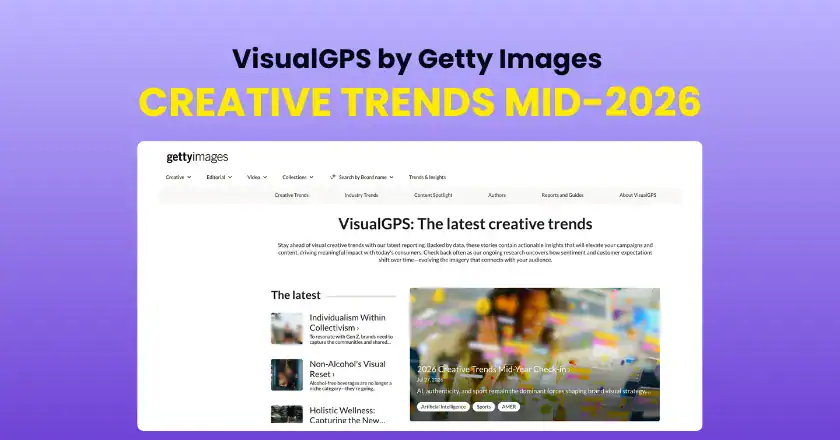
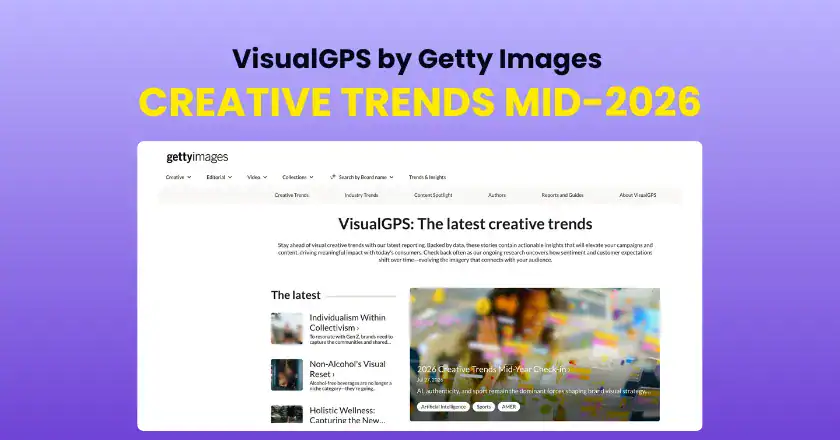
Getty Images, a global leader in visual communications, has released its comprehensive mid-year update to the 2026 VisualGPS trend report, offering a detailed analysis of the shifting aesthetic and cultural landscape. Six months into 2026, the data indicates that the year’s defining creative themes—Artificial Intelligence, Authenticity, and Sports Fandom—are undergoing a period of intense refinement rather than radical transformation. As global markets in the Americas (AMER), Europe, Middle East, and Africa (EMEA), and Asia-Pacific (APAC) settle into the mid-point of the decade, the visual language used by brands is becoming increasingly localized and grounded in practical reality.
The mid-year check-in serves as a critical barometer for marketers, advertisers, and content creators. It reveals a clear departure from the speculative and often hyperbolic visual tropes of the early 2020s, moving instead toward a "human-centric" approach. The report underscores a significant shift in consumer psychology: as synthetic media becomes ubiquitous, the premium on "the real" has reached an all-time high, forcing brands to navigate a complex landscape where perfection is often viewed with skepticism.
The Evolution of AI Imagery: From Science Fiction to Daily Utility
One of the most striking findings in the 2026 mid-year report is the normalization of Artificial Intelligence in visual storytelling. At the beginning of the decade, AI was largely represented through "frontier" aesthetics—glowing blue neural networks, humanoid robots, and neon-lit laboratory settings. By the midpoint of 2026, these science-fiction spectacles have largely disappeared from mainstream commercial imagery.
The current trend reflects an "invisible AI" phase. Visuals now focus on how AI discreetly supports human workers in their daily environments. This shift suggests that the "fear of the machine" has been replaced by a demand for "functional integration." However, the report notes significant regional nuances in how this integration is depicted:
- AMER (The Americas): Imagery focuses heavily on the "augmented professional." The visual narrative emphasizes efficiency and the removal of administrative burdens, showing workers in healthcare, finance, and logistics using AI tools to reclaim time for human-to-human interaction.
- EMEA (Europe, Middle East, and Africa): There is a distinct "artisanal counterpoint" in this region. Visuals often contrast high-tech AI back-end processes with traditional craftsmanship. For example, a designer might use AI to optimize a pattern, but the visual focus remains on the physical texture of the fabric and the human hand guiding the tool.
- APAC (Asia-Pacific): The focus in this region is on "AI in action" through extreme close-ups and granular details. The visual language emphasizes the precision of AI in manufacturing and urban infrastructure, portraying the technology as a seamless, high-definition layer of modern life.
This evolution indicates that audiences no longer need to be "wowed" by the existence of AI; they need to be reassured of its utility and its role as a partner to human ingenuity.
Authenticity and the Rise of "Chaotic Reality"
The concept of authenticity has undergone a rigorous re-evaluation in the first half of 2026. The VisualGPS data suggests that "perfection" has transitioned from an aspirational goal to a brand liability. Consumers are increasingly savvy at identifying over-polished or AI-generated perfection, leading to a surge in demand for imperfection, craftsmanship, and lived experience.
The report identifies a move toward "Maximalist Chaotic Reality," particularly in the AMER market. This aesthetic rejects the sterile, minimalist "Instagram-ready" look of previous years in favor of cluttered desks, unmade beds, and candid, unposed moments. It is a visual celebration of the messiness of life, which serves as a powerful signal of credibility.
Regional expressions of authenticity vary significantly:
- APAC: Authenticity is expressed through "collective reality." Unlike the Western focus on the individual, APAC visuals emphasize community, multi-generational families, and group participation. Credibility is found in the strength of social bonds and shared traditions.
- AMER: The "chaotic reality" mentioned above dominates. There is a high value placed on "the unedited self," with brands increasingly using imagery that features natural skin textures, non-traditional fashion choices, and environments that look inhabited rather than staged.
- EMEA: Emotional authenticity is rooted in local culture and heritage. There is a trend toward "slow storytelling," where visuals capture quiet, contemplative moments that feel deeply personal and culturally specific, avoiding the "one-size-fits-all" approach to global marketing.
Industry analysts suggest that this "Authenticity 2.0" is a direct response to the "uncanny valley" created by early generative AI. By leaning into human flaws and cultural specificities, brands can establish a level of trust that synthetic media cannot yet replicate.
Sports and Fandom: The Shift from Athlete to Co-Creator
With 2026 being a massive year for global sports—most notably driven by the buildup to and execution of the Men’s World Cup—the visual language of athletics has shifted. The traditional "hero shot" of a lone athlete in a moment of peak physical exertion is no longer the primary driver of engagement.
Instead, the focus has shifted to the fans. In the 2026 mid-year landscape, fans are portrayed as co-creators of the sporting experience. The visual narrative has expanded beyond the 90 minutes on the pitch to include the "culture of fandom." This includes:
- Communal Rituals: Visuals of fans traveling together, participating in pre-game traditions, and the emotional highs and lows of watching a match in a public square.
- Fashion and Lifestyle: The "sportcore" aesthetic continues to evolve, with sports apparel being integrated into high fashion and everyday street style.
- Food and Event Culture: The sensory experience of the stadium and the surrounding festivities—local street food, fan zones, and regional celebrations—has become a central pillar of sports imagery.
The Men’s World Cup has acted as a catalyst for this "participatory fandom." Brands are no longer just sponsoring the game; they are sponsoring the community that surrounds the game. The report highlights that imagery showing the "aftermath" of a win or the "shared grief" of a loss resonates more deeply with modern audiences than a generic action shot.
Data and Implications: The Business Case for Genuineness
The overarching conclusion of the Getty Images VisualGPS mid-year check-in is clear: audiences recognize what is genuine, and brands that demonstrate authenticity are rewarded with higher trust and engagement metrics.
Internal data cited in the report suggests that content labeled or perceived as "authentic" and "locally relevant" sees a 22% higher engagement rate compared to generic global assets. Furthermore, in the AMER market, 68% of consumers stated they are more likely to trust a brand that shows "real people in real situations" rather than idealized versions of life.
The financial implications are significant. As the cost of generating "perfect" AI content drops, the market value of "hard-to-get" authentic, rights-cleared, and culturally nuanced human photography is expected to rise. Analysts predict that by the end of 2026, the most successful brands will be those that use AI for backend efficiency while doubling down on "human-first" front-end visual communication.
Chronology of Visual Trends: 2024–2026
To understand the current state of 2026, it is helpful to look at the trajectory of the last 24 months:
- Early 2024: The "Generative Explosion." Brands experimented heavily with surreal, AI-generated landscapes and characters. The focus was on novelty and the "wow factor."
- Late 2024 – Early 2025: The "Authenticity Backlash." Consumers began expressing fatigue with synthetic perfection. The "No-Filter" movement regained momentum.
- Late 2025: The "Integration Phase." AI started being used to enhance real photos rather than replace them. Sports imagery began shifting toward the "fan-cam" aesthetic.
- Mid-2026: The "Refined Realism." AI is now a background tool. Authenticity is localized and "messy." Sports are about the communal experience of the World Cup.
Official Responses and Industry Impact
Leading creative directors and CMOs have begun responding to these mid-year findings. Many are pivoting their Q3 and Q4 campaigns to align with the "Refined Realism" trend.
"The data confirms what we’ve been feeling on the ground," said one senior advertising executive in New York. "People are tired of being sold a dream that looks like it was rendered in a computer. They want to see their own lives reflected back at them, even if those lives are a bit chaotic. The 2026 World Cup has only amplified this, as sports are the ultimate unscripted reality."
The impact on the stock photography and videography industry is also notable. Photographers are being encouraged to capture "the in-between moments"—the seconds before an action starts or the quiet moments after it ends—as these are the images currently in highest demand by global brands.
Looking Ahead: The Remainder of 2026
As we move toward the final quarters of 2026, the trends identified in the mid-year check-in are expected to solidify. The "invisible AI" will become even more embedded in our visual consumption, making the "human element" even more precious.
The global success of the Men’s World Cup will likely leave a lasting legacy on sports marketing, cementing the "fan-as-hero" narrative for years to come. Meanwhile, the regionalization of authenticity will challenge global brands to move away from centralized creative hubs and toward more localized content production.
In a world where technology can create anything, the most valuable thing a brand can offer is something that feels undeniably real. The mid-year 2026 report serves as a reminder that while tools change, the human desire for connection, community, and truth remains constant.