For three decades, the author has resided on Vancouver Island, a region known for its high cougar population, yet has rarely glimpsed these elusive felines. This personal quest for a profound encounter with big cats culminated in a photographic expedition to the remote and rugged landscapes of Chilean Patagonia, specifically the environs of Torres del Paine National Park. The journey, fraught with initial logistical challenges including a lost passport and an emergency visit to a Brazilian embassy, ultimately led to an immersive experience within a landscape where ecotourism and conservation efforts are increasingly intertwined with traditional ranching practices.
The Evolving Landscape of Patagonian Ecotourism
The lodge chosen for the expedition was a converted estancia, a traditional South American ranch, situated on the periphery of Torres del Paine National Park. This establishment not only retained its functional farming and livestock equipment but also exemplified a modern shift in the region. As visitor numbers to Torres del Paine have surged, drawn by its iconic granite peaks and pristine wilderness, ecotourism has emerged as a significant economic driver. The estancia’s owners represent a growing segment of the local community who have embraced a philosophy of coexistence with wildlife, a stark contrast to historical practices where predators like pumas were often viewed as threats to livestock. This transition is reflected in the ethos of the staff, whose values are deeply rooted in the gaucho culture, emphasizing honesty, hard work, and generosity – principles that now extend to the stewardship of the natural environment.
A Respected Guide and a Legendary Puma
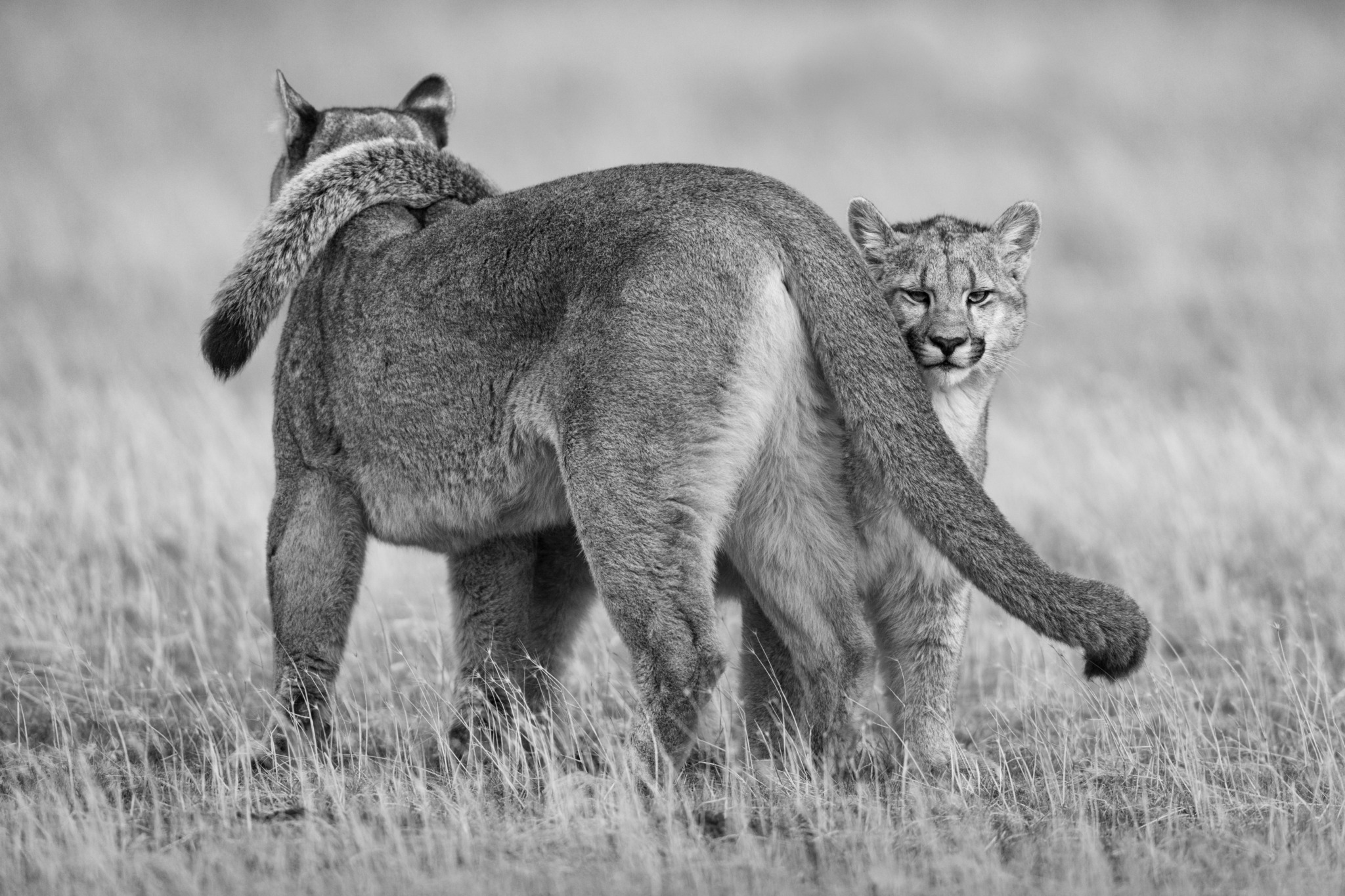
Central to the author’s Patagonian experience was Rodrigo, a guide renowned for his expertise in tracking and understanding the local puma population. Rodrigo’s intimate knowledge of the animals, described as akin to knowing them as family, was instrumental in navigating the vast and varied terrain. The expedition ventured deep into puma territory, leaving behind the cultivated lands of the estancia to traverse striking rock formations, glacial lakes, and expansive grasslands, or pampas. Towering granite peaks of the Andes formed a dramatic backdrop to this journey. It was within this formidable natural amphitheater that the first significant encounter occurred: Petaka, a female puma of considerable local renown, and her two young kittens.
Petaka’s reputation stems from her unperturbed demeanor and apparent indifference to human presence, a characteristic that has become a hallmark of her legend among visitors to Torres del Paine. This behavior is not unique to Petaka but is indicative of a broader trend in the region. In contrast to some neighboring countries, pumas in Chile are designated as a protected species, with hunting largely prohibited. This legal framework has facilitated a degree of acclimatization among some puma populations, allowing them to continue their natural behaviors in the presence of humans without undue stress or avoidance. The author highlights this as a deeply fulfilling aspect of the experience, observing a wild animal at ease, its calm and relaxed state a testament to a healthy and balanced ecosystem.
An Unexpected Winter Sanctuary
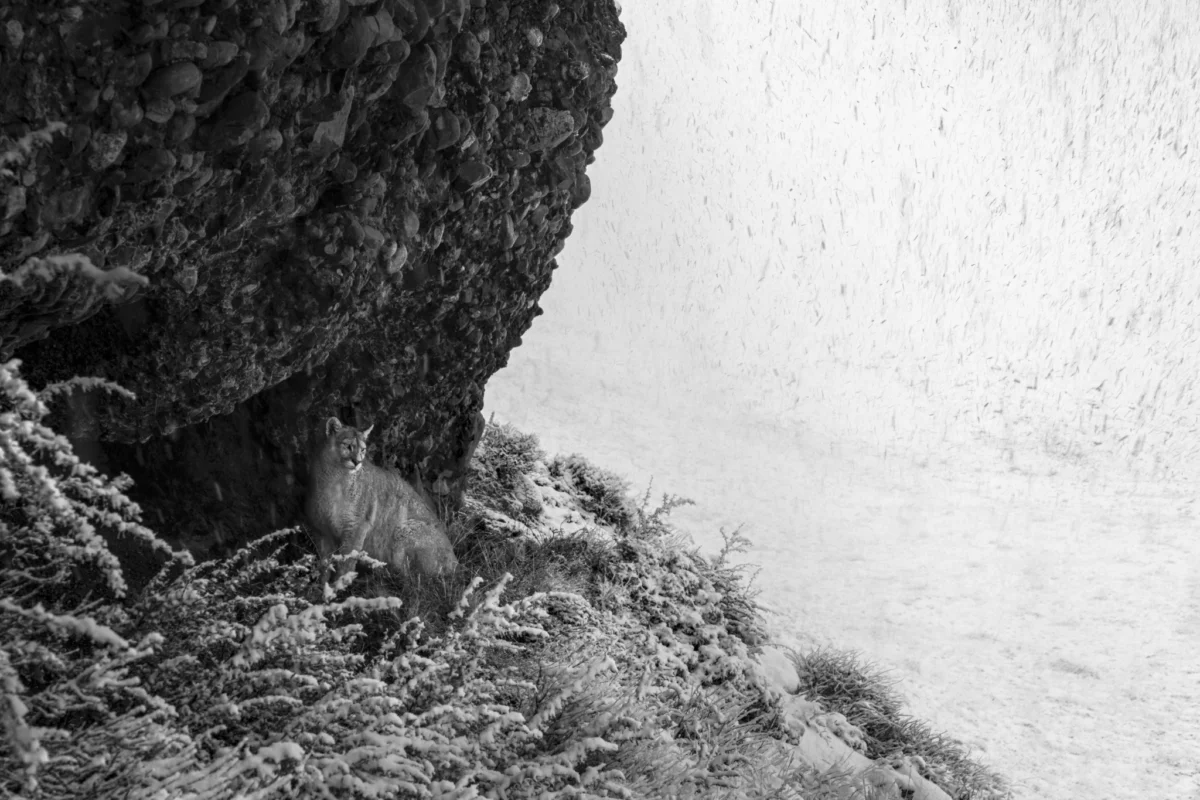
The author recounts the privilege of observing Petaka diligently caring for her kittens, a scene that evoked profound emotion. This period of observation, however, was abruptly interrupted by the notoriously unpredictable Patagonian weather. The skies darkened, winds intensified, and a blizzard descended, blanketing the landscape in snow and muffling all sound. Seeking refuge from the storm, the author found shelter within a mountainside cave. It was in this unexpected sanctuary that a dramatic and profound encounter unfolded.
A large puma emerged from the swirling snow and settled just a few feet away, also seeking respite from the inclement weather. The author, instinctively holding their breath, managed to steady their camera, a surge of adrenaline and excitement coursing through them. The two, human and wild cat, shared the confined space in silent communion, the snow piling up outside, transforming the landscape into a pristine white canvas. The puma, exhibiting the same serene indifference that had characterized Petaka, remained focused on its surroundings, never once acknowledging the author’s presence.
This shared moment of stillness, of two vastly different beings weathering the same storm in close proximity, lasted until the weather abated. As the storm cleared and the puma silently departed over the freshly fallen snow, the author experienced an overwhelming release of emotion. This experience served as a powerful reminder of the profound impact that allowing nature the space to thrive can have. It underscored the author’s belief that when ecosystems are allowed to recover and flourish, humanity can become a witness to the unadulterated essence of life on Earth – wild, raw, and awe-inspiring.
Broader Implications for Conservation and Human-Wildlife Coexistence
The encounters described in Chilean Patagonia offer a compelling case study in successful human-wildlife coexistence, particularly concerning apex predators like the puma. The shift from viewing pumas as vermin to recognizing their ecological importance and implementing protective measures has demonstrably positive outcomes.
Supporting Data and Context:
- Puma Populations: While specific, up-to-the-minute population data for the Torres del Paine region can be proprietary or subject to ongoing research, general estimates suggest a healthy and stable puma population within the park and its surrounding buffer zones, largely attributed to conservation efforts. Globally, puma populations have faced significant decline due to habitat loss and persecution, making areas like Patagonia crucial strongholds.
- Ecotourism Growth: The ecotourism sector in Chile has experienced substantial growth. According to the Chilean National Tourism Service (SERNATUR), visitor numbers to national parks, including Torres del Paine, have steadily increased over the past decade, contributing significantly to the local and national economy. This growth necessitates careful management to minimize environmental impact and ensure that tourism benefits conservation.
- Conservation Policies: Chile’s designation of pumas as a protected species is a critical policy. This legal framework, coupled with educational initiatives and community engagement programs, plays a vital role in fostering a culture of respect and protection for these animals.
Analysis of Implications:
The narrative highlights the interconnectedness of conservation policies, local community engagement, and successful wildlife observation. The adaptation of pumas to human presence in protected areas suggests that with appropriate management and minimal human interference, peaceful coexistence is not only possible but can also lead to unique opportunities for scientific research and ecotourism. The estancia owners’ transition from viewing pumas as threats to embracing them as part of the natural heritage underscores a broader paradigm shift in land management, where ecological integrity is recognized as a valuable asset.
The author’s experience underscores the ethical considerations inherent in wildlife photography and observation. The emphasis on quiet observation, patience, and allowing the animal to dictate the terms of interaction is a model for responsible ecotourism. The fact that the puma in the cave never acknowledged the author’s presence is not a sign of failure, but rather a profound success in unobtrusive observation, demonstrating the animal’s comfort and lack of perceived threat.
Potential Challenges and Future Outlook:
Despite the successes, challenges remain. Increased human activity in sensitive ecosystems can lead to habitat fragmentation, increased risk of human-wildlife conflict (e.g., livestock depredation, though less prevalent in this specific narrative), and potential disruption of natural behaviors. The ongoing economic pressures on local communities can also influence land-use decisions.
However, the Patagonian model offers a promising path forward. By investing in sustainable ecotourism, supporting local conservation initiatives, and continuing to enforce protective legislation, regions like this can serve as benchmarks for other areas grappling with similar human-wildlife dynamics. The continued presence of healthy puma populations, coupled with the resilience of traditional gaucho values that now embrace conservation, suggests a hopeful future for the wild heart of Patagonia. The author’s personal quest, transforming from a desire for a fleeting glimpse into a profound lesson in ecological harmony, encapsulates the ultimate reward of respecting and protecting the natural world.