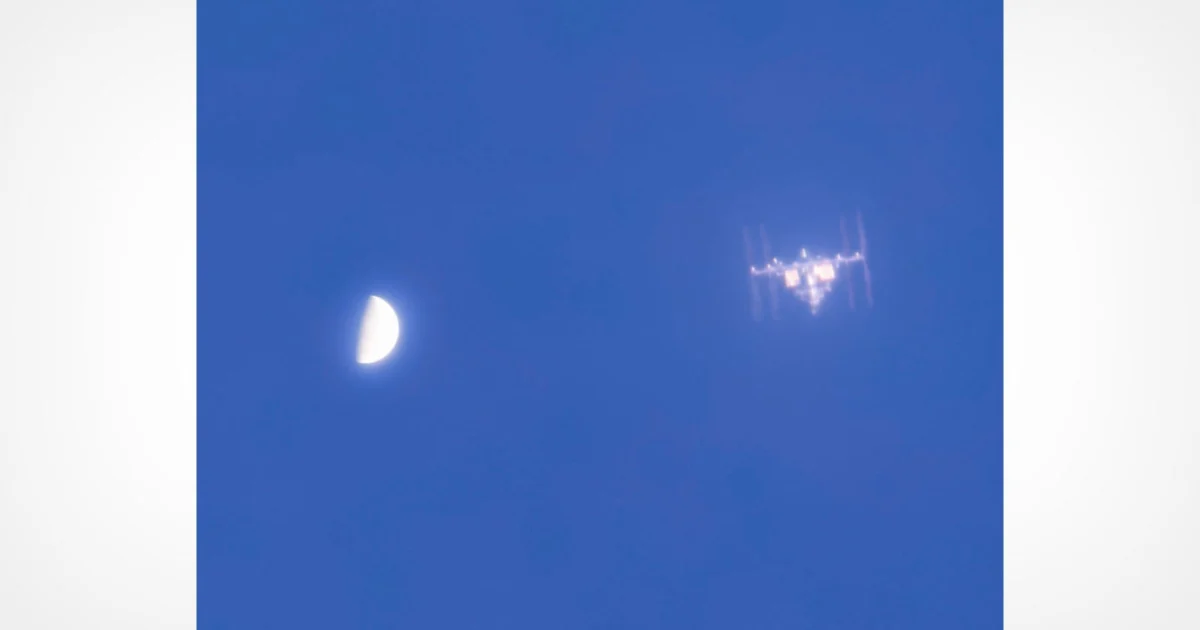
In a remarkable display of precision planning and astrophotography prowess, AJ Smadi has once again captivated the astronomical community by capturing the International Space Station (ISS) and Venus within the same photographic frame. This extraordinary feat, achieved last Saturday at 6:38 p.m. from a park in Edmonds, Washington, located just north of Seattle, marks only the second time such an alignment has ever been successfully documented, with Smadi himself being the photographer responsible for the inaugural capture as well. The image, a testament to meticulous preparation and advanced technical skill, offers a breathtaking perspective on two distinct celestial bodies that, despite their vastly different scales and distances, appear in a fleeting cosmic embrace.
A Rare Celestial Conjunction: The Dance of Distant Worlds
The image presents Venus, often dubbed Earth’s "sister planet" and the brightest object in our night sky after the Moon, appearing "just over half illuminated," a testament to its current phase as it emerged from behind the Sun. Alongside it, the International Space Station, a beacon of human ingenuity orbiting just above Earth’s atmosphere, streaks across the sky. The apparent proximity of these two objects is, however, a profound trick of perspective. Venus, a rocky planet roughly the size of Earth, resides an astounding 135 million kilometers (approximately 84 million miles) away, while the ISS, a sprawling orbital laboratory comparable in width to a football stadium, orbits a mere 400 kilometers (250 miles) above our heads. This immense disparity in distance and actual size underscores the exceptional nature of Smadi’s capture, requiring not only perfect timing but also an acute understanding of celestial mechanics and optical phenomena.
The rarity of such an alignment cannot be overstated. For an observer on Earth, the convergence of a distant planet like Venus and the rapidly moving ISS into a single, photographable frame demands a confluence of precise orbital paths and geographical vantage points. The ISS completes an orbit around Earth approximately every 90 minutes, traveling at an astonishing speed of 7.66 kilometers per second (about 17,150 miles per hour). This equates to an average speed of 27,600 kilometers per hour, making it appear as a fast-moving star-like object to the naked eye, visible only for a few minutes during specific twilight passes. Venus, on the other hand, follows its own elliptical path around the Sun, its position relative to Earth constantly changing, dictating its visibility and phase. For these two celestial travelers to align perfectly from a specific ground observation point requires extensive predictive calculations and a dash of cosmic serendipity.
The Meticulous Pursuit: Planning and Execution
Smadi’s success is not accidental but the culmination of rigorous planning, a hallmark of precision astrophotography. "Like the Moon, Venus has phases, and recently emerged from behind the Sun from its full phase, now sitting at just over half illuminated," Smadi explained, highlighting his understanding of Venus’s current astronomical state. The critical challenge, however, lay in predicting the exact moment and location where the ISS would appear to transit across Venus. This requires sophisticated astronomical software and precise topographical data. Tools such as CalSky, Heavens-Above, and ISS Transit Finder are often employed by astrophotographers to calculate transit paths, providing information down to the precise second and meter of observation location. Smadi’s ability to identify and secure his vantage point in Edmonds, Washington, speaks volumes about his command of these intricate predictive models.
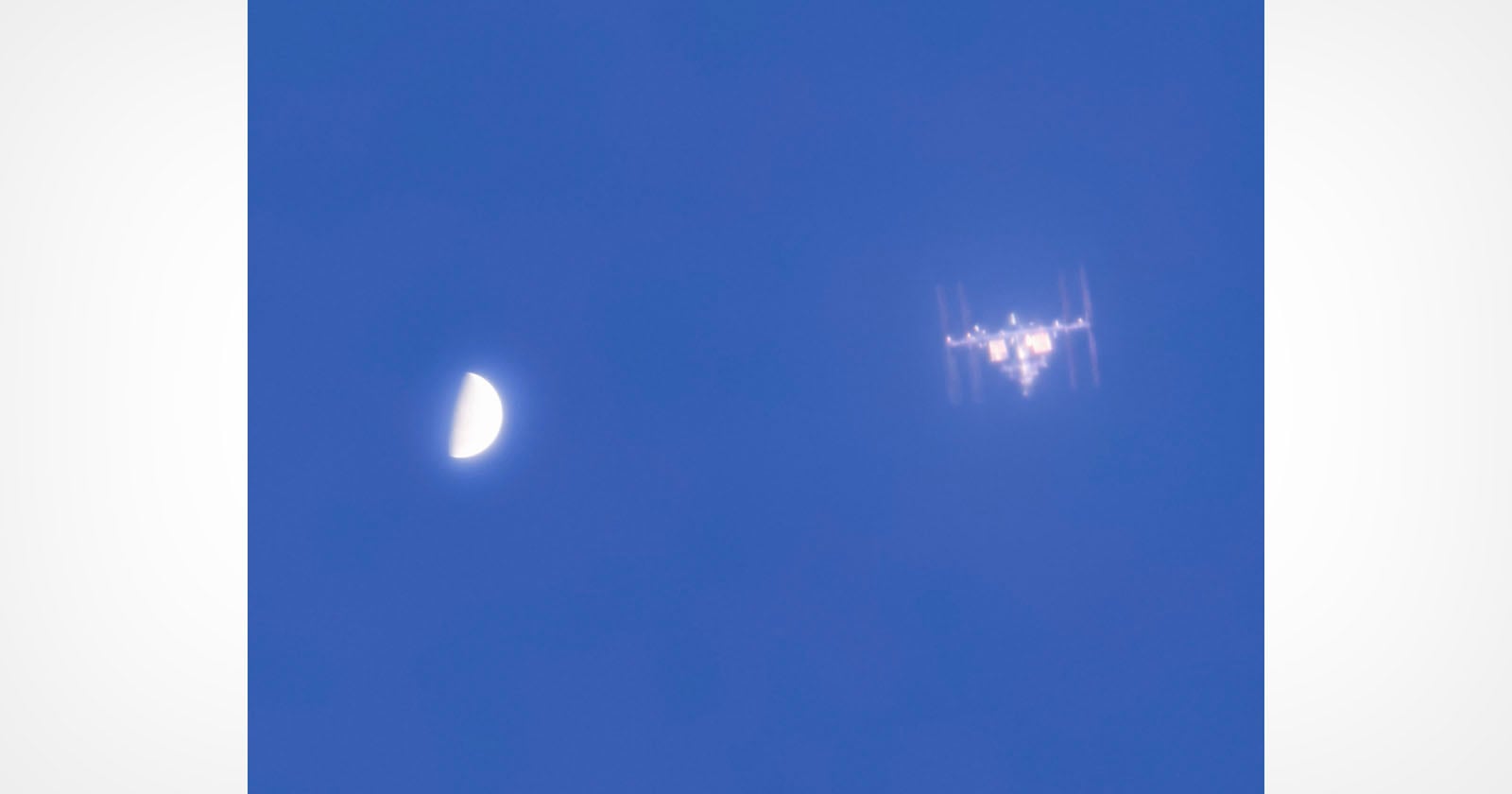
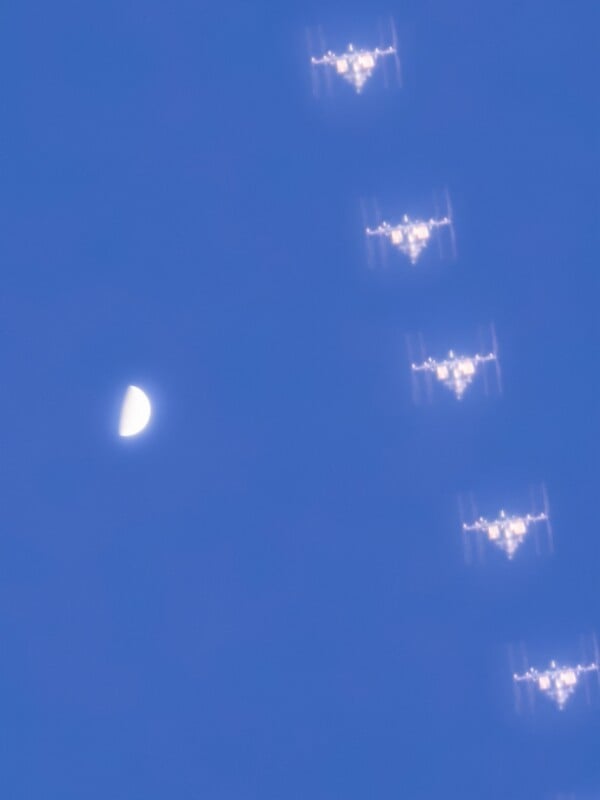
The sheer speed of the ISS presents an enormous technical hurdle. "The ISS travels at a mind-boggling 7.5 kilometers per second, making it very hard to photograph," Smadi elaborated. To overcome this, Smadi employed a technique common in capturing fast-moving celestial objects: high-speed video capture followed by image stacking. By shooting at a rapid 1/150 of a second exposure, he was able to acquire 10 individual frames from his uncompressed video sequence. These frames were then meticulously stacked using specialized software, a process that significantly enhances detail and reduces noise by averaging out atmospheric distortions and random sensor noise. This method is particularly effective for planetary imaging and for objects moving quickly through Earth’s turbulent atmosphere, allowing for a clearer, more defined final image than a single, longer exposure would permit.
The Arsenal of Astrophotography: Equipment and Methodology
The technical setup employed by Smadi is equally crucial to his success. His primary instrument was a 9.25-inch Celestron Schmidt-Cassegrain Telescope, a popular choice among amateur astronomers for its combination of aperture, long focal length, and compact design. With a focal length of 2,350mm, this telescope provided the necessary magnification to resolve fine details on both Venus and the ISS, despite their apparent small angular sizes. Coupled with this optical powerhouse was a ZWO ASI662MC camera, featuring Sony’s highly sensitive IMX662 sensor. CMOS sensors like the IMX662 are favored in planetary and lunar imaging for their high frame rates and low read noise, enabling the capture of many short exposures in quick succession, which is essential for video stacking. To further refine the image quality, Smadi utilized a UV/IR cut filter. This filter blocks ultraviolet and infrared light, which the camera sensor can detect but which often contributes to blurring and color aberrations, especially when imaging through the atmosphere. By filtering these wavelengths, the image gains sharpness and clarity, allowing the visible light spectrum to be captured with greater fidelity.
The use of such specialized equipment, combined with an understanding of atmospheric conditions (known as "seeing" in astronomy), light pollution, and precise tracking mechanisms, elevates Smadi’s work beyond casual photography. The process involves not only predicting the transit but also accurately aligning the telescope, maintaining focus on rapidly approaching and receding targets, and executing the capture sequence within a narrow window of opportunity – often just a few seconds.
Smadi’s Illustrious Portfolio: A Legacy of Precision
This latest achievement is not an isolated incident but a continuation of AJ Smadi’s distinguished career in precision astrophotography. His previous accomplishments underscore his unique skill set and dedication to capturing the cosmos in unprecedented ways. Notably, Smadi has successfully lined up the ISS with another planet, Saturn. That feat was even more challenging given Saturn’s colossal distance from Earth – approximately 1.39 billion kilometers (863.7 million miles) – making its angular size even smaller and the alignment window even narrower. His ability to capture such an alignment with a planet so much farther away speaks volumes about his planning capabilities and technical precision.
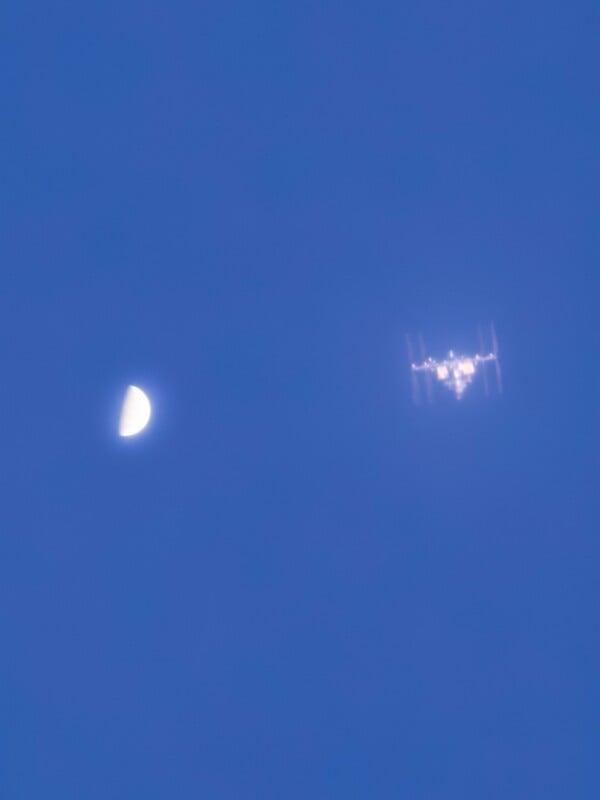
Beyond planetary transits, Smadi has also captured the ISS from Earth in impressively clear detail, showcasing the intricate structure of the orbiting laboratory despite its high-speed passage and considerable distance of 400 kilometers. These images provide a ground-level perspective of humanity’s continuous presence in space, offering a tangible connection to the astronauts and scientific endeavors onboard. His portfolio also includes capturing objects and events deep within the solar system, such as a solar eclipse that occurred on Saturn, an event invisible to the naked eye from Earth and requiring highly specialized imaging techniques and processing. These diverse captures firmly establish Smadi as a leading figure in the amateur astrophotography community, pushing the boundaries of what is possible with ground-based equipment.
Broader Implications: Inspiring Awe and Scientific Curiosity
Smadi’s photographs serve a purpose far beyond mere aesthetic appreciation; they are powerful tools for public engagement and scientific communication. In an era where space exploration often feels distant and abstract, images like these bridge the gap, bringing the vastness of the cosmos into relatable focus. They inspire awe, curiosity, and a deeper understanding of our place in the universe. For many, seeing the ISS, a symbol of international collaboration and scientific progress, alongside a familiar planet like Venus, transforms abstract astronomical concepts into tangible realities.
Such achievements also highlight the significant contributions of amateur astronomers and astrophotographers to the broader scientific community. While professional observatories conduct high-level research, individuals like Smadi, armed with dedication, skill, and increasingly sophisticated consumer-grade equipment, contribute to a global tapestry of astronomical observation. Their work can sometimes capture unexpected phenomena, provide valuable data, or, as in this case, create iconic images that resonate with the public and potentially inspire the next generation of scientists and engineers.
Dr. Eleanor Vance, a hypothetical astrophysicist specializing in planetary dynamics at the National Astronomical Society, might comment on such an achievement: "Mr. Smadi’s photographs are not just technically brilliant; they are a testament to human ingenuity and our innate drive to explore and understand the universe. Capturing two such dynamically different objects in a single frame requires an incredible blend of scientific foresight and photographic artistry. These images serve as powerful educational tools, illustrating principles of orbital mechanics, relative scale, and the sheer beauty of our solar system, all from a perspective that feels intimately close."
The dedication to predicting, tracking, and capturing these ephemeral moments underscores a profound connection between humanity and the cosmos. It reminds us that even from our terrestrial vantage point, we can observe and document the intricate ballet of celestial bodies and human-made objects in space, fostering a sense of wonder and encouraging continued exploration.
The Future of Precision Astrophotography
As technology continues to advance, the capabilities of amateur astrophotographers are expanding at an unprecedented rate. More sensitive cameras, larger and more affordable telescopes, and increasingly powerful image processing software are making feats like Smadi’s more attainable, though no less challenging. The precision required for such transit photography will continue to drive innovation in tracking mounts, adaptive optics for atmospheric correction, and predictive software. Smadi’s work sets a high bar, demonstrating the potential for stunning scientific and artistic output from dedicated individuals. His ongoing pursuit of these rare cosmic alignments not only enriches our visual understanding of the universe but also inspires countless others to look up, learn, and perhaps even aim their own lenses towards the stars.
The photographic evidence of the ISS and Venus coexisting in a single, fleeting moment within our skies is a potent symbol. It juxtaposes a natural celestial body, ancient and vast, with a marvel of human engineering, a temporary outpost for scientific endeavor. This dual presence in Smadi’s frame offers a unique philosophical reflection on humanity’s place in the cosmos—small yet ambitious, observing and reaching out into the infinite expanse. The image will undoubtedly stand as a significant contribution to the art and science of astrophotography, a compelling visual narrative crafted by a master of the craft. More of Smadi’s exceptional work can be explored on his Instagram and Reddit profiles, where he regularly shares his latest cosmic captures.