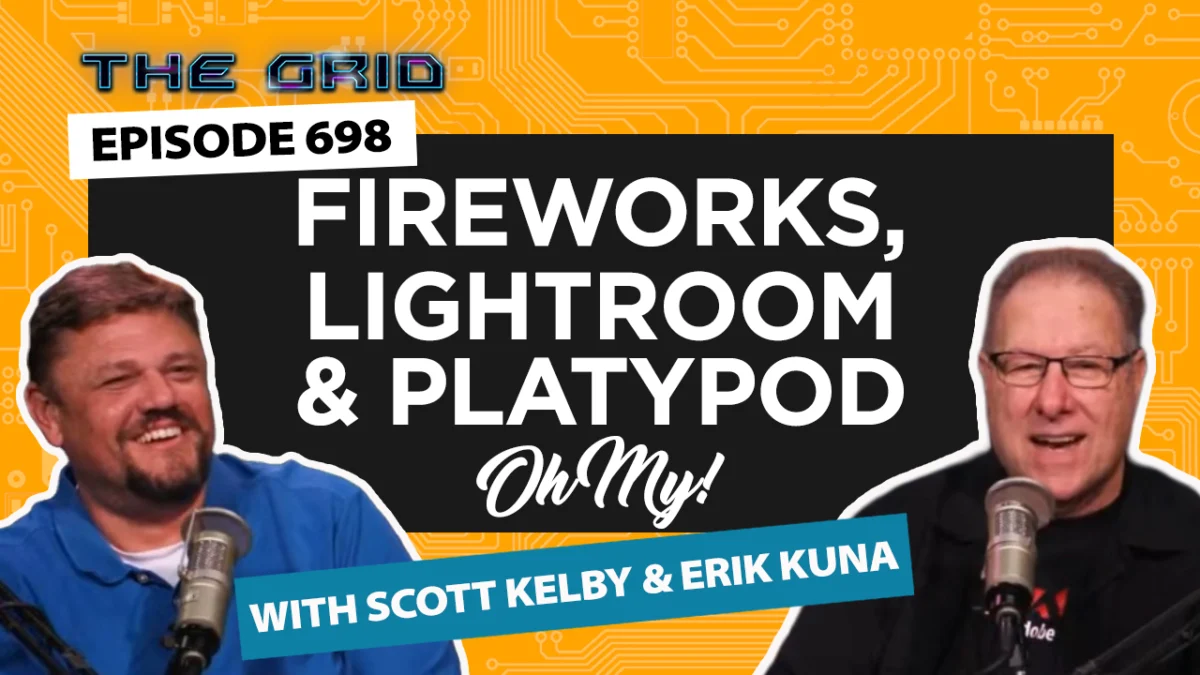
The latest installment of The Grid, episode 698, delivered a comprehensive masterclass in contemporary photography, featuring industry stalwarts Scott Kelby and Erik Kuna. This week’s broadcast provided viewers with a wealth of actionable advice, spanning an eclectic range of subjects from the intricacies of fireworks and flash photography to the nuances of recent Lightroom updates and the burgeoning field of astrophotography. The episode underscored the hosts’ commitment to democratizing advanced photographic techniques, making complex concepts accessible to a broad audience of enthusiasts and professionals alike.
The Grid: A Cornerstone of Photography Education
The Grid, a long-running weekly webcast produced by KelbyOne, has established itself as a seminal platform for photography education and community engagement. Hosted primarily by Scott Kelby, a prolific author, educator, and CEO of KelbyOne, and frequently co-hosted by Erik Kuna, a renowned photographer and educator, the show has consistently delivered timely insights into photographic trends, gear reviews, and practical tutorials. With nearly 700 episodes under its belt, The Grid has cultivated a loyal global following, serving as a vital resource for photographers seeking to refine their skills and stay abreast of technological advancements. The format typically blends technical demonstrations with real-world application, often incorporating viewer questions and interactive discussions, a pedagogical approach that has proven highly effective in fostering a dynamic learning environment.
Chronology of Expertise: Episode 698 Highlights
The episode commenced with Scott Kelby delving into the often-challenging domain of fireworks photography. As a visual spectacle frequently associated with public holidays and celebrations, capturing fireworks effectively requires a precise understanding of exposure, timing, and composition. Kelby systematically outlined key strategies, emphasizing the importance of a stable tripod, remote shutter release, and manual camera settings. He elaborated on the optimal aperture ranges (typically f/8 to f/16) to ensure sharpness across the frame and adequate depth of field, coupled with lower ISO settings (100-400) to minimize noise, particularly critical for long exposures in low light. Shutter speed, he explained, is highly variable, ranging from a few seconds to upwards of 30 seconds, depending on the desired effect of trailing light paths. Following the capture techniques, Kelby seamlessly transitioned into post-processing within Adobe Lightroom, demonstrating how simple adjustments to highlights, shadows, whites, and blacks can dramatically enhance the vibrancy and detail of fireworks images, transforming raw captures into impactful visual narratives. The discussion also touched upon color saturation and clarity, crucial tools for making the explosive bursts "pop" against a dark sky.
Mastering Illumination: The Platypod Bracket & Bounce
The conversation then pivoted to the critical role of external lighting in portraiture and product photography, specifically spotlighting the new Platypod Bracket & Bounce system. Scott Kelby, known for his pragmatic approach to gear, showcased this compact lighting accessory through a practical, real-world application. The Platypod Bracket & Bounce is designed to provide a versatile solution for photographers seeking to elevate their flash photography beyond on-camera direct flash, which often results in harsh shadows and flat, unflattering illumination.
The fundamental principle behind Kelby’s demonstration was the transformative impact of getting a flash off-camera. While built-in or hot-shoe mounted flashes serve a basic purpose, their direct, frontal light source often flattens subjects and fails to sculpt features effectively. By contrast, off-camera flash allows photographers to control the direction, quality, and intensity of light, creating more dynamic, three-dimensional, and aesthetically pleasing results. The Platypod system, comprising a sturdy bracket and a bounce disc, facilitates this by providing a stable, portable mount for speedlights or small strobes, allowing them to be positioned independently of the camera. Kelby illustrated how bouncing flash off a wall, ceiling, or the included bounce disc can soften light, reduce harsh shadows, and create more natural-looking illumination, mimicking the effects of larger, more expensive studio lighting setups. This segment resonated with photographers looking for portable, efficient solutions to improve their lighting game without investing heavily in cumbersome studio equipment. The implications for event photographers, portrait artists working on location, and even product photographers requiring precise light placement are significant, offering a lightweight yet robust alternative to traditional light stands.
Revolutionizing Post-Production: Lightroom and Camera Raw Updates
A significant portion of the episode was dedicated to the latest updates to Adobe Lightroom and Camera Raw, tools indispensable to modern digital photographers. While the introduction of duplicate detection garnered considerable attention within the photography community—a feature addressing the perennial issue of redundant files and cluttered catalogs—Scott Kelby argued that the true game-changer was the dramatically improved "Select Subject" masking capability.
Duplicate detection, while a welcome addition for workflow efficiency, primarily serves an organizational function. It helps photographers identify and manage identical images that might have been imported multiple times, thereby saving disk space and streamlining catalog navigation. This feature reflects Adobe’s ongoing commitment to improving the user experience and addressing common pain points in digital asset management.
However, Kelby’s emphasis on the enhanced "Select Subject" masking tool highlighted a more profound advancement in image editing. Leveraging sophisticated artificial intelligence and machine learning algorithms, the updated "Select Subject" feature now offers unparalleled accuracy and precision in automatically identifying and selecting the primary subject within an image. This capability drastically reduces the time and effort traditionally required for manual selections, which often involved painstaking brushwork or complex path tools.
The implications of this enhancement are far-reaching. For portrait photographers, it means faster, more accurate selections of subjects, enabling precise adjustments to skin tones, eyes, or hair without affecting the background. For landscape or architectural photographers, it facilitates isolated adjustments to specific elements within a scene. Kelby underscored how this technology makes tasks ranging from subtle portrait refinements to complex background replacements significantly faster and more accurate, thereby accelerating post-production workflows and empowering photographers to achieve more sophisticated edits with greater ease. This advancement is part of a broader industry trend towards AI-powered editing, where software intelligently assists photographers in complex tasks, allowing them to focus more on creative vision rather than laborious technical execution. The improvements signal a continued evolution in non-destructive editing, pushing the boundaries of what automated tools can achieve in photo manipulation.
Unlocking the Cosmos: Astrophotography with Affordable Star Trackers
Concluding the episode, Erik Kuna provided a compelling demonstration of an affordable star tracker, a specialized piece of equipment designed to simplify and enhance astrophotography, particularly for capturing the Milky Way. Astrophotography, once considered an esoteric and highly technical niche, has seen a surge in popularity, driven by advancements in camera sensor technology and increasingly accessible equipment.
Kuna’s segment addressed a common challenge in astrophotography: the Earth’s rotation. When photographing celestial objects with long exposures, the Earth’s movement causes stars to appear as streaks or trails rather than sharp points of light. Traditional solutions often involved complex stacking techniques or very high-end equatorial mounts. Star trackers mitigate this issue by precisely counteracting the Earth’s rotation, allowing cameras to track the movement of stars across the night sky. This enables photographers to use much longer exposure times—often several minutes—without incurring star trails.
The key benefit highlighted by Kuna was that these longer exposures, facilitated by the tracker, allow for significantly lower ISO settings and smaller apertures (e.g., f/2.8-f/4), which drastically improves image quality by reducing digital noise and increasing sharpness. This is particularly crucial for capturing faint celestial details like the intricate dust lanes and nebulae of the Milky Way. Kuna’s demonstration emphasized that an affordable star tracker can unlock the potential for stunning Milky Way photography with almost any lens, even those not traditionally considered "fast" or wide-angle. This removes a significant barrier to entry for aspiring astrophotographers, who might otherwise be deterred by the perceived need for expensive, specialized lenses. His practical guidance included tips on polar alignment—the process of aligning the tracker with the Earth’s rotational axis—and recommended exposure settings, making the technique approachable for a wider audience. The implications are profound for hobbyists and emerging astrophotographers, offering a cost-effective pathway to capture breathtaking images of the night sky that were previously the exclusive domain of highly specialized equipment.
Broader Impact and Implications for the Photography Community
Episode 698 of The Grid serves as a microcosm of the dynamic and continuously evolving landscape of digital photography. The diverse range of topics covered—from event photography (fireworks) and studio-quality lighting on location to advanced post-processing and specialized genres like astrophotography—reflects the multifaceted demands and opportunities within the photographic world.
The emphasis on practical, actionable advice, coupled with demonstrations of accessible tools like the Platypod Bracket & Bounce and affordable star trackers, underscores a significant trend: the democratization of advanced photographic techniques. What was once the exclusive domain of highly trained professionals with extensive budgets is now increasingly within reach for enthusiasts and aspiring artists. This accessibility is driven by continuous innovation in camera technology, intelligent software solutions, and clever accessory design that offers professional-level results at consumer-friendly price points.
Furthermore, the detailed discussion of Lightroom updates highlights the ongoing critical role of post-processing in the digital workflow. As camera sensors become more sophisticated, the raw files they produce offer immense flexibility, but realizing their full potential often hinges on adept editing. The advancements in AI-powered masking, as championed by Kelby, represent a paradigm shift, enabling photographers to execute complex edits with greater speed and precision, thereby freeing up more time for creative exploration rather than tedious technical work.
The overarching message conveyed by Kelby and Kuna is one of empowerment. Through clear instruction and practical application, they demonstrate that continuous learning, combined with a strategic adoption of new tools and techniques, can significantly elevate a photographer’s craft, regardless of their current skill level or equipment budget. The replay of episode 698 stands as a testament to the enduring value of expert guidance in navigating the complexities and embracing the opportunities presented by the modern photographic landscape. It encourages photographers to experiment, innovate, and push the boundaries of their creative expression, reinforcing The Grid‘s legacy as an essential educational resource.