The integration of the AVSS PRS-M30 parachute system into the DJI Matrice 30 (M30) series marks a pivotal advancement in the commercial drone industry, specifically addressing the stringent safety requirements for flight operations over human gatherings and dense urban environments. As industrial drone applications migrate from remote infrastructure sites to complex metropolitan landscapes, the necessity for redundant safety mechanisms has become a primary concern for regulators, operators, and the public alike. By combining DJI’s sophisticated flight control systems with Aerial Vehicle Safety Solutions (AVSS) hardware, the M30 series has transitioned from a high-performance inspection tool to a versatile platform capable of navigating the legal and physical complexities of populated areas. This development is not merely a technical upgrade but a strategic alignment with international aviation standards, such as the ASTM F3322-18, which governs the design and testing of small Unmanned Aircraft (sUA) parachutes.
The Evolution of the DJI Matrice 30 Series
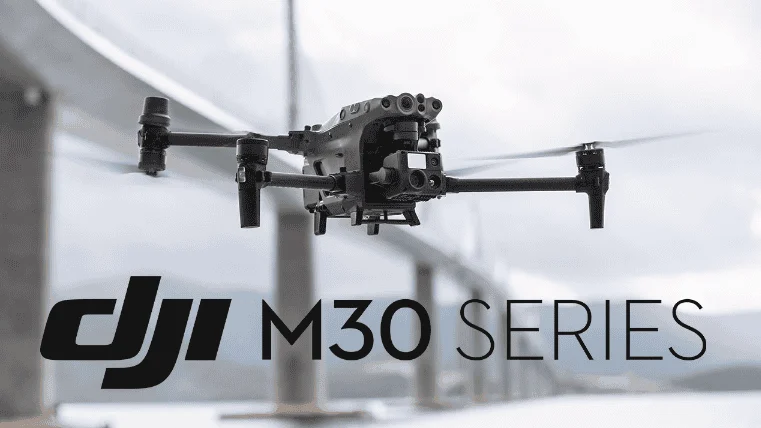
Launched as a bridge between the portable Mavic 3 Enterprise and the heavy-lift Matrice 300 RTK, the DJI M30 series was engineered for "anytime, anywhere" deployment. Its foldable design allows for rapid setup, yet it maintains the ruggedness required for high-stakes industrial missions. However, despite its inherent reliability, the risk of a "kinetic event" or system failure over a crowd remained a barrier for many municipal and commercial users. The introduction of the AVSS PRS-M30 system mitigates these risks by providing a failsafe that significantly reduces the terminal velocity of the aircraft in the event of a power loss or motor failure.
The M30 series, comprising the standard M30 and the M30T (which includes a radiometric thermal sensor), features a redundant battery system, dual-vision and ToF (Time of Flight) sensors on all six sides, and an advanced O3 Enterprise transmission system. While these internal redundancies prevent many common causes of crashes, the addition of a ballistic parachute provides the final layer of protection required by civil aviation authorities for Category 2 and Category 3 operations over people.
Technical Specifications of the PRS-M30 Parachute System
The PRS-M30 is a purpose-built safety peripheral designed specifically for the Matrice 30’s airframe. It consists of three primary components: an electronic module, a flight termination system (FTS), and the parachute pod. The system is designed to be plug-and-play, connecting via the drone’s PSDK (Payload Software Development Kit) port, which allows for seamless communication between the aircraft’s flight controller and the parachute’s sensors.
A critical feature of the PRS-M30 is the Autonomous Triggering System (ATS). If the drone enters an uncontrolled state—such as an extreme pitch or roll angle or a sudden loss of altitude—the ATS detects the anomaly in milliseconds. Before the parachute is deployed, the FTS instantly cuts power to the drone’s motors. This is a vital safety step; it prevents the parachute strings from becoming entangled in spinning propellers and ensures that the aircraft does not continue to fly under power while descending. The parachute canopy is ejected using a high-pressure spring or CO2 cartridge, providing rapid inflation even at low altitudes.
Regulatory Framework and Compliance Standards
For drone operators in the United States, Europe, and other highly regulated regions, flying over people is strictly governed. In the U.S., the Federal Aviation Administration (FAA) Part 107 rules require that any drone flying over open-air assemblies must meet specific kinetic energy thresholds to minimize potential injury. The integration of the AVSS parachute allows the DJI M30 to meet these safety standards by ensuring that if a failure occurs, the impact energy remains below the maximum allowable joules.
The AVSS system has undergone rigorous testing to comply with ASTM F3322-18 standards. This testing involves dozens of successful deployments across various failure scenarios, including manual triggers and automatic deployments during high-speed forward flight. This data is essential for operators seeking a "Waiver for Operations Over People" (107.39) or when operating under the "Complex Operations" categories in EASA jurisdictions. By providing a documented safety record, the M30 and AVSS combination simplifies the bureaucratic process for public safety agencies and commercial enterprises.
Impact on Public Safety and Emergency Response
The ability to fly over crowds has immediate and profound implications for law enforcement and emergency medical services. During large-scale public events, such as festivals, marathons, or protests, situational awareness is critical for crowd management and identifying potential threats. Previously, operators had to maintain a safe distance or fly in "clear corridors" to avoid being directly over people. With the M30’s thermal capabilities and the PRS-M30’s safety assurance, police departments can now hover directly over areas of interest to provide real-time telemetry to ground units.
In search and rescue (SAR) scenarios, the M30T can utilize its thermal sensors to locate missing persons in forested areas or urban ruins. Often, these missions take place near residential zones where bystanders may gather. The parachute system ensures that the search can continue without endangering the very public the agencies are trying to protect. Furthermore, the M30’s IP55 rating allows it to operate in heavy rain and snow, conditions where manual flight is difficult and the risk of technical failure is slightly elevated, making the parachute an even more valuable asset.
Chronology of Drone Safety Integration
The path to achieving safe flight over crowds has been a multi-year journey for the industry:
- 2017-2019: Early adoption of industrial drones highlighted the need for secondary safety systems. AVSS and other manufacturers began developing the first generation of PRS (Parachute Recovery Systems).
- 2020: The FAA released updated rules for operations over people, emphasizing the need for kinetic energy reduction.
- March 2022: DJI officially launched the Matrice 30 series, emphasizing its compact power but noting that third-party accessories would be needed for specialized safety certifications.
- 2023-2024: AVSS refined the PRS-M30, completing the ASTM F3322-18 testing specifically for the M30 airframe.
- 2025: The integration becomes a standard recommendation for "Drone as a First Responder" (DFR) programs globally, allowing drones to be dispatched from docking stations (like the DJI Dock) across urban centers.
Infrastructure Inspection in Urban Corridors
Beyond public safety, the commercial sector stands to benefit significantly from this technology. Inspecting bridges, high-rise buildings, and telecommunications towers in city centers often requires flying over sidewalks, roads, and parks. Traditionally, these operations required extensive ground cordoning, which is both expensive and logistically difficult.
The M30’s high-resolution zoom camera allows for detailed inspections from a distance, but the flight path often necessitates crossing populated zones. The PRS-M30 provides the "safety envelope" that allows insurance companies to underwrite these missions and city councils to grant permits. This reduces the operational cost of infrastructure maintenance by eliminating the need for massive ground crews and temporary road closures.
Analytical Perspective on Market Implications
The collaboration between DJI, a dominant hardware manufacturer, and AVSS, a specialized safety engineering firm, represents a maturing of the drone ecosystem. It reflects a shift from "proprietary-only" solutions to an open-payload architecture where third-party experts provide the necessary components for regulatory compliance.
From an economic standpoint, the M30 with a parachute system offers a higher Return on Investment (ROI) than larger, more expensive platforms. The M30 is more portable and faster to deploy than the Matrice 300/350, yet with the AVSS integration, it carries the same level of safety certification. This makes it the ideal "workhorse" for mid-to-large scale drone programs. As "Smart City" initiatives continue to expand, the presence of drones in the sky will become more common, and the public’s acceptance of this technology will depend largely on the visible presence of safety measures like the PRS-M30.
Future Outlook: Toward Autonomous Urban Air Mobility
The success of the DJI M30 in populated environments serves as a blueprint for the future of Autonomous Urban Air Mobility (UAM). As the industry moves toward Beyond Visual Line of Sight (BVLOS) operations, the requirement for autonomous safety triggers will become universal. The data gathered from M30 flights over crowds today will inform the safety protocols for the delivery drones and passenger air taxis of tomorrow.
In conclusion, the DJI M30’s ability to fly over crowds, facilitated by the AVSS PRS-M30 parachute system, is a landmark achievement in drone aviation. It effectively bridges the gap between high-end industrial performance and the rigorous safety demands of the modern world. By addressing the "worst-case scenario" with a reliable, tested mechanical solution, DJI and AVSS have provided a pathway for the expanded use of unmanned aerial technology in every facet of public life, ensuring that progress does not come at the expense of safety.