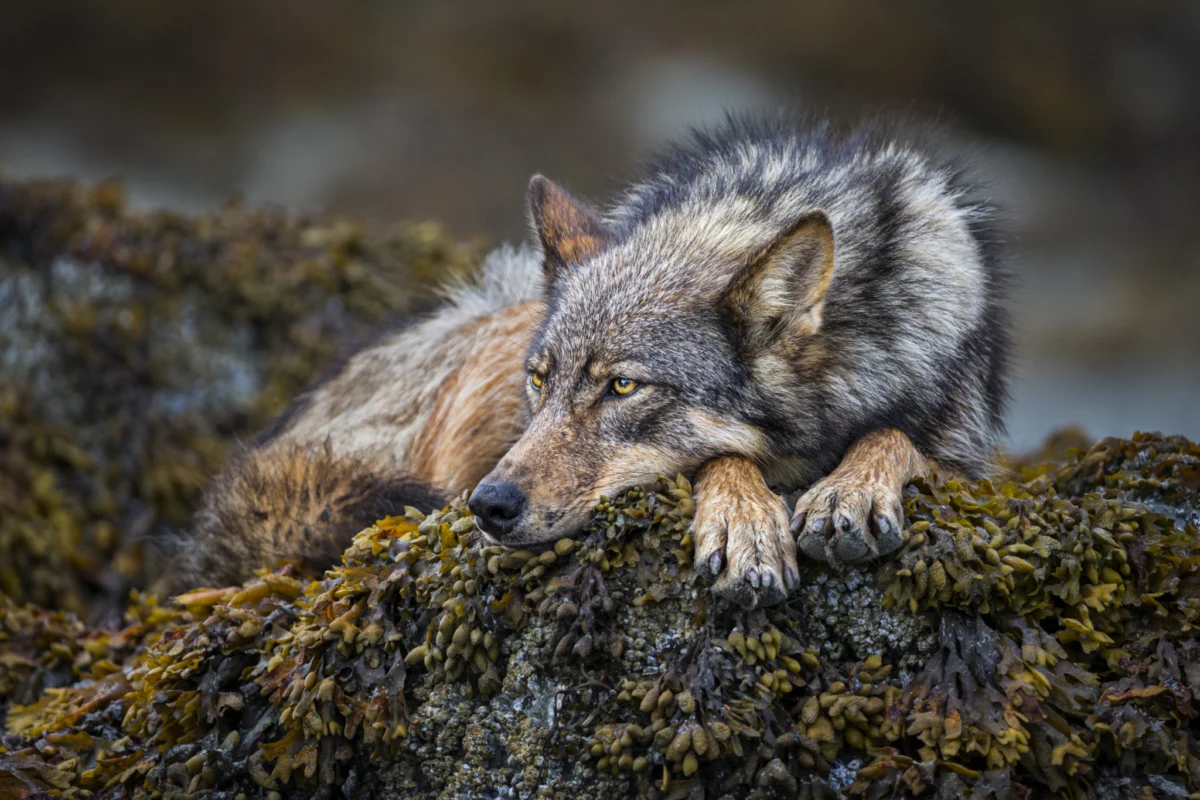
Thirty years ago, a profound journey into the heart of the Canadian wilderness began, an expedition that would profoundly shape my understanding of the natural world and the complex relationship between humans and wildlife. Chartered to be dropped solo into the aptly named Barren Grounds, a vast expanse of tundra situated just 300 miles north of the Arctic Circle, this three-month immersion involved traversing over 600 miles on foot and navigating more than 2,000 miles by canoe. The initial objective was starkly personal: to test the boundaries of my own resilience and self-reliance. However, an equally compelling, outward-facing goal was to photograph tundra wolves, creatures shrouded in both mystery and widespread misconception. After weeks of patient observation and fruitless searching, a breakthrough occurred. What initially appeared to be an inert, greyish rock, nestled amongst the vibrant hues of lupines, revealed itself to be a lone wolf. The ensuing hours were a masterclass in stealth and anticipation, crawling for nearly an hour, inching closer through tangled willows, until the unmistakable glint of tawny eyes, perked ears, and the silver face of a magnificent wolf came into full view.
This singular encounter was not an isolated incident but the beginning of a series of interactions with wolves that have spanned decades. Each subsequent meeting, whether observing a solitary hunter or having the distinct honor of resting mere feet from a relaxed pack, has served as an intensive course in patience and earned trust. Wolves, by their very nature, are creatures of profound caution. Their inherent shyness and keen awareness of their surroundings mean they rarely initiate contact with humans. The data corroborates this reality: documented attacks on humans by wolves in North America are exceptionally rare, with only a handful recorded over the past century. Yet, despite this empirical evidence, the archetype of the "big bad wolf" remains stubbornly entrenched in our collective imagination, perpetuated through fiction, film, and age-old folklore. This enduring narrative, it seems, taps into a primal human fascination with the thrill of fear.
While modern society largely acknowledges that wolves do not, in reality, impersonate elderly relatives to deceive children or possess the architectural prowess to demolish houses with their breath, a subconscious fear often persists. This deeply ingrained apprehension is, in no small part, a legacy of childhood stories and enduring legends. Fairy tales such as Little Red Riding Hood, while seemingly benign, can, in the context of escalating biodiversity loss across the continent, inadvertently cast these apex predators as convenient scapegoats. As ecological systems face unprecedented pressure, the narrative of the villainous wolf becomes a readily available, albeit inaccurate, explanation for declining prey populations.
When populations of deer, elk, and other crucial prey species begin to dwindle, wolves are frequently the first to be implicated. This tendency to assign blame overlooks a critical historical context: wolves have been an integral part of the North American landscape for an estimated 30,000 to 50,000 years, predating the arrival of humans by tens of thousands of years. Their presence is not an anomaly but a foundational element of these ecosystems.
The true devastation to wildlife stems not from the predatory actions of wolves, but from the far-reaching and systemic impacts of human industrial activity. The relentless expansion of roads, rampant deforestation, extensive mining operations, and widespread drilling have inflicted immeasurably greater harm on natural habitats and their inhabitants than wolves ever have. Yet, despite this undeniable reality, a persistent belief that the solution to ecological imbalance lies in controlling and eliminating certain species endures. This flawed logic underpins the continued implementation of government-sanctioned wolf culls, often framed as necessary wildlife "management" strategies. Simultaneously, corporate entities continue to aggressively pursue environmentally destructive practices such as oil dredging and copper mining, further fragmenting and degrading critical habitats. A stark example of this ongoing issue is the Canadian government’s current initiative, funded by taxpayers, to exterminate approximately 4,000 wolves in British Columbia alone. This program, ostensibly aimed at protecting caribou populations, overlooks the broader ecological role of wolves and the far more significant anthropogenic pressures impacting these environments. Until humanity collectively accepts accountability for the true scale of damage inflicted upon our landscapes, these destructive patterns are destined to repeat.
The purpose in sharing the profound beauty and ecological significance of animals like wolves is to foster a deeper, more nuanced understanding of their vital role. To perpetuate the villainization of predators that have, for millennia, acted as keystone species, maintaining equilibrium within their ecosystems, is to deepen our descent into a destructive cycle. Every creature, regardless of how it is perceived or how profoundly it may be misunderstood, contributes intrinsically to the richness and complexity of our planet’s biodiversity. The critical first step toward confronting the truth and beginning to mend our fractured relationship with the natural world involves a decisive shift in focus. We must redirect our attention from misplaced blame towards addressing the pervasive systemic threats that genuinely endanger our planet’s ecological integrity.
The Historical Context of Human-Wolf Interaction
The narrative of the wolf in North America is a complex tapestry woven from millennia of co-existence, punctuated by periods of intense conflict and misunderstanding. Indigenous peoples across the continent often held a deep reverence for wolves, recognizing their spiritual significance and their integral role in the natural order. Many oral traditions and creation stories feature wolves as respected figures, embodying qualities such as intelligence, resilience, and a profound connection to the land. However, with the arrival of European settlers, a different narrative began to take hold. Driven by agricultural expansion, which brought livestock into direct competition with native herbivores and thus predators, and fueled by a perception of wilderness as something to be conquered and tamed, the wolf was increasingly cast as a dangerous adversary.
This animosity was further solidified by the dissemination of European folklore, which often depicted wolves as malevolent beings. The economic incentive to eradicate wolves also played a significant role. Bounties were offered for wolf pelts, encouraging widespread hunting and trapping. This systematic persecution, spanning centuries, led to dramatic declines in wolf populations across much of their historical range. By the early to mid-20th century, wolves had been extirpated from large portions of the contiguous United States and had seen significant population reductions in Canada.
Ecological Significance of Wolves
Wolves are more than just charismatic predators; they are essential architects of healthy ecosystems. As apex predators, they play a critical role in regulating the populations of their prey species. This regulation has cascading effects throughout the food web. For instance, by keeping herbivore populations in check, wolves prevent overgrazing, allowing vegetation to recover and flourish. This, in turn, benefits a wide array of other species, from insects and birds that rely on diverse plant life for food and shelter, to the very soil structure itself, which is protected from erosion by healthy vegetation.
The reintroduction of wolves into areas where they had been absent has provided compelling evidence of their ecological importance. The Yellowstone National Park wolf reintroduction program, beginning in 1995, is a prime example. Prior to their return, the park experienced significant overgrazing by elk, which had depleted riparian vegetation. Following the reintroduction of wolves, elk behavior changed; they became more wary and avoided certain areas where they were more vulnerable. This shift in grazing patterns allowed vegetation, including aspen and willow, to rebound. This recovery, in turn, led to an increase in beaver populations, which created new aquatic habitats, and a resurgence of songbird populations. The very landscape of the park began to transform, demonstrating the profound "trophic cascade" initiated by the presence of wolves.
The Data Behind Misconceptions and Realities
The persistent perception of wolves as a significant threat to human safety is not supported by empirical data. According to the U.S. Fish and Wildlife Service, between 1977 and 2019, there were only a handful of documented wolf attacks on humans in North America. These incidents were overwhelmingly defensive, occurring when wolves felt threatened, and resulted in very few serious injuries. This stands in stark contrast to the significant number of human fatalities caused annually by domestic dogs, a fact often overlooked in discussions about dangerous wildlife.
Conversely, the data on human impact on wolf populations and their habitats paints a different picture. Habitat loss and fragmentation due to development, including logging, mining, and infrastructure projects, are the primary drivers of declining wolf numbers in many regions. Road construction, for example, not only destroys habitat but also increases the risk of wolves being struck by vehicles. Furthermore, the illegal killing of wolves, often driven by fear or misconception, continues to be a significant threat in many areas.
Government Policies and Public Opinion
Government policies regarding wolf management often reflect a complex interplay between scientific understanding, economic interests, and public sentiment. In some jurisdictions, wolves are classified as endangered or threatened species, affording them legal protections. In others, particularly in areas with significant livestock ranching, wolves may be subject to lethal control measures when they are perceived to be preying on livestock. These management decisions are frequently contentious, drawing criticism from conservationists who advocate for stronger protections and from some agricultural stakeholders who seek to reduce wolf populations.
The Canadian government’s decision to support the extermination of 4,000 wolves in British Columbia, purportedly to aid caribou recovery, is a case in point. While proponents argue this is a necessary measure to address the decline of endangered caribou populations, critics contend that it misidentifies the primary threats to caribou, which include habitat degradation and fragmentation from resource extraction industries. They argue that focusing solely on wolf culling distracts from the root causes of caribou decline and that the ecological role of wolves in maintaining a healthy ecosystem is being disregarded. Such policies raise critical questions about the long-term sustainability of conservation strategies and the ethical considerations of large-scale predator eradication.
Broader Implications for Conservation and Human-Nature Relations
The enduring myth of the "big bad wolf" and the subsequent misguided management practices have significant implications for broader conservation efforts and our fundamental relationship with the natural world. When we scapegoat an ecologically vital species like the wolf, we divert attention and resources from addressing the true drivers of biodiversity loss, such as habitat destruction, climate change, and pollution. This flawed approach perpetuates a cycle of ecological imbalance and hinders our ability to achieve genuine, sustainable conservation outcomes.
The journey from fearing and demonizing to understanding and appreciating wildlife requires a fundamental shift in perspective. It demands that we move beyond anthropocentric viewpoints and recognize the intrinsic value of all species and the complex, interconnected web of life. Embracing the wisdom of indigenous cultures, who have long understood the importance of ecological balance and the reciprocal relationship between humans and nature, can provide invaluable guidance. As Robin Wall Kimmerer eloquently stated, "As we learn to listen to the land, we discover that we are not separate from it; we are part of it." This realization is not merely an idealistic sentiment; it is a necessary prerequisite for forging a future where both humanity and the wild can thrive. By challenging ingrained myths, embracing scientific evidence, and advocating for policies that reflect a holistic understanding of ecosystems, we can begin to heal the broken relationship between ourselves and the natural world, ensuring a more vibrant and resilient planet for generations to come.