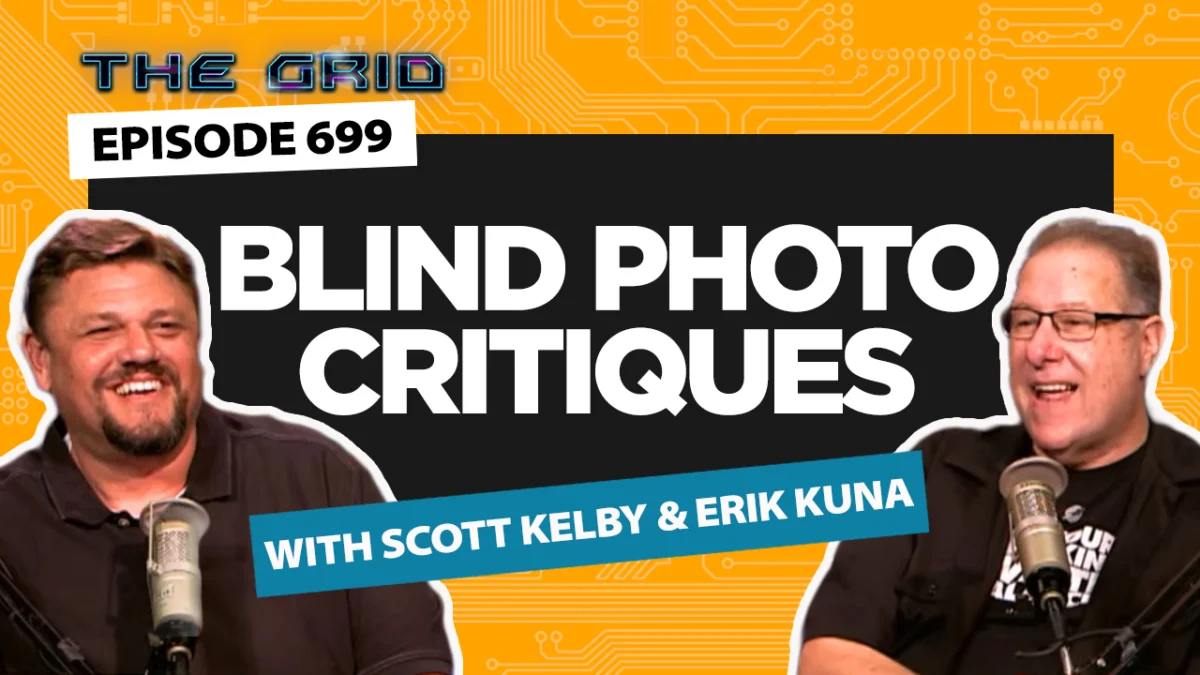
The latest installment of The Grid, episode 699, presented a rigorous session of its acclaimed Blind Photo Critiques, featuring photographic luminaries Scott Kelby and Erik Kuna. This recurring segment offers an in-depth, unbiased evaluation of viewer-submitted images, designed to foster practical skill enhancement among photographers of all levels. The recent episode showcased an exceptionally diverse portfolio of submissions, spanning a broad spectrum of photographic genres and technical challenges, providing a rich educational resource for its global audience.
Understanding "The Grid" and Blind Photo Critiques
"The Grid," hosted by Scott Kelby and Erik Kuna, is a long-running weekly webcast dedicated to photography education, news, and community engagement. Launched several years ago, it has established itself as a cornerstone for photographers seeking to improve their craft and stay abreast of industry trends. The show’s format typically includes discussions on gear, software, techniques, and, notably, its "Blind Photo Critiques." This segment is distinguished by its methodology: images are submitted anonymously, stripped of EXIF data and photographer identity, ensuring that critiques are solely based on the visual merits and technical execution of the photograph itself, free from personal bias or preconceived notions about the photographer’s experience or equipment. This objective approach is a cornerstone of its educational value, compelling both critics and viewers to focus purely on the art and science of photography.
A Spectrum of Photographic Excellence and Challenge
Episode 699 highlighted the vast landscape of modern photography through its curated selection of images. Submissions encompassed complex scenarios such as dynamic fireworks displays, high-speed air show action, intricate Milky Way astrophotography, nuanced portraiture, elaborate wedding photography, immersive travel scenes, precise architectural studies, and challenging underwater compositions. This breadth underscores the varied interests and technical demands faced by contemporary photographers, from mastering long exposures for celestial bodies to capturing fleeting moments in event photography or controlling light in aquatic environments. The inclusion of such a wide array of genres allows the critiques to address universal photographic principles while also diving into specialized techniques pertinent to each field.
Core Principles of Critique: Beyond the Camera Settings
Throughout the session, Kelby and Kuna meticulously dissected each image, offering constructive feedback that transcended superficial observations. Their discussions consistently gravitated towards fundamental photographic principles, including optimal camera settings, principles of composition, effective posing techniques for human subjects, the critical importance of timing in capturing decisive moments, and advanced editing workflows utilizing tools like Camera Raw and Photoshop. A notable demonstration featured Adobe’s Generative Expand functionality, showcasing its potential for creative post-processing, alongside a detailed walkthrough of blending techniques for a striking blue hour Milky Way photograph.
A central, reiterated theme of the episode was the assertion that technical camera settings, while foundational, do not inherently produce memorable photographs. This recurring message underscored a pedagogical philosophy that prioritizes artistic vision and communicative intent. Both critics emphasized that the most significant improvements often stem from a photographer’s ability to direct their subject effectively, simplify complex compositions to enhance clarity, and, ultimately, tell a stronger, more compelling visual story. This distinction between technical proficiency and artistic storytelling is a critical lesson for aspiring photographers, suggesting that mastery of the camera’s functions is merely a means to an end, with the true artistry residing in the photographer’s creative choices and narrative construction.
Technological Integration: Generative Expand and Post-Processing Mastery
The demonstration of Generative Expand within Photoshop served as a pertinent example of how contemporary photographers are leveraging artificial intelligence (AI) tools to push creative boundaries. Generative Expand, a feature within Adobe Photoshop’s Generative Fill suite, allows users to non-destructively extend the canvas of an image, intelligently filling in new areas based on the existing content and user prompts. This capability offers unprecedented flexibility in cropping, recomposing, and even subtly altering the aspect ratio of an image without traditional cloning or content-aware fill limitations. Kelby and Kuna’s inclusion of this tool in their critique highlights the ongoing evolution of post-processing techniques and the imperative for photographers to adapt to and integrate new technologies responsibly. The discussion likely centered on how such tools can enhance storytelling or rectify compositional issues, rather than replacing fundamental photographic skills.
Similarly, the detailed segment on blending a blue hour Milky Way image underscored the intricate nature of astrophotography post-processing. Capturing the Milky Way often involves specialized techniques such as stacking multiple exposures for noise reduction and dynamic range enhancement, followed by meticulous blending to integrate foreground elements captured under different lighting conditions (e.g., blue hour for ambient light) with the darker night sky. This particular demonstration provided practical insights into managing light, color balance, and detail across different exposures, a common challenge in advanced landscape and astrophotography.
The Evolution of Photographic Education and Community Engagement
The format of "The Grid" and its Blind Photo Critiques reflects a broader trend in photographic education: a move towards interactive, community-driven learning platforms. By inviting viewer submissions, the show transforms passive viewership into active participation, fostering a sense of community among photographers worldwide. This approach democratizes access to expert critique, which traditionally might have been confined to academic settings or exclusive workshops. The global reach of such online platforms ensures that diverse perspectives and photographic challenges from various geographical and cultural contexts are brought to the forefront, enriching the learning experience for everyone involved.
The educational philosophy espoused by Kelby and Kuna, prioritizing storytelling and simplification, resonates with the challenges faced by many photographers in an age of overwhelming technical options. With advancements in camera technology making high-quality imaging more accessible than ever, the differentiator increasingly lies in the photographer’s vision and ability to craft a compelling narrative. This shift from purely technical prowess to a more holistic understanding of visual communication is a crucial aspect of modern photographic development.
Upcoming Initiatives and Broader Implications
Beyond the critiques, Scott Kelby provided updates on several initiatives pertinent to the photographic community. These included announcements regarding upcoming workshops, which traditionally offer immersive, hands-on learning experiences across various photographic disciplines. Such workshops provide a deeper dive into specific techniques, allowing participants to apply lessons learned from shows like "The Grid" in a practical setting.
Kelby also shared insights into his testing of a new astrophotography tracker. This detail is significant for the astrophotography community, as trackers are essential devices that allow cameras to follow the apparent motion of celestial objects, enabling longer exposures without star trails. His evaluation of new gear often informs the purchasing decisions and technical approaches of countless amateur and professional astrophotographers, highlighting the practical impact of expert endorsement and review.
Furthermore, the announcement of the upcoming Photographing People Conference signals a continued focus on one of photography’s most enduring and challenging genres. Conferences dedicated to specific areas like portraiture, wedding photography, and street photography provide specialized training, networking opportunities, and exposure to the latest techniques and trends from leading experts. These events reinforce the community aspect of photography, offering platforms for shared learning and professional development.
Conclusion: The Enduring Value of Constructive Critique
The latest episode of The Grid‘s Blind Photo Critiques with Scott Kelby and Erik Kuna serves as a testament to the enduring value of constructive feedback and focused photographic education. By dissecting a wide array of images with an emphasis on compositional strength, subject direction, and narrative clarity over mere technical settings, the program offers actionable insights applicable across all photographic genres. The integration of modern tools like Generative Expand alongside foundational techniques underscores a progressive approach to photographic mastery. For aspiring and established photographers alike, revisiting such replays offers an invaluable opportunity to internalize key principles, refine their visual storytelling capabilities, and navigate the evolving landscape of digital imaging. The program continues to be a vital resource for those committed to advancing their photographic journey.