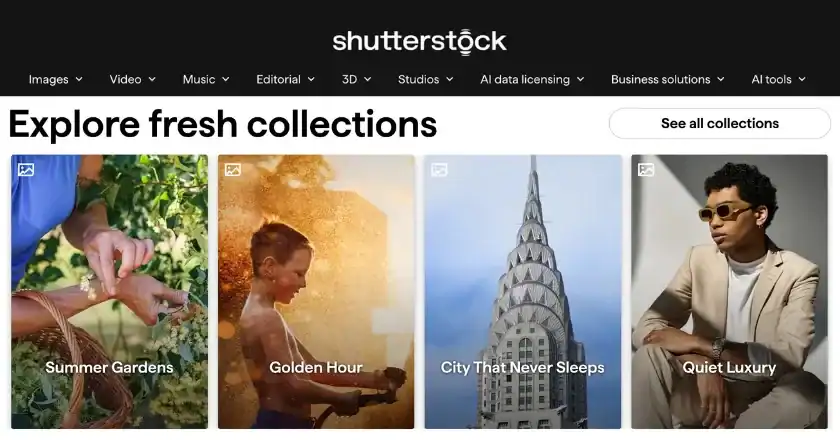
The marketing landscape of 2026 has been defined by a relentless demand for high-velocity, multi-channel visual content, forcing brands to re-evaluate the traditional binary choice between stock imagery and custom photography. As digital ecosystems become increasingly saturated with artificial intelligence-generated content, the strategic selection of visual assets has evolved from a simple budgetary consideration into a critical pillar of brand trust and operational efficiency. In this environment, the most successful enterprises are no longer choosing one over the other; instead, they are deploying sophisticated hybrid models that leverage the immediate scalability of platforms like Shutterstock alongside the high-touch authenticity of bespoke shoots.
The Evolution of the Visual Content Market: 2020–2026
To understand the current state of visual marketing, one must look at the trajectory of the industry over the first half of the decade. In 2020, the global stock media market was valued at approximately $3.3 billion. By 2026, industry analysts estimate this figure has surged to over $5.5 billion, driven by the expansion of the creator economy and the necessity for brands to maintain a 24/7 presence across dozens of social and digital platforms.
The mid-2020s saw a pivotal shift. As AI-generated imagery became ubiquitous, consumers began to exhibit "generative fatigue," a psychological pushback against visuals that felt overly polished or lacked human nuance. This led to a resurgence in the value of "authentic" imagery. However, the sheer volume of content required—estimated by some agencies to be a 400% increase compared to 2022 levels—made exclusive reliance on custom photography financially and logistically impossible for most firms.
Economic Breakdown: The Cost of Visual Acquisition
The primary differentiator between stock and custom photography remains the cost of production and licensing. In 2026, the pricing structures have become more transparent, yet the gap between the two remains significant.
Stock photography platforms have transitioned almost entirely to high-volume subscription models and enterprise-level licensing. On platforms like Shutterstock, a single image can cost a brand as little as $0.20 when purchased as part of a large-scale subscription. Even premium, high-resolution assets for specific commercial use rarely exceed $350. This predictability allows marketing departments to forecast their annual content spend with high precision.
Conversely, custom photography represents a significant capital expenditure. A professional brand photoshoot in 2026 involves a complex web of costs:
- Creative Fees: Ranging from $1,500 to $10,000 per day for the photographer’s expertise.
- Logistics and Production: Costs for location scouting, permits, and equipment rentals.
- Human Capital: Fees for models, hair and makeup artists, and wardrobe stylists, which have risen due to inflation and specialized talent demands.
- Post-Production: High-end retouching and color grading can add 30% to the initial shoot cost.
A standard two-day custom shoot for a national campaign can easily exceed $50,000, producing a limited set of assets that, while unique, cannot satisfy the daily requirements of a global social media strategy.

Speed as a Competitive Advantage in the 2026 Market
In the current "attention economy," the speed at which a brand can react to a cultural moment or a market shift is often more important than the uniqueness of the visual asset. Stock photography offers a "near-zero" turnaround time. A social media manager can identify a trending topic at 9:00 AM and have a fully licensed, high-quality visual ready for a post by 9:15 AM.
Custom photography, by contrast, is a marathon. The timeline for a bespoke shoot—from the initial creative brief and talent casting to the final delivery of retouched files—typically spans four to eight weeks. While the results are tailor-made, this delay can result in missed opportunities in a market that moves in hours rather than months.
The Authenticity Crisis and the Quality Spectrum
A major concern for CMOs in 2026 is the erosion of consumer trust. Data from the 2025 Global Brand Trust Report indicated that 68% of consumers are more likely to engage with a brand that uses "real-life" imagery rather than obvious stock or AI-generated visuals.
This has forced a qualitative evolution in stock photography. The "stocky" look of the 2010s—characterized by forced smiles and clinical office settings—has been replaced by "lifestyle-first" libraries. Platforms like Shutterstock now prioritize technical excellence alongside narrative realism. Furthermore, the integration of ethical AI tools allows brands to modify stock images—changing a background or adjusting a color palette—to better align with their specific brand guidelines without the cost of a new shoot.

Custom photography remains the gold standard for "Hero" imagery. For a company’s homepage, flagship product launches, or core brand identity, the investment in custom shots provides a level of specificity that stock cannot match. These images serve as the "visual DNA" of the company, ensuring that the brand is not confused with competitors who might be using similar stock assets.
Return on Investment (ROI): A Use-Case Analysis
The ROI of photography in 2026 is measured through two distinct lenses: efficiency and conversion.
Stock Photography ROI
Stock imagery delivers its highest return in high-volume, low-stakes environments. For A/B testing digital advertisements, social media engagement, and blog content, the low cost-per-image allows for a wide breadth of experimentation. If a stock image fails to convert, the financial loss is negligible. If it succeeds, the profit margin is maximized because the initial investment was so low.
Custom Photography ROI
Custom imagery delivers its return through brand equity and high-value conversions. For a luxury automotive brand or a high-end skincare line, using a stock image on a product page could actually result in a negative ROI by devaluing the brand in the eyes of the consumer. In these cases, the $20,000 spent on a custom shoot is justified by the millions of dollars in sales generated by a cohesive, premium brand experience.

The Rise of the Hybrid Model: A Strategic Blueprint
The most effective marketing teams in 2026 have abandoned the "either/or" mentality in favor of a 70/20/10 content distribution model:
- 70% Stock Content: Used for the "daily churn" of social media, email newsletters, and informative blog posts. This keeps the brand visible and active without exhausting the budget.
- 20% Custom "Hero" Content: Reserved for major campaigns, product launches, and the core website interface. These assets define the brand’s unique aesthetic.
- 10% AI-Augmented Visuals: Using tools like Shutterstock’s AI suite to bridge the gap between stock and custom, allowing for the rapid creation of variations on existing brand assets.
Industry Perspectives: The CMO Viewpoint
"We no longer view stock as a compromise," says Sarah Chen, Chief Marketing Officer at a leading FinTech firm. "In 2026, stock is our engine for agility. We use Shutterstock for 90% of our social output because it allows us to be part of the conversation in real-time. We save our custom photography budget for the moments where we need to tell a story that is uniquely ours. It’s about being smart with where we deploy our capital."
Analysts from the Visual Research Group note that the integration of metadata and licensing tracking has also made stock more attractive. In a world of complex copyright laws, the "legal peace of mind" provided by major stock agencies is a significant factor for enterprise-level brands who cannot risk the litigation associated with improperly sourced custom or AI content.
Future Implications: Beyond 2026
As we look toward the end of the decade, the line between stock and custom photography will continue to blur. We are already seeing the emergence of "managed stock," where agencies commission photographers to shoot specific themes for a single brand, which are then hosted on a private stock-like interface for the brand’s internal use.

Furthermore, the role of the photographer is shifting from a mere "image taker" to a "visual architect." In 2026, photographers are increasingly hired to create "asset libraries" rather than single-use images, providing brands with a modular kit of parts that can be rearranged and repurposed using AI tools.
Conclusion: Strategic Visual Deployment
The decision between stock and custom photography in 2026 is a tactical one, rooted in the specific goals of a campaign. Stock photography is the undisputed leader in scalability, speed, and cost-efficiency, making it the essential backbone of modern digital marketing. Custom photography remains the essential tool for brand differentiation and high-impact storytelling.
For brands navigating the complex visual landscape of 2026, the path to success lies in a balanced approach. By utilizing the vast resources of platforms like Shutterstock to handle the high-volume demands of the digital age, companies can preserve their resources for the high-value custom projects that truly define who they are in a crowded marketplace. The question is no longer "which one is better," but rather "how can we use both to win?"