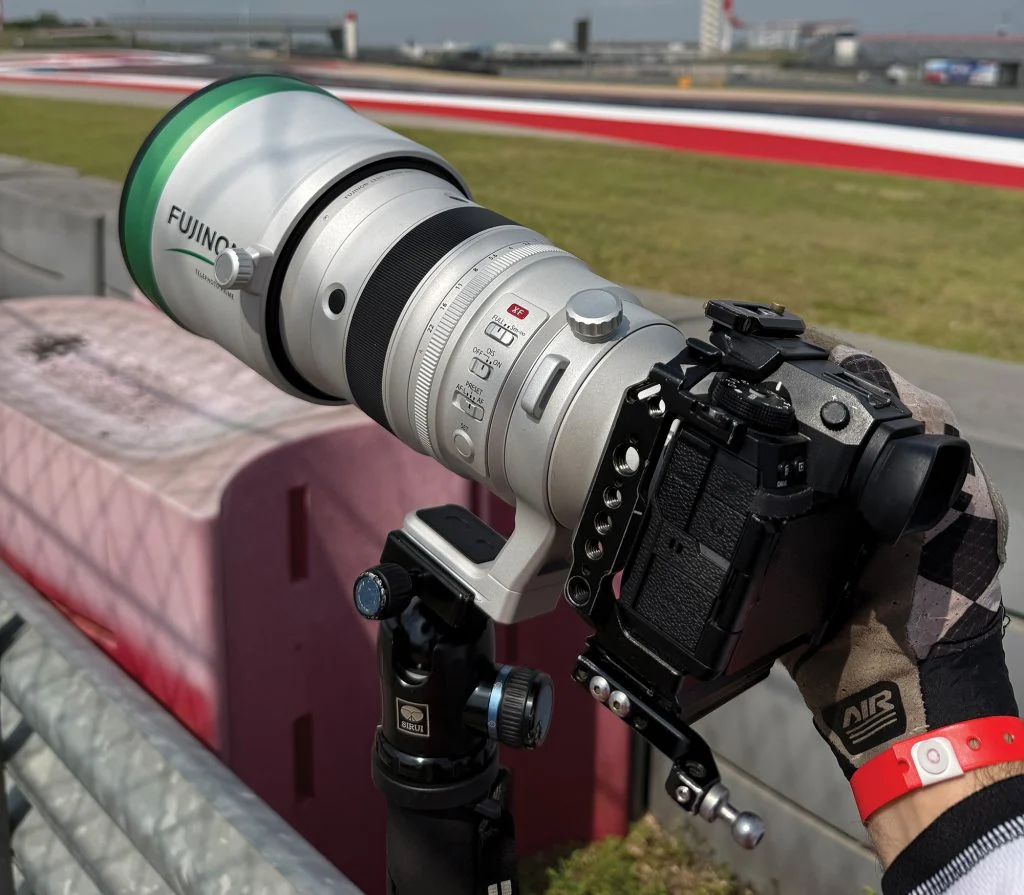
For the past four years, the world of motorsport photography has increasingly defined the professional trajectory of many visual artists. This specialized field demands not only skill and precision but also an arsenal of high-performance equipment capable of capturing fleeting moments of speed, navigating vast distances across circuits, and adapting to rapidly changing light conditions. While versatile zoom lenses like the Fujifilm XF100-400mm f/4.5-5.6 have proven indispensable for their broad coverage and utility, the demands of elite motorsport often necessitate a more specialized tool. This is where the Fujifilm XF200mm f/2 R LM OIS WR prime lens emerges as a formidable contender, offering an unparalleled blend of optical excellence, robust construction, and cutting-edge performance tailored for the most discerning professional photographers. Its integration into the workflow of photographers covering high-octane events, such as those at the Circuit of the Americas, underscores its critical role in delivering images of exceptional clarity and impact.
Fujifilm’s Strategic Ascent in Professional Photography
The introduction of the Fujifilm XF200mm f/2 in late 2018 marked a significant milestone in Fujifilm’s strategic expansion into the professional photography market. Prior to this, Fujifilm’s X-series, with its APS-C sensor format, had garnered widespread acclaim among enthusiasts and semi-professionals for its superb image quality, compact design, and retro-inspired ergonomics. However, to truly challenge the established dominance of full-frame systems from Canon, Nikon, and later Sony, Fujifilm needed to demonstrate its capability to produce lenses and camera bodies that could meet the rigorous demands of professional sports and wildlife photographers. The XF200mm f/2 was a clear statement of intent, signaling Fujifilm’s commitment to building a comprehensive professional ecosystem around its X-mount.
At its announcement in June 2018, the XF200mm f/2, alongside the then-flagship X-H1 camera body, was positioned as a lens for photographers who could not compromise on image quality, speed, or durability. This lens was designed to be a peer to the fast super-telephoto primes found in competing full-frame systems, but optimized for the X-series’ APS-C sensor. Fujifilm’s philosophy was not merely to scale down existing designs but to engineer optics specifically for their sensor format, aiming for performance that would rival or even exceed full-frame equivalents in certain aspects, particularly in terms of portability and cost-effectiveness for a given reach.
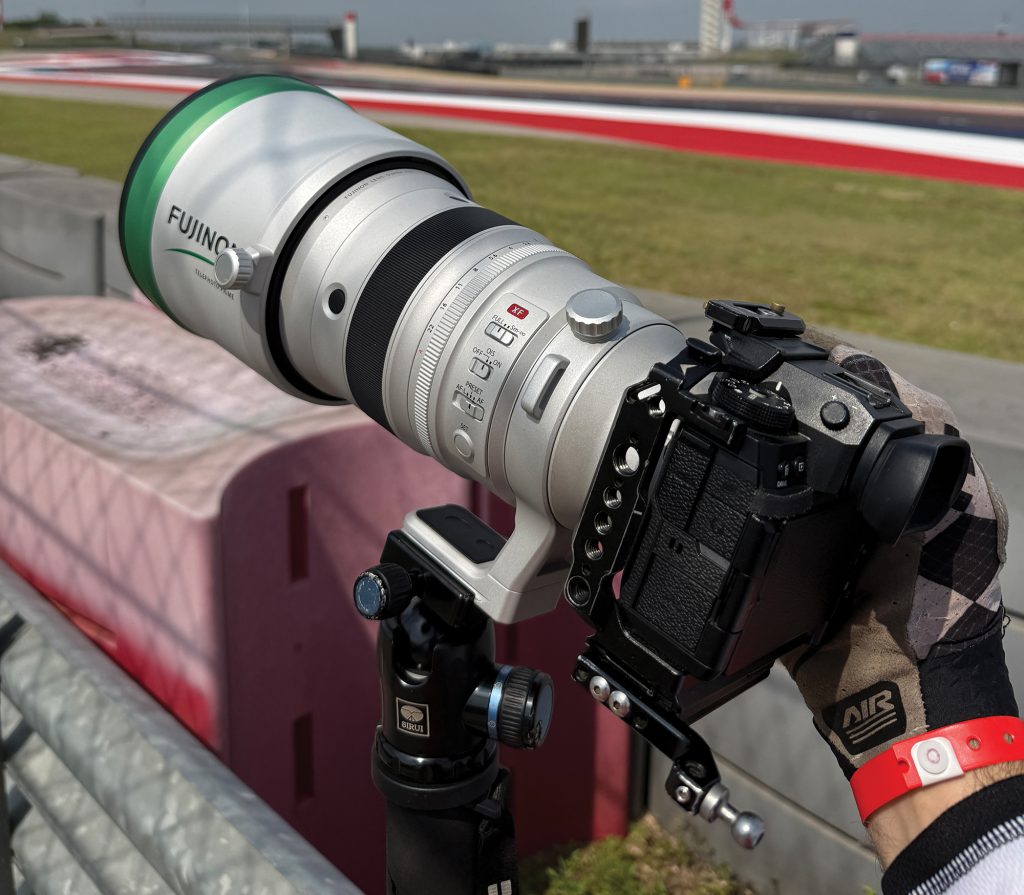
The ongoing evolution of Fujifilm’s X-H series bodies, from the X-H1 to the more recent X-H2 and X-H2S, has further solidified the XF200mm f/2’s position within the professional lineup. These bodies, particularly the X-H2S with its stacked-sensor technology, have provided the necessary processing power and autofocus capabilities to fully unlock the potential of high-performance lenses like the XF200mm f/2, enabling photographers to capture subjects moving at extreme velocities with unprecedented precision.
Technical Prowess and Uncompromising Design
The Fujifilm XF200mm f/2 R LM OIS WR stands as a testament to Fujifilm’s no-compromise engineering philosophy. Offering an angle of view equivalent to approximately 305mm on a full-frame system, it provides significant reach, making it ideal for isolating subjects in dynamic environments. Its utility is further extended by the inclusion of a dedicated XF 1.4x TC WR teleconverter, which boosts the effective focal length to roughly 427mm (full-frame equivalent) while maintaining a respectable maximum aperture of f/2.8. Critically, this teleconverter is engineered to integrate seamlessly, with no discernible degradation in optical performance or autofocus speed, a feat that is not always guaranteed with third-party or even some first-party teleconverters.

Physically, the lens immediately conveys its professional-grade status. Its full-metal construction ensures exceptional durability, capable of withstanding the rigors of professional use in demanding outdoor conditions. Notably, it was the first Fujinon lens to feature a matte silver coating, a practical innovation designed to minimize heat absorption during prolonged exposure to direct sunlight. This thoughtful design choice helps prevent potential image degradation that can occur from thermal expansion within the optical system, ensuring consistent performance even under harsh trackside temperatures.
The autofocus system is powered by a twin linear motor, a sophisticated mechanism that provides both remarkable speed and near-silent operation. This is crucial for capturing fast-moving subjects like race cars without disturbing sensitive environments or missing critical moments due due to slow focusing. Complementing this is a highly effective built-in optical image stabilization (OIS) system, rated at five stops. This stabilization is a game-changer for handheld shooting, especially when attempting panning shots or working in lower light conditions where slower shutter speeds are required to achieve desired motion blur effects. The ability to handhold a lens of this focal length and weight with confidence significantly enhances a photographer’s flexibility and creative control.

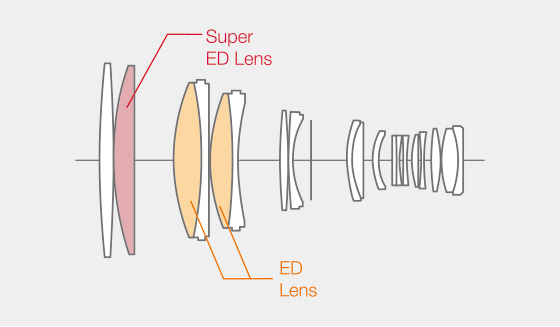
Optically, the XF200mm f/2 is a masterpiece of modern lens design. It comprises 19 elements arranged in 14 groups, a complex configuration that includes one Super ED element and two ED (Extra-low Dispersion) elements. These specialized glass types are meticulously placed to suppress chromatic aberration and color fringing, ensuring images exhibit outstanding clarity, contrast, and color fidelity across the entire frame, even at wide apertures. The lens is fully weather-sealed at multiple points to protect against dust and moisture, making it suitable for use in adverse weather conditions often encountered at outdoor events. A fluorine-coated front element further repels water, dirt, and smudges, simplifying cleaning and maintenance in the field. The inclusion of nine rounded aperture blades contributes to the production of exceptionally smooth and aesthetically pleasing circular bokeh, which is vital for isolating subjects from busy backgrounds and creating a strong visual impact. Practical design elements like a one-third EV step aperture ring for precise exposure control and an integrated rotating tripod collar with strap attachment points further underscore its professional intent and ergonomic considerations.
Unlocking Peak Performance: The XF200mm f/2 with the X-H2S
The true capabilities of the XF200mm f/2 become most apparent when paired with a camera body capable of harnessing its full potential. Professional photographers often employ dual camera bodies for redundancy and to quickly switch between focal lengths. In the Fujifilm ecosystem, the X-H2S has emerged as the ideal companion for this super-telephoto prime. The synergy between the XF200mm f/2 and the X-H2S is widely regarded as the pinnacle of performance within the Fujifilm X Series. The X-H2S, with its 26.1MP BSI stacked CMOS sensor and the X-Processor 5, offers significantly enhanced processing power, faster readout speeds, and advanced autofocus capabilities, including sophisticated subject detection algorithms.
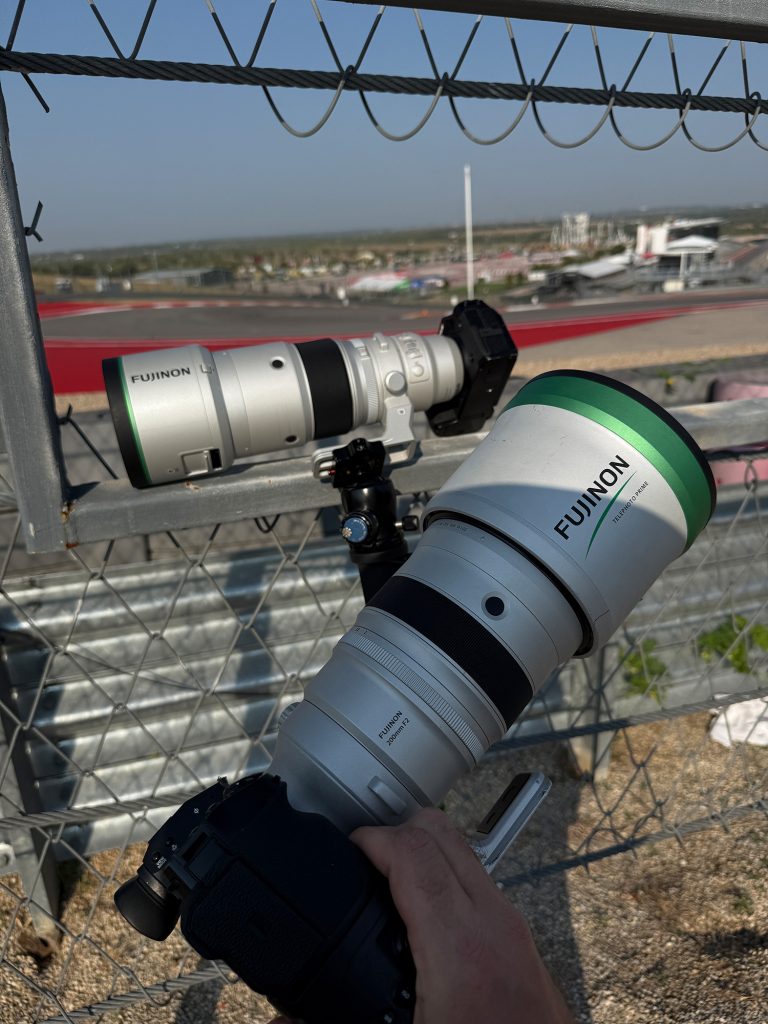
This combination translates into an unparalleled shooting experience where speed, autofocus reliability, clarity, and sharpness operate at an effortless level. For motorsport photographers, where subjects can approach at triple-digit speeds, the difference in autofocus acquisition and tracking consistency between the X-H2S and other bodies like the X-H2 is critical. While the X-H2 produces perfectly usable results, the X-H2S’s ability to lock onto and tenaciously track fast-moving objects, even in complex or low-light scenarios, significantly reduces the margin for error and increases the keeper rate. This enhanced performance is not merely a convenience; it is a professional necessity when missing a shot is not an option.
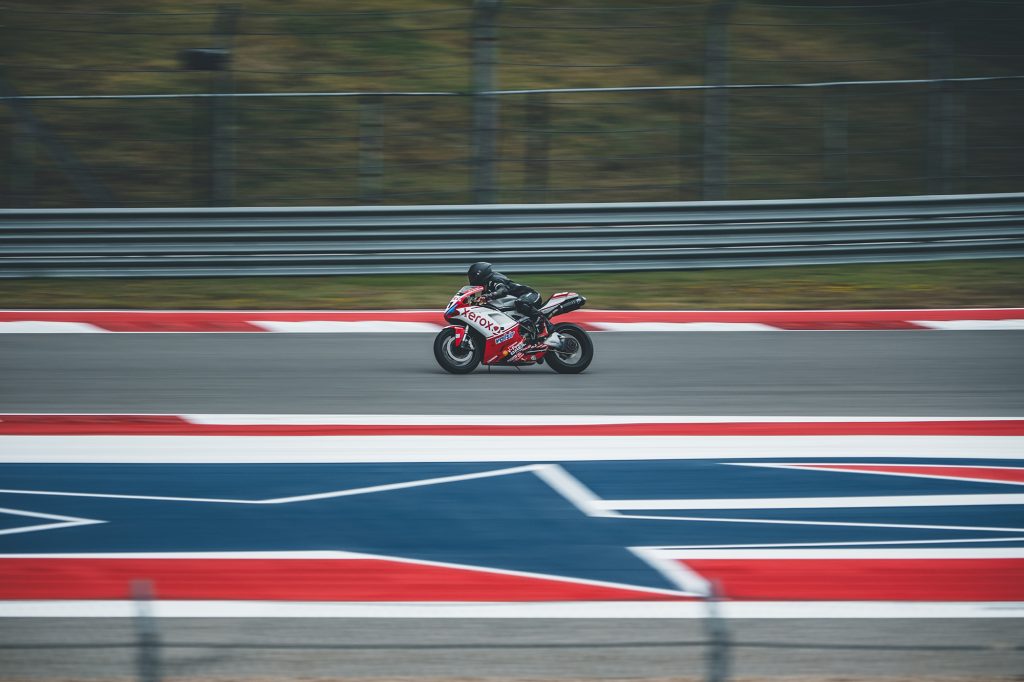
Beyond raw speed, the image quality delivered by this pairing is transformative. The "umami" described by photographers refers to a unique, rich flavor in images that transcends mere sharpness. It encompasses micro-contrast, the nuanced rendition of textures, and the beautiful separation of subjects from their backgrounds. Shooting wide open at f/2, the XF200mm produces a bokeh that is not just creamy but truly luxurious, creating a painterly effect that draws the viewer’s eye directly to the critically sharp subject. This aesthetic quality is particularly valuable in motorsport, where cluttered backgrounds are common, and the ability to isolate a speeding vehicle or a driver’s intense gaze can elevate an image from a mere record to a compelling piece of art.

Practical ergonomics further enhance the in-field experience. The programmable autofocus buttons on the lens barrel offer an additional point of stable interaction, especially useful when shooting handheld or on a monopod, allowing photographers to customize controls for rapid adjustments. The lens hood, a often-overlooked accessory, is robust, large, and secured with a pressure screw, providing excellent protection against flare and physical impact. Its substantial size also offers a familiar ergonomic grip point for many professional motorsport photographers who often cup the edge of the hood for added stability.
Practical Realities and Investment Considerations
Despite its numerous advantages, the Fujifilm XF200mm f/2 is not without its practical considerations. Weighing approximately 2,265 grams (nearly 5 pounds), it is a substantial piece of equipment. While manageable for short periods, prolonged handheld shooting, especially when combined with dynamic techniques like speed panning, can lead to significant physical strain. For this reason, a monopod often becomes an indispensable companion for long shooting days, providing crucial support and reducing fatigue, allowing photographers to maintain focus and precision throughout an event.

Another significant practical and financial consideration is the lens’s massive front element, which necessitates the use of dedicated 105mm filters. Given the lens’s retail price of around $6,000 new, the additional investment in high-quality 105mm filters can be substantial. A typical professional kit might include a UV filter for constant front element protection, a circular polarizer (CPL) for managing reflections and enhancing colors in bright trackside conditions, and a variable neutral density (VND) filter. The VND filter, in particular, allows for shooting wide open at f/2 or f/2.8 in intense daylight conditions to achieve maximum subject isolation and creamy bokeh, without overexposing the image. This additional investment, while not trivial, is a necessary part of maximizing the lens’s creative potential in diverse lighting environments.
For many professionals, the high initial cost of such specialized equipment makes rental services, like those provided by Lensrentals, an attractive option. Renting allows photographers to access cutting-edge gear for specific projects without the substantial upfront investment, making these high-performance tools more accessible for a wider range of assignments.

Broader Implications and Target Audience
The XF200mm f/2 is often discussed in the context of commercial and wildlife photography, where its long reach, wide aperture, and exceptional image quality are clear advantages. However, its specific application in motorsport photography, as highlighted by expert users, reveals a niche where its attributes are uniquely critical. This lens is not designed to be a photographer’s first or most flexible purchase. Instead, it typically becomes the third essential lens in a professional kit, a highly specialized tool reserved for moments when conditions demand absolute clarity, superior background separation, and uncompromising low-light performance.
It complements the versatility of zoom lenses such as the XF50-140mm f/2.8 or the XF100-400mm f/4.5-5.6, which handle the bulk of general coverage and situations requiring rapid focal length adjustments. When light levels drop, when the artistic rendition of bokeh is paramount, or when the ultimate in sharpness and detail is required to capture a specific, impactful moment, the XF200mm f/2 steps forward as the undisputed heavyweight champion.
For Fujifilm, the XF200mm f/2 represents more than just a lens; it is a statement of capability and commitment to the professional market. It demonstrates that an APS-C system can indeed deliver the performance required for the most demanding photographic disciplines. Industry analysts have often pointed to such specialized lenses as crucial elements in Fujifilm’s strategy to attract and retain professional photographers, offering a compelling alternative to established full-frame systems. The continued success of lenses like the XF200mm f/2, paired with advanced bodies, validates Fujifilm’s engineering prowess and solidifies its position as a serious contender in the high-end professional imaging landscape.
Ultimately, while no lens is truly "needed" in an absolute sense, the Fujifilm XF200mm f/2 offers an unparalleled experience for those who commit to it. For professional Fujifilm shooters entrenched in motorsport photography, it is rapidly transitioning from a desirable specialized tool to an indispensable piece of equipment, representing the pinnacle of what the X-System can offer in terms of optical excellence and professional-grade performance. Its presence in a kit signifies a dedication to capturing images that not only record events but elevate them through exceptional visual artistry.