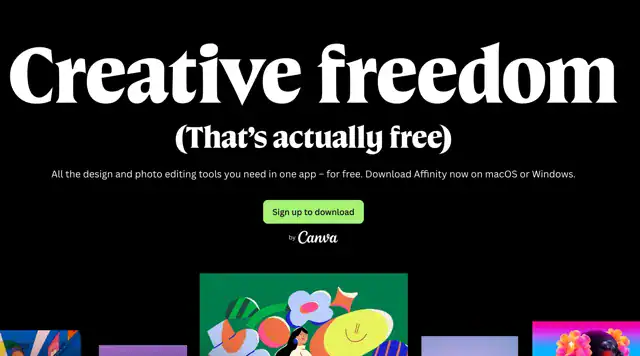
In a strategic move that has sent shockwaves through the global design community, Canva has officially launched a unified version of the Affinity creative suite, offering its professional-grade tools entirely free of charge. This development marks a significant shift in the competitive landscape of creative software, effectively bridging the long-standing divide between accessible, template-based design and high-end professional workflows. By consolidating three distinct professional applications into a single, cohesive environment, Canva is positioning itself as a formidable challenger to established industry giants, most notably Adobe.
The release follows Canva’s high-profile acquisition of Serif, the United Kingdom-based developer behind the Affinity suite, in early 2024. Prior to this integration, Affinity was recognized as the primary alternative to Adobe Creative Cloud, favored by designers for its high performance and its "perpetual license" model, which avoided the recurring costs of software subscriptions. The new "Affinity by Canva" initiative takes this accessibility a step further by removing the financial barrier entirely, granting any user with a standard Canva account access to tools that previously required a paid license.
The Evolution of Affinity: A Chronology of Integration
The journey toward a unified, free Affinity app began decades before its acquisition by Canva. Serif was founded in 1987, initially focusing on low-cost desktop publishing software for Windows. However, the company underwent a total reinvention in the 2010s, rebuilding its software architecture from the ground up to create the Affinity Trinity: Affinity Designer (vector illustration), Affinity Photo (raster editing), and Affinity Publisher (page layout).

The timeline of the current transition is marked by several key milestones:
- March 2024: Canva announces the acquisition of Serif for an estimated $380 million, bringing Affinity’s team of 90 employees into the Canva ecosystem.
- May 2024: Canva hosts its "Canva Create" event in Los Angeles, where it outlines a vision for the "enterprise era," signaling that Affinity would play a crucial role in attracting professional design teams.
- October 2024: The launch of the unified Affinity environment is finalized, transitioning the software from three separate installations to a single, integrated workspace available for Windows and macOS.
- Future Outlook: Development of a unified iPad version is currently underway, intended to provide parity between desktop and mobile professional workflows.
Technical Specifications and the Unified Workspace
The core innovation of the new Affinity app is the "StudioLink" technology, which has been expanded to allow users to switch seamlessly between different design disciplines without leaving the application or exporting files. This integration addresses a common friction point in creative production, where designers often lose time moving assets between vector editing, photo retouching, and layout software.
Within the unified environment, the software provides:
- Vector Illustration (formerly Designer): Precision tools for logo design, iconography, and complex illustrations with a focus on speed and high-zoom accuracy.
- Professional Photo Editing (formerly Photo): Non-destructive editing capabilities, RAW processing, and advanced retouching tools that rival industry standards.
- Advanced Page Layout (formerly Publisher): Comprehensive tools for multi-page documents, typography control, and print-ready output.
The app maintains support for industry-standard file formats, including Adobe Photoshop (.PSD), Adobe Illustrator (.AI), and Scalable Vector Graphics (.SVG). It also utilizes a proprietary .af format, which ensures that a single file can contain vector, raster, and layout data simultaneously, facilitating a more streamlined collaborative process.

Strategic Market Disruption and Economic Data
Canva’s decision to offer Affinity for free is a calculated move to capture a larger share of the professional market. For years, the creative software industry has been dominated by a subscription-only model. According to market analysts, the "subscription fatigue" among freelancers and small agencies has created a vacuum that Canva is now looking to fill.
Comparative data highlights the potential economic impact of this shift:
- Adobe Creative Cloud: Costs approximately $600 to $900 per year for a full suite subscription, depending on the region and plan.
- Affinity (Pre-Acquisition): Cost a one-time fee of approximately $165 for the "Universal License" covering all platforms.
- Affinity by Canva: Costs $0 for basic professional features, requiring only a free Canva registration.
By removing the entry price, Canva is effectively commoditizing professional design tools. This strategy mirrors Canva’s original growth model, which relied on a robust free tier to build a user base of over 185 million monthly active users before upselling enterprise and AI-driven features.
Integration with Canva AI Studio and Pro Features
While the core creative tools of Affinity are now free, Canva is leveraging its advanced Artificial Intelligence (AI) capabilities to create a premium tier. Users who subscribe to Canva Pro or Canva for Teams gain access to the "Canva AI Studio" directly within the Affinity interface. This integration includes:

- Generative Fill: Allowing users to add or replace elements in an image using text prompts.
- Smart Background Removal: High-precision, AI-driven isolation of subjects.
- Content Suggestions: AI-powered layout and color palette recommendations based on the project’s context.
Importantly, Canva has addressed privacy concerns that have plagued other AI developers. The company has stated that user data generated within Affinity will not be used to train its generative AI models without explicit consent, a move designed to reassure professional designers and corporate legal teams concerned about intellectual property.
Official Responses and Industry Sentiment
The response from the design community has been a mix of enthusiasm and cautious observation. In a statement following the launch, Canva’s leadership emphasized that the goal is to "empower the world to design" by removing the technical and financial barriers that often separate amateur creators from professional results.
Serif’s leadership, now integrated into Canva, noted that the acquisition has provided the resources necessary to accelerate feature development that would have taken years as a standalone company. "Joining forces with Canva allows us to focus on the core engineering that makes Affinity fast and precise, while Canva handles the broader ecosystem and AI integration," a company spokesperson stated.
However, some industry veterans remain skeptical about the "free forever" promise. Historical precedents in the software industry suggest that once a significant user base is captured, features may eventually be moved behind a paywall. Analysts suggest that Canva’s long-term revenue will likely come from enterprise-level collaboration tools and cloud storage, rather than the creative software itself.

Broader Impact and Future Implications
The democratization of professional design tools carries significant implications for the future of the creative economy. By providing high-end software at no cost, the barrier to entry for aspiring designers in developing economies is significantly lowered. This could lead to a more diverse and globalized design workforce.
For corporate environments, the unified Affinity app simplifies the IT stack. Instead of managing multiple subscriptions and licenses for different departments, teams can standardize on a single ecosystem that scales from simple social media graphics (Canva) to complex technical illustrations and print publications (Affinity).
Furthermore, this move forces competitors to re-evaluate their pricing structures. If Canva successfully proves that a free-to-use professional suite is sustainable through enterprise cross-selling, it may trigger a broader industry shift away from the rigid subscription models that have defined the last decade of software as a service (SaaS).
As the iPad version nears completion and the AI Studio continues to evolve, the creative industry will be watching closely to see if the "Affinity by Canva" experiment can maintain its momentum. For now, the launch represents a milestone in the "prosumer" movement, where the line between professional tools and consumer accessibility continues to blur, ultimately placing more power in the hands of the creator.