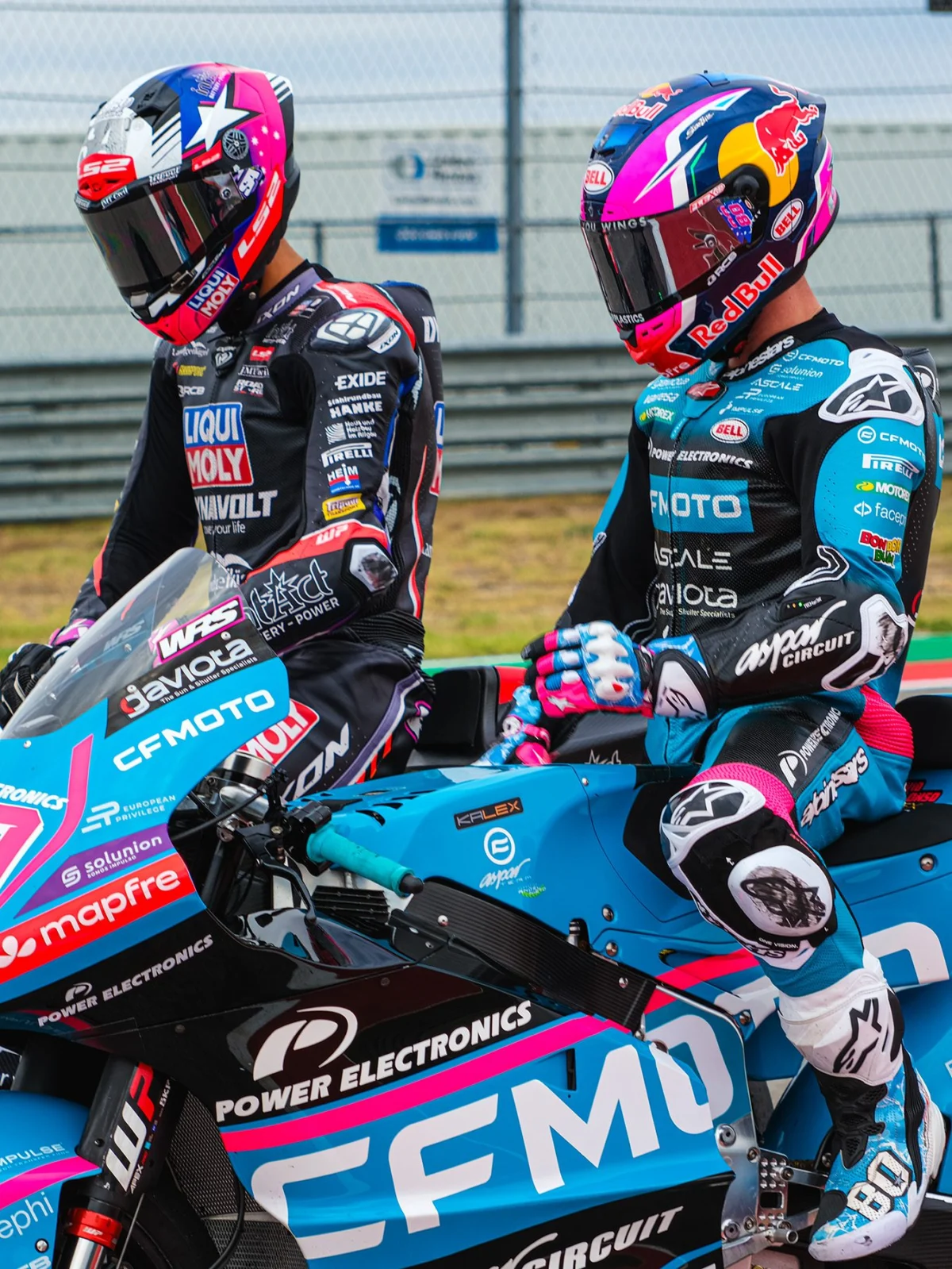
Over the past four years, the landscape of professional photography for many, including prominent figures in the field, has increasingly gravitated towards the specialized demands of motorsport. This shift necessitates an arsenal of high-performance optics, particularly long lenses capable of delivering unparalleled clarity, speed, and reliability under the rapidly changing light and dynamic conditions inherent to racing circuits. While versatile workhorse lenses like the Fujifilm XF100-400mm f/4.5-5.6 have proven indispensable for their broad coverage and adaptability, a growing emphasis on uncompromising image quality and unique aesthetic expression has highlighted the critical role of specialized prime lenses. Among these, the Fujifilm XF200mm f/2 R LM OIS WR has emerged as a formidable contender, solidifying its position as a cornerstone for photographers seeking the pinnacle of performance within the Fujifilm X Series ecosystem, particularly at high-stakes venues such as the Circuit of the Americas (COTA).
This in-depth exploration delves beyond mere versatility, focusing instead on the singular commitment to excellence embodied by the Fujifilm XF200mm f/2. It is a lens that transcends the ordinary, earning accolades as a standout optical instrument across various camera systems, and becoming a preferred choice for professionals whose craft demands both technical precision and artistic flair in capturing the essence of speed and competition. Its integration into professional workflows, particularly when paired with Fujifilm’s latest X-H series bodies, marks a significant advancement in the capabilities available to motorsport photographers.
Technical Prowess and Engineering Excellence
The Fujifilm XF200mm f/2 is engineered as a no-compromise super-telephoto prime lens, meticulously designed to meet the rigorous demands of professional photography. Its optical design delivers an angle of view equivalent to approximately 305mm on a full-frame system, providing substantial reach for isolating subjects at a distance. This capability is further extended with the included XF 1.4x TC WR teleconverter, pushing the effective focal length to roughly 427mm (full-frame equivalent) while maintaining an impressive maximum aperture of f/2.8. Crucially, extensive field testing consistently demonstrates that the use of this teleconverter introduces no discernible degradation in optical performance or autofocus responsiveness, a testament to Fujifilm’s advanced optical engineering and precise calibration.
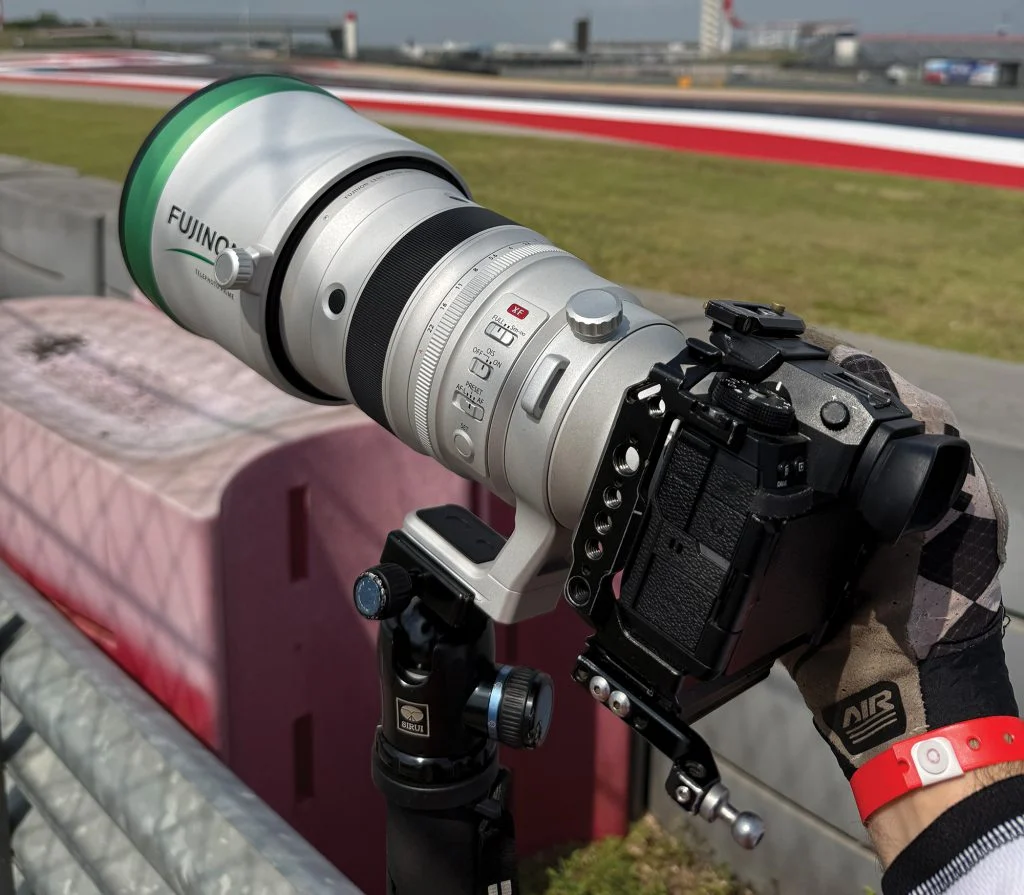
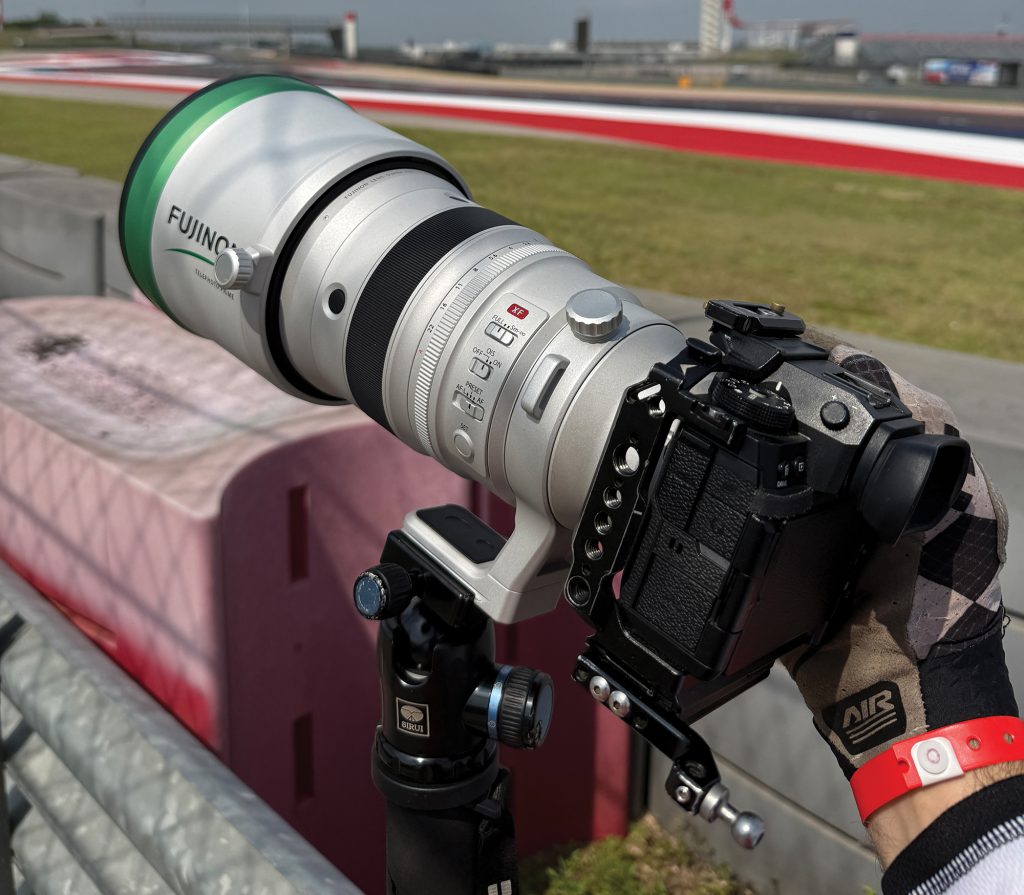
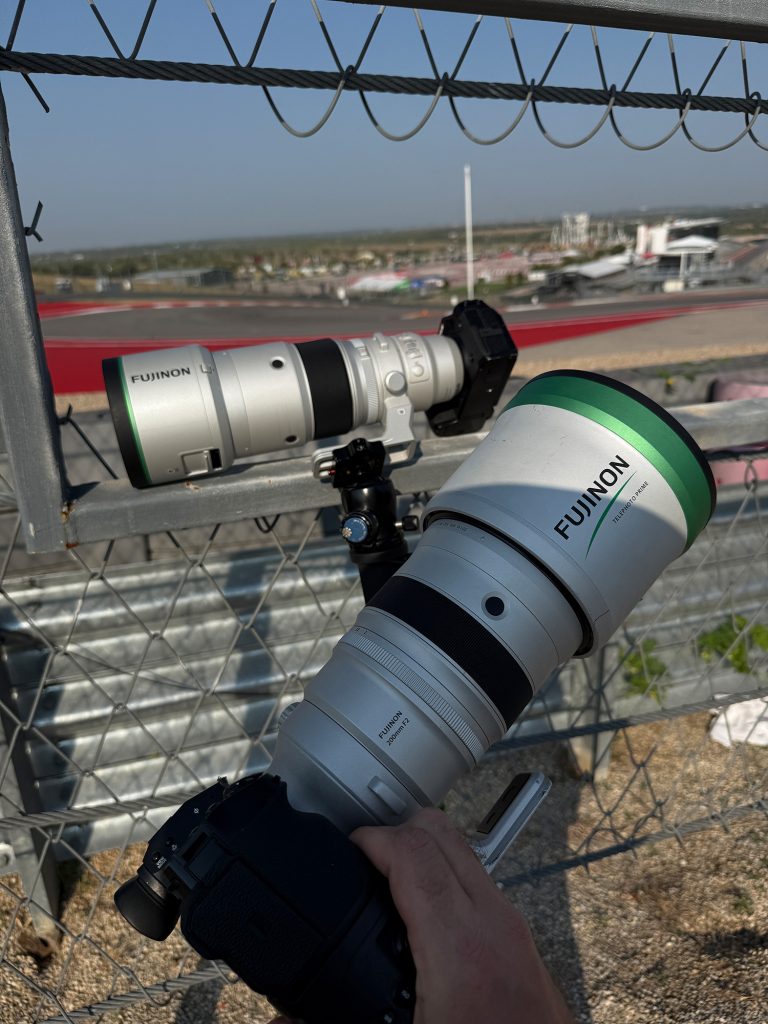
The physical construction of the XF200mm f/2 makes an immediate and emphatic statement regarding its professional intent. Crafted from a robust, full-metal chassis, it exudes durability and reliability essential for challenging outdoor environments. Notably, it is the first Fujinon lens to feature a distinctive matte silver coating. This is not merely an aesthetic choice; it serves a crucial practical function by minimizing heat absorption, a significant factor when operating under direct sunlight for extended periods at race tracks. Reduced heat absorption mitigates the risk of internal component expansion and contraction, which can subtly affect optical alignment and, consequently, image quality over long shooting sessions.
Underpinning its rapid performance is a sophisticated twin linear motor autofocus system. This mechanism provides exceptionally fast, precise, and virtually silent focusing, a critical advantage when tracking subjects moving at triple-digit speeds without disturbing sensitive environments or subjects. Complementing the autofocus is a highly effective built-in optical image stabilization (OIS) system, rated for up to five stops of compensation. This substantial stabilization is invaluable for maintaining sharp images when shooting handheld, especially during dynamic panning shots that require slower shutter speeds to convey a sense of motion, or in low-light conditions where tripod use might be impractical.
Optical Design and Image Integrity
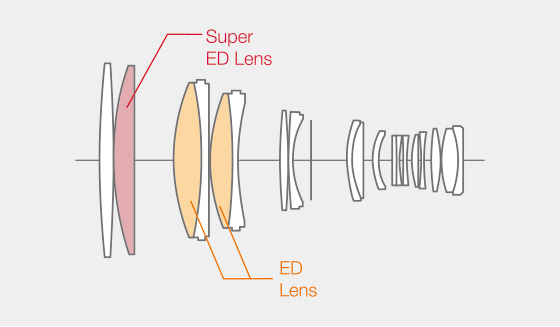
The internal optical configuration of the XF200mm f/2 reflects a design philosophy centered on absolute image integrity. It comprises 19 elements arranged in 14 groups, a complex arrangement that includes one Super ED (Extra-low Dispersion) element and two ED elements. These specialized glass elements are strategically placed to aggressively suppress chromatic aberration, a common optical distortion that manifests as color fringing around high-contrast edges. In motorsport photography, where bright car liveries meet dark asphalt or sky, controlling chromatic aberration is paramount for delivering crisp, color-accurate images.
Further enhancing its professional credentials, the lens is fully weather-sealed against dust and moisture, ensuring reliable operation in adverse conditions frequently encountered at outdoor sporting events. The front element is treated with a fluorine coating, an advanced repellent that makes it exceptionally easy to clean off water droplets, dirt, and smudges, allowing photographers to maintain clear vision even in demanding situations. The lens also features nine rounded aperture blades, which contribute to the production of smooth, circular bokeh, rendering out-of-focus areas with an aesthetically pleasing, creamy quality. This subject-background separation is a hallmark of high-end prime lenses and is particularly sought after in motorsport for isolating fast-moving vehicles against often cluttered backgrounds. Precise exposure control is facilitated by a one-third EV step aperture ring, offering fine adjustments for challenging lighting scenarios. An integrated rotating tripod collar, complete with multiple strap attachment points, further underscores the lens’s design for professional field use, providing stable mounting options and ergonomic handling.
In the Field: Performance at the Circuit of the Americas
The true measure of any professional lens lies in its performance under real-world pressure. For motorsport photography, the environment is intensely demanding, characterized by unpredictable action, extreme speeds, and rapidly shifting light. The Circuit of the Americas (COTA) in Austin, Texas, serves as a prime example of such a venue. As a purpose-built Formula 1 race track, COTA features a challenging layout with significant elevation changes, tight hairpins, and long straights, each presenting unique photographic opportunities and obstacles. Capturing a split-second moment of a vehicle traveling at 150+ mph requires not just skill, but equipment that can keep pace without compromise.

A seasoned motorsport photographer’s experience reveals that the Fujifilm XF200mm f/2 achieves its zenith when paired with the Fujifilm X-H2S body. This combination, often hailed as the most remarkable lens-and-body synergy within the Fujifilm X Series, delivers a level of performance that feels almost effortless. The X-H2S, with its stacked BSI CMOS sensor and X-Processor 5, boasts significantly enhanced processing power and a superior autofocus system compared to its predecessors. This translates into unparalleled speed, autofocus reliability, clarity, and sharpness, all operating at a synergistic level that minimizes missed shots—a non-negotiable requirement when capturing subjects at triple-digit speeds.
While the XF200mm f/2 yields perfectly usable results on the X-H2, the difference in autofocus acquisition and consistency with the X-H2S is notably superior. For the high-stakes environment of motorsport, where milliseconds dictate success or failure, this difference is profoundly significant. The X-H2S’s advanced subject detection and tracking capabilities, powered by deep learning AI, allow it to lock onto and follow vehicles with uncanny precision, ensuring a higher keeper rate even in the most chaotic moments.
Initial acclimation to a dedicated long prime like the XF200mm f/2 is a common experience for photographers accustomed to the flexibility of zoom lenses. This period involves identifying optimal vantage points and adapting to the discipline of a fixed focal length. However, once this rhythm is established, the photographic experience becomes intensely rewarding. Reviewing images captured with this lens frequently elicits audible reactions from photographers, a testament to its exceptional output. The separation between subject and background is consistently outstanding, a direct benefit of the f/2 aperture and meticulous optical design. Wide open at f/2, the bokeh is rendered with a rich, creamy quality that beautifully isolates the subject, which remains critically sharp with exquisite detail, from the textured carbon fiber of a race car to the intricate sponsor decals.

Several thoughtful design elements further enhance the lens’s usability in the field. The programmable autofocus buttons strategically placed on the barrel provide an additional stable point of interaction, particularly useful when shooting handheld. The lens hood, a critical accessory for managing flare and providing physical protection, is equally impressive: it is large, rigidly constructed, and secured firmly with a pressure screw, reflecting its professional-grade design. Many professional motorsport photographers, when working with a monopod, often cup the edge of the hood as an additional point of stability and control, a technique facilitated by its robust design.
Practical Considerations and Strategic Investment
Despite its extraordinary performance, the Fujifilm XF200mm f/2 presents certain practical considerations that professional users must factor into their workflow. Weighing approximately 2,265 grams (just under 5 pounds), it is a substantial piece of equipment. While manageable for shorter durations, a monopod quickly becomes a welcome and often necessary companion during long shooting days. Extended periods of handheld shooting, particularly when combined with the dynamic movements required for speed panning, can lead to significant physical strain, making a support system indispensable for maintaining consistency and preventing fatigue.
Another practical consideration, and a significant financial one, is the lens’s massive front element, which necessitates dedicated 105mm filters. Given that the XF200mm f/2 retails for around $6,000 new, the additional investment in a comprehensive filter kit is not insignificant. Professional photographers typically build a small, essential filter collection early on, including a UV filter for constant protection against dust and impacts, a circular polarizer for managing reflections and enhancing color saturation in bright trackside conditions, and a high-density variable neutral density (ND) filter (such as a 3-stop or 32-stop variant) to enable wide-open shooting at f/2 even in intense daylight. This allows for maximum background separation and creative control without overexposing the image.
Strategic Positioning: The "Umami" Lens in the Professional Kit
The Fujifilm XF200mm f/2, while often reviewed for its utility in commercial and wildlife photography, holds a distinct and particularly potent appeal for motorsport photographers. It is an "umami" lens—a term that signifies a profound, unique, and deeply satisfying flavor that elevates the overall experience. It offers an unparalleled and stunning aesthetic to images that cannot be replicated by other lenses within the Fujifilm lineup.
For a professional Fujifilm shooter, the XF200mm f/2 is unlikely to be their inaugural lens purchase; nor is it designed to be the most flexible. Instead, it positions itself as the third essential lens in a meticulously curated kit, the specialized tool reached for when conditions demand its unique attributes. When flexibility and broader coverage are paramount—for instance, navigating the paddock or capturing diverse trackside action—the highly versatile XF50-140mm f/2.8 or the indispensable XF100-400mm f/4.5-5.6 will perform the heavy lifting. However, when ambient light levels diminish, when the precise rendering of background blur is critical, and when absolute clarity and sharpness are the unequivocal priorities, the XF200mm f/2 steps forward as the undisputed heavyweight champion.
This strategic positioning highlights Fujifilm’s commitment to building a comprehensive professional system. By offering such a specialized, high-performance prime, Fujifilm signals its intent to cater to the most demanding niches, demonstrating that its X Series can deliver results on par with, or even exceeding, full-frame systems in specific scenarios. Industry analysts often point to such flagship lenses as a clear signal of a manufacturer’s dedication to professional users, reinforcing brand loyalty and attracting new talent who prioritize specialized performance.

Broader Implications and Future Outlook
The existence and performance of the Fujifilm XF200mm f/2 carry broader implications for the photography industry and the future of mirrorless systems. It underscores the enduring relevance of fast prime lenses in an era increasingly dominated by versatile, all-in-one zooms. While zooms offer convenience, primes like the XF200mm f/2 demonstrate that for specialized applications where light gathering, optical perfection, and exquisite background separation are paramount, the dedicated prime lens remains an irreplaceable tool.
For Fujifilm, this lens reinforces its position as a serious contender in the professional market, dispelling any lingering doubts about the X Series’ ability to compete in high-demand fields like sports photography. It empowers Fujifilm users to achieve a distinct visual signature, characterized by incredible sharpness and beautiful bokeh, which can differentiate their work in a crowded marketplace. This commitment to developing niche, high-performance optics not only strengthens the X Series ecosystem but also pushes the boundaries of what photographers can expect from APS-C format cameras.
In conclusion, while the Fujifilm XF200mm f/2 may not be deemed a "necessary" purchase for every photographer, its acquisition represents an investment in unparalleled image quality and specialized performance. For the professional Fujifilm shooter working in motorsports, or indeed any genre demanding exceptional reach, speed, and optical fidelity, this lens transcends mere utility; it becomes an indispensable tool. Once integrated into a professional kit, its unique capabilities make it almost unimaginable to part with, representing the pinnacle of what the Fujifilm X Series system can offer in delivering breathtaking, impactful imagery.