The global aviation community remains in a state of shock following the catastrophic loss of Air India flight AI-171, which crashed on June 12, 2025, during its final approach to Sardar Vallabhbhai Patel International Airport in Ahmedabad, India. The aircraft, a Boeing 787 Dreamliner carrying 245 passengers and crew members from London Heathrow, plummeted under circumstances that remain the subject of intense scrutiny. With only one reported survivor currently receiving intensive medical care, the tragedy marks one of the most significant aviation disasters in recent Indian history. As the recovery phase transitions into a formal inquiry, the focus has shifted entirely to the retrieval and decoding of the aircraft’s "black boxes"—the Flight Data Recorder (FDR) and the Cockpit Voice Recorder (CVR). These devices, now secured at a high-security laboratory in New Delhi, hold the definitive record of the flight’s final moments and are expected to provide the clarity needed to understand how a modern, technologically advanced aircraft could suffer such a total loss of control.
Chronology of Flight AI-171
Flight AI-171 departed London Heathrow at its scheduled time, operating a routine long-haul service to Ahmedabad. For the majority of the nine-hour journey, the flight progressed without incident. According to preliminary radar data and air traffic control (ATC) logs, the Boeing 787 maintained its assigned altitude and speed across European and Middle Eastern airspace. It was only during the transition from the cruise phase to the initial descent into the Gujarat region that the first signs of irregularity appeared.
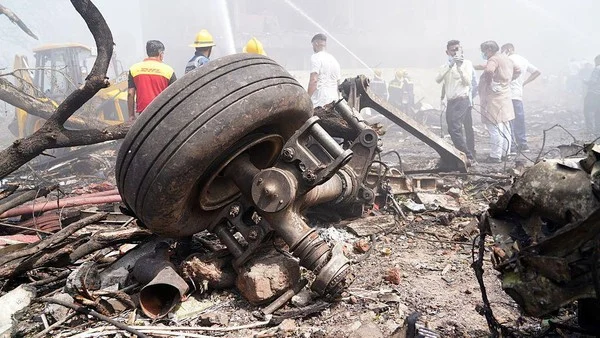
Witnesses near the airport reported seeing the aircraft flying at an unusually low altitude before it began a series of erratic maneuvers. Local ATC records indicate that the pilots were cleared for a standard instrument landing system (ILS) approach. However, minutes before touchdown, communication became fragmented. The aircraft reportedly deviated from its glide path, followed by a rapid loss of altitude. The impact occurred in a semi-rural area on the outskirts of Ahmedabad, narrowly missing densely populated residential zones but resulting in a massive post-impact fire that complicated initial rescue efforts.
The Critical Role of the Flight Recorders
The recovery of the Flight Data Recorder (FDR) and the Cockpit Voice Recorder (CVR) within 24 hours of the crash was hailed as a vital breakthrough for the investigation team. Despite the term "black box," these units are painted in high-visibility international orange to assist recovery teams in locating them amidst charred wreckage.
The FDR is designed to record thousands of parameters every second, including airspeed, altitude, vertical acceleration, engine performance, and the positioning of flight control surfaces such as the rudder, elevators, and flaps. Meanwhile, the CVR captures all audio in the cockpit, including conversations between the pilots, radio transmissions to ATC, and ambient sounds like engine noise or automated cockpit warnings.
The analysis is being conducted by the Aircraft Accident Investigation Bureau (AAIB) of India, with direct technical assistance from the United States National Transportation Safety Board (NTSB) and engineers from Boeing. Because the Boeing 787 is an American-manufactured aircraft, the NTSB’s involvement is a standard international protocol under ICAO Annex 13, ensuring that the manufacturer’s data and design specifications are fully integrated into the probe.
Technical Focus: The Flap System Hypothesis
While the investigation is in its infancy, early technical briefings have highlighted a potential malfunction in the aircraft’s flap system. Flaps are movable panels on the trailing edge of the wings that increase lift and drag, allowing an aircraft to fly safely at the lower speeds required for landing.
Initial reports from the site and preliminary data analysis suggest that the aircraft may have experienced a "flap asymmetry" or a total failure of the flap actuators. If the flaps on one wing extend while those on the other remain retracted, it can create a severe rolling moment that is difficult for pilots to counteract, especially at low altitudes. In the case of AI-171, investigators are looking into whether a mechanical failure or a software glitch in the fly-by-wire system prevented the Dreamliner from maintaining a stable configuration during its final descent.

The analysis of the FDR will be instrumental here. It will show exactly when the flaps were commanded to deploy and whether the mechanical response matched the pilot’s input. If a discrepancy is found, it could lead to a global safety bulletin for the hundreds of Boeing 787s currently in operation worldwide.
Official Responses and International Cooperation
The Indian Ministry of Civil Aviation has called for a transparent and exhaustive investigation. In a press conference held in New Delhi, officials emphasized that no theory is being ruled out, including weather-related factors or human error. "Our priority is to provide answers to the families of the victims and to ensure that the global aviation industry learns every possible lesson from this tragedy," a spokesperson stated.
Boeing issued a formal statement expressing deep condolences to the families affected and confirming that a technical team is on the ground in India. "We are working closely with the AAIB and the NTSB to provide all necessary technical expertise. Safety is our top priority, and we are committed to supporting the investigation in every capacity," the company stated.
The involvement of the NTSB is particularly significant. The agency brings specialized "read-out" equipment that can sometimes recover data from recorders that have suffered extreme thermal or mechanical stress. The process involves carefully cleaning the memory chips, drying them in vacuum chambers if they have been exposed to moisture, and then using bit-by-bit extraction to reconstruct the data.
The Human Element and the Lone Survivor
The tragedy of AI-171 is compounded by the loss of 244 lives. The passenger manifest included families returning home, business travelers, and several foreign nationals. The news of a single survivor—a passenger found in a section of the tail that broke away upon impact—has been described as a "miracle" by local media. This individual is currently in a stable but critical condition at a specialized trauma center in Ahmedabad. While the survivor’s testimony may eventually assist investigators, the current focus remains on physical and digital evidence, as the trauma of such an event often impacts a survivor’s immediate memory of the sequence of events.
Broader Implications for the Aviation Industry
The crash of a Boeing 787 Dreamliner—a flagship of modern aviation known for its efficiency and advanced safety features—has sent ripples through the industry. Since its entry into service, the 787 has maintained an excellent safety record, making this event an anomaly that demands rigorous explanation.
- Fleet Inspections: If the investigation identifies a systemic mechanical flaw, airlines operating the 787 may be required to perform emergency inspections of their wing components and hydraulic systems.
- Regulatory Oversight: The Directorate General of Civil Aviation (DGCA) in India may implement stricter oversight on long-haul maintenance schedules, particularly for aircraft transitioning through varying climate zones.
- Insurance and Liability: The scale of the disaster will likely lead to significant insurance claims, affecting global aviation insurance premiums. Legal experts suggest that the findings of the black box analysis will determine the direction of liability, whether it falls on the carrier’s operational procedures or the manufacturer’s design.
- Air India’s Transformation: This incident comes at a time when Air India is undergoing a massive multi-billion dollar transformation under the Tata Group. The airline has been investing heavily in new aircraft and enhanced training programs. The investigation will inevitably look at whether maintenance protocols or pilot training standards played any role in the tragedy.
The Road Ahead for the Investigation
The process of fully analyzing the black boxes and cross-referencing the data with wreckage analysis can take months, if not years. A preliminary report is expected within 30 days, which will provide a factual summary of the data recovered so far without assigning blame. The final report, however, will delve into the "root cause," offering recommendations to prevent a recurrence.
For the families of the victims, the wait for answers is agonizing. For the aviation world, the stakes could not be higher. Every crash investigation serves as a grim but necessary catalyst for improvement. From the wreckage of AI-171, the industry seeks the data that will form the next generation of safety protocols, ensuring that the 244 lives lost contribute to a future where such tragedies are even rarer.
As the laboratory in New Delhi begins the meticulous task of listening to the final minutes of cockpit audio and charting the thousands of data points from the FDR, the world watches. The orange boxes, now the only silent witnesses to the final moments of AI-171, hold the key to turning a mystery into a lesson in safety and resilience.