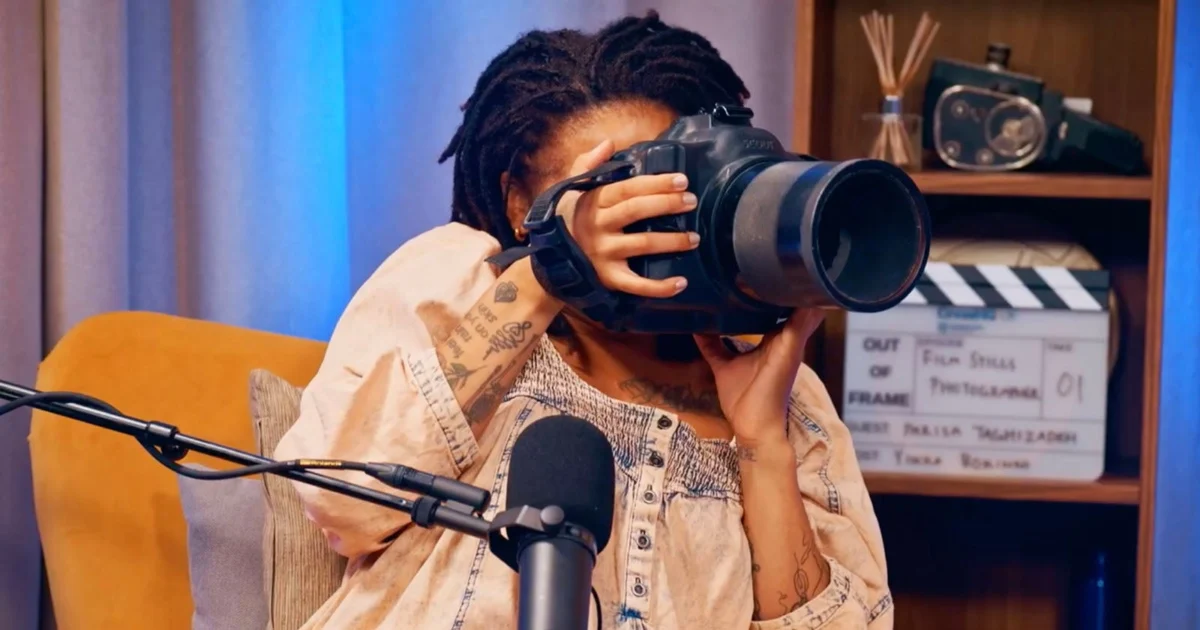
Vintage lenses are often discussed primarily for their "character," a term frequently associated with optical imperfections like pronounced flare, reduced contrast, distinctive "swirly" bokeh, or spherical aberrations that impart an analog aesthetic to digital images. While these unique flaws can indeed serve as powerful creative tools, the true allure of many vintage bargains lies not solely in their eccentricities but in their exceptional performance relative to their modest used prices. This article delves into a curated selection of manual-focus lenses that transcend mere novelty, offering genuine optical refinement and practical utility for contemporary digital photography within an accessible budget.
The Enduring Appeal of Vintage Optics in the Digital Age

The resurgence of interest in vintage lenses has been significantly fueled by the proliferation of mirrorless camera systems. These modern bodies, with their short flange distances and advanced electronic viewfinders, seamlessly accommodate a vast array of legacy glass via simple mechanical adapters. This compatibility transforms what were once niche curiosities for film enthusiasts into viable, high-performing alternatives to often considerably more expensive modern optics. The lenses featured here are not rare collector’s items or cult objects whose prices have been inflated by internet trends. Instead, they represent a category of practical, robustly built lenses celebrated for their sharpness, contrast, color rendition, and useful optical characteristics, making them tools rather than mere toys.
A critical consideration for prospective buyers is the fluctuating nature of the used market and the paramount importance of condition. Issues such as fungus, haze, balsam separation, oily aperture blades, stiff focusing helicoids, or decentered elements can severely compromise even a highly regarded lens. While most of these lenses adapt effortlessly to mirrorless cameras, some mounts offer greater ease of use than others. Nikon F, Olympus OM, Canon FD, Minolta SR/MD, Pentax K, and Contax/Yashica mounts are generally straightforward. Contax G lenses present a unique challenge due to their lack of a conventional manual focus ring, necessitating specialized adapters with their own focusing mechanisms. This list targets a budget of $200-$250, though many excellent examples can be found for significantly less with patience.

Historical Context: A Golden Era of Optical Innovation
The mid-20th century through the late 1980s marked a golden age of lens manufacturing, characterized by intense competition and rapid innovation among Japanese and German optical firms. This period saw the development of sophisticated optical formulas, the widespread adoption of multi-coating technologies to combat flare and improve contrast, and advancements in mechanical precision. Many of the lenses from this era were designed for 35mm film SLRs, built with durable metal components to withstand professional use. With the advent of autofocus in the late 1980s and the subsequent digital revolution, manual-focus lenses from this period were largely supplanted by newer, electronically controlled autofocus designs. However, the inherent quality of many of these older optics, coupled with their robust construction and the current ease of adaptation, has led to their rediscovery. Photographers now appreciate them not just for their cost-effectiveness but for their distinct "look" – a nuanced rendering often described as more organic or painterly compared to the clinically perfect, but sometimes sterile, output of modern lenses.
Deep Dive: Ten Exceptional Vintage Lenses for Modern Portraiture
These selections prioritize high image quality and practical value, offering an excellent starting point for photographers seeking to explore the world of vintage glass without breaking the bank.
1. Vivitar Auto Wide-Angle 28mm f/2.5 (Kino Precision)
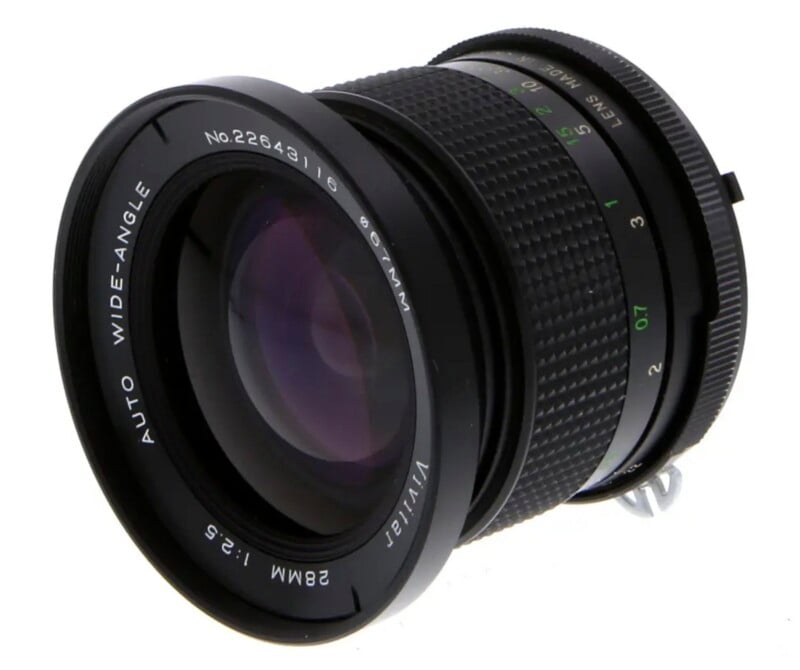
The Vivitar brand, rather than being a manufacturer itself, was a distributor that commissioned lenses from various Japanese optical companies. Identifying the specific manufacturer is key to assessing quality. The highly regarded 28mm f/2.5 Auto Wide-Angle variant, built by Kino Precision, is identifiable by a serial number beginning with "22." This same optical design also appeared under the Kiron and Panagor labels. Its eight-element, eight-group air-spaced optical formula, featuring multicoating and a six-blade diaphragm, was unusually complex for its time. Weighing approximately 320 grams with an all-metal barrel, it boasts a long, smoothly damped focus throw and an integrated lens hood.
A standout feature is its unusually close minimum focusing distance of 0.3 meters for a 28mm lens, enabling environmental portraits and detailed close-ups with notable subject separation. Contrast is surprisingly well-maintained, colors are pleasing, and distortion is minimal. The out-of-focus areas can exhibit a charming "soap-bubble" quality under favorable conditions. While not a corner-to-corner performer wide open, with visible vignetting and softness in the outer field that resolves beyond f/8, it excels from f/5.6 onwards. Its numerous air-glass surfaces make it susceptible to dramatic flare, which can be either a creative asset or a challenge depending on the lighting. Typically found for under $100, it offers exceptional value.
2. Tokina AT-X 28-70mm f/2.6-2.8 or 28-70mm f/2.8
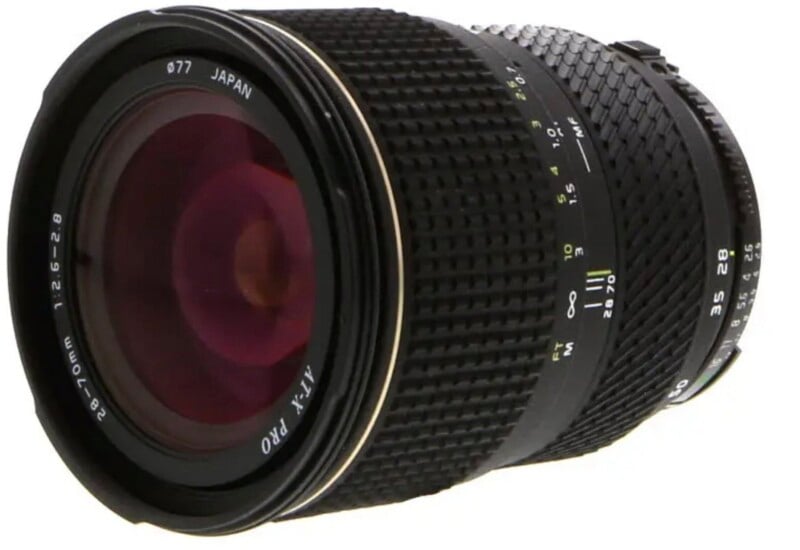
This category encompasses two distinct but related lenses: the earlier Tokina AT-X 28-70mm f/2.8 (1988-1994, 16 elements in 12 groups, 72mm filters, ~610g, 0.7m minimum focus) and the later AT-X PRO 28-70mm f/2.6-2.8 (1994-late 1990s, PRO and PRO II variants, 77mm filters, ~760g). The PRO II version, distinguished by its bayonet hood mount and improved coatings, also incorporated a high-refraction, low-dispersion element. These lenses share a design lineage with the Angenieux 28-70mm f/2.6 AF, suggesting Tokina’s involvement in the original engineering.
Despite being autofocus-era lenses, their AT-X focus clutch mechanism allows for easy manual focusing, making them highly adaptable to mirrorless systems. Their all-aluminum construction speaks to their robust build quality. They offer a constant fast aperture across a useful zoom range, a rarity among manual-focus zooms of the period. Optically, they exhibit a characteristic "Tokina glow" wide open, particularly at 70mm, caused by spherical aberration, which disappears by f/4. From f/4 to f/8, both versions deliver sharp central performance and respectable edge-to-edge clarity, with rich, film-like color rendition. Barrel distortion at 28mm and pincushion at 70mm are present but correctable. The original f/2.8 model remains a strong budget pick, often found for $200-$250, while the PRO versions command slightly higher prices.
3. Pentax SMC 40mm f/2.8
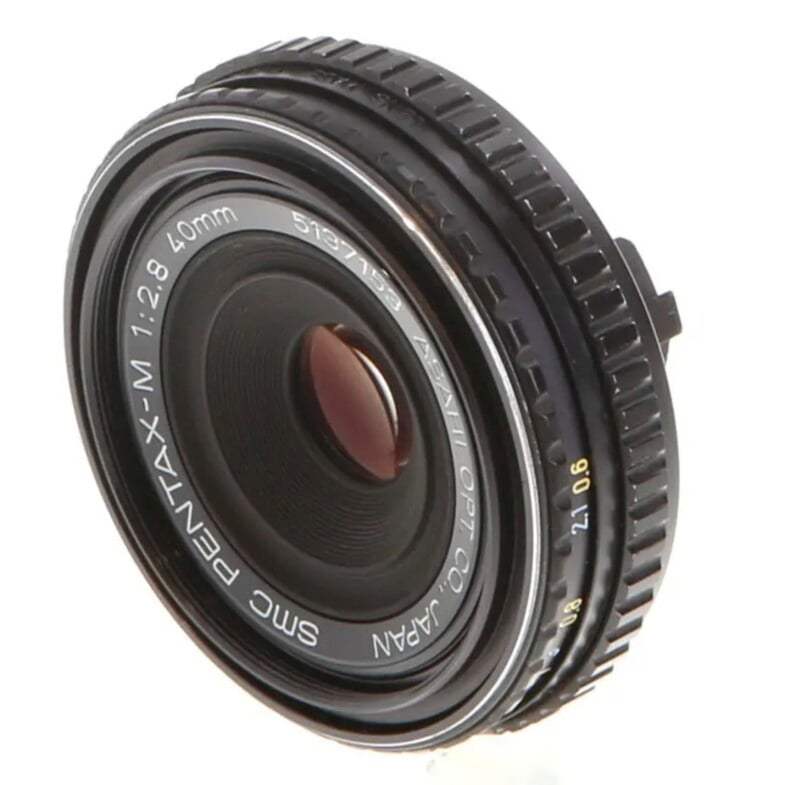
The Pentax SMC 40mm f/2.8 is celebrated for its remarkable compactness, embodying the philosophy that the best lens is the one you carry. This "pancake" prime sits at a versatile 40mm focal length, bridging the gap between a classic 35mm documentary perspective and a 50mm normal lens. It offers sufficient width for general scenes without exaggerated perspective, yet enough normalcy to feel natural and flexible for diverse photographic situations. Its tiny footprint, especially when adapted to mirrorless cameras, makes the setup incredibly portable and discreet.
Optically, the 40mm f/2.8 is commendable for its size. While slightly lower in contrast and sharpness wide open compared to some top-tier standard primes, it sharpens significantly when stopped down to f/4 or f/5.6, delivering crisp and satisfying results. Its key strength lies in its consistent performance across the frame, with minimal detail fall-off from center to corners, even at f/2.8—an impressive feat for a lens of this design. It is a Tessar derivative, offering a different character than the Double Gauss (Planar) derivatives often seen in 50mm lenses. This lens encourages a more intuitive, "walk-around" shooting style, making it an excellent choice for everyday photography where portability and a natural perspective are prioritized over absolute wide-open speed. Alternatives like the Konica Hexanon AR 40mm f/1.8 offer more speed but come with their own set of wide-open aberrations, while the Nikkor AI 45/2 P, though excellent, is less of a "vintage" find.
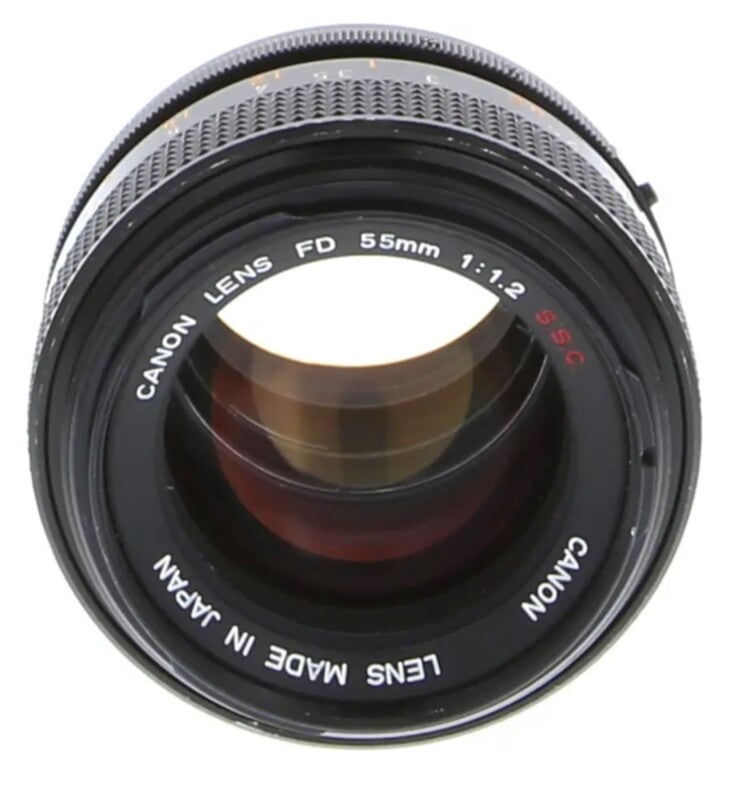
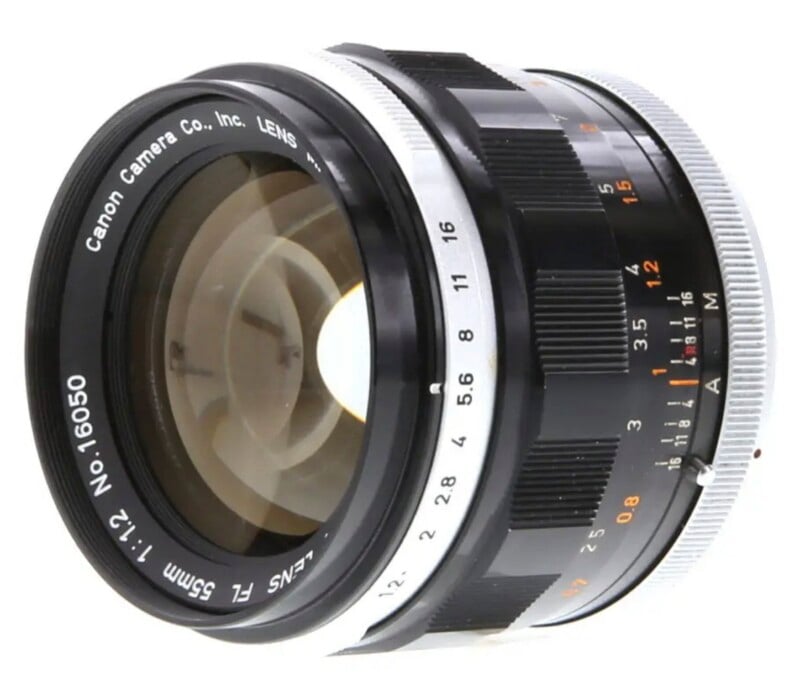
4. Canon FL 55mm f/1.2 or FD 55mm f/1.2
For photographers seeking an ultra-fast f/1.2 aperture without a premium price tag, the Canon FL 55mm f/1.2 is an unparalleled entry point. Introduced in 1968, this lens features a seven-element, five-group optical design, an eight-blade diaphragm, 58mm filter thread, 0.6m minimum focus, and a sturdy 480-gram metal and glass construction. Its affordability stems partly from the obsolescence of the FL breech-lock mount for film SLRs (requiring stop-down metering on FD cameras), but this becomes irrelevant when adapted to mirrorless systems.
Wide open, the FL 55mm f/1.2 delivers the expected characteristics of a vintage f/1.2 lens: reduced contrast, a soft glow around highlights due to spherical aberration, and distinctive "bubble" bokeh with noticeable optical vignetting (cat’s-eye effect) towards the edges. Field curvature also requires careful focusing at f/1.2. This "character" is precisely why many photographers seek it out, particularly for flattering portraits. The lens transforms dramatically when stopped down; by f/2.8, spherical aberration is largely gone, and contrast and sharpness improve considerably. By f/4, it performs as a thoroughly competent standard prime. This dual personality—a distinctive portrait lens wide open and a capable normal lens stopped down—is its greatest asset. Later FD 55mm f/1.2 S.S.C. versions offer multi-coating and slightly better correction, while the aspherical variants (FD 55mm f/1.2 AL of 1971 and later S.S.C. Aspherical) were groundbreaking for their use of aspherical elements but are significantly more expensive and often suffer from yellowing due to thoriated glass. The plain FL version remains the value champion, typically selling for $125-$200.
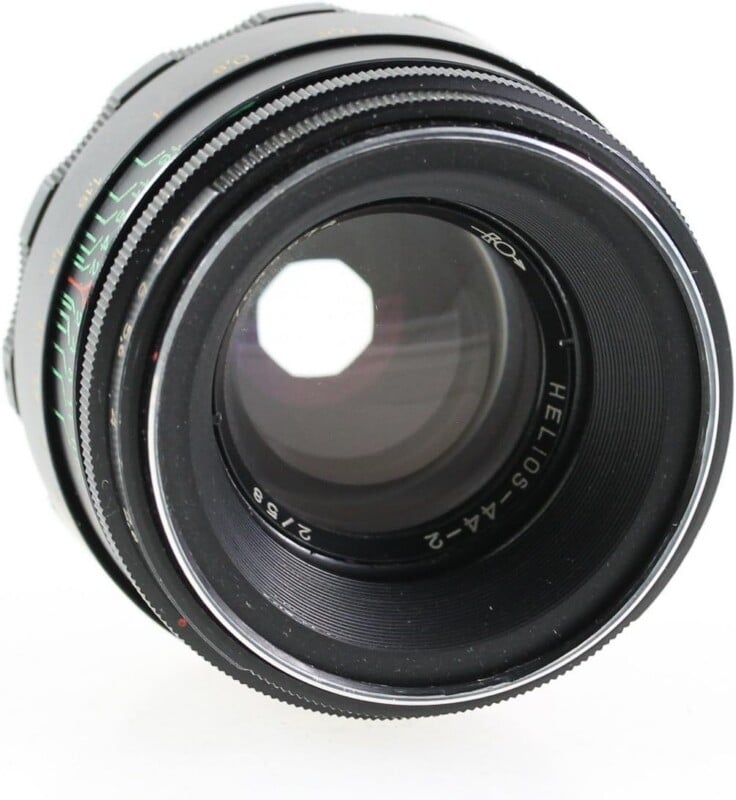
5. Helios 44-2 58mm f/2
The Helios 44-2 is perhaps the most iconic "character" lens on this list, a Soviet copy of the legendary Carl Zeiss Jena Biotar 58mm f/2. Produced in vast quantities across multiple factories (KMZ, Valdai, BelOMO) from the late 1950s, the 44-2 is the M42 mount version with an eight-blade preset diaphragm and 52mm filter thread. Its single-coated optics contribute to its distinct look. The preset aperture mechanism, allowing smooth, clickless aperture adjustment via a lower ring, is particularly useful for video applications.
The lens’s famous "swirly bokeh" is a result of uncorrected off-axis aberrations and mechanical vignetting inherent in its design. This effect is not always present; it requires specific conditions: a busy background with specular highlights, a relatively close subject, and the aperture wide open. When these conditions align, the corners of the image smear into a dramatic rotational pattern, a signature look unmatched by modern lenses. Without these conditions, it functions as a soft, low-contrast standard lens. Stopping down to f/5.6 or f/8 significantly sharpens the center and eliminates the swirl. Due to varied quality control across decades and factories, sample variation is common. Checking for haze, oily blades, and decentering is crucial, though at its typical price of $30-$75, acquiring multiple copies for comparison is not uncommon. Later versions like the 44M, 44M-4, and 44M-7 added automatic aperture coupling and improved coatings, which enhanced contrast but often tamed the beloved swirl effect. For the quintessential "swirl," the 44-2 is the definitive choice.
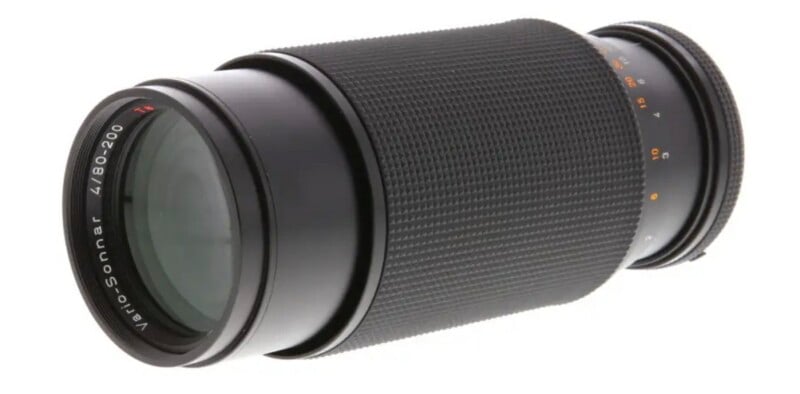
6. Contax Zeiss C/Y 80-200mm f/4 Vario-Sonnar
While often overshadowed by its more renowned sibling, the 100-300mm Vario-Sonnar, the Contax Zeiss 80-200mm f/4 Vario-Sonnar stands as an overlooked gem. It defies the stereotype of soft, low-contrast, and chromatically aberrated film-era telephoto zooms. Though substantial in size and not exceptionally fast by modern standards, its optical performance retains a seriousness that impresses. The lens delivers classic Zeiss color and contrast within a highly versatile telephoto zoom range, covering portraits, compressed landscapes, events, and travel telephoto work. The constant f/4 aperture ensures consistent exposure across the zoom range, and its C/Y mount adapts readily to mirrorless and Canon EF systems.
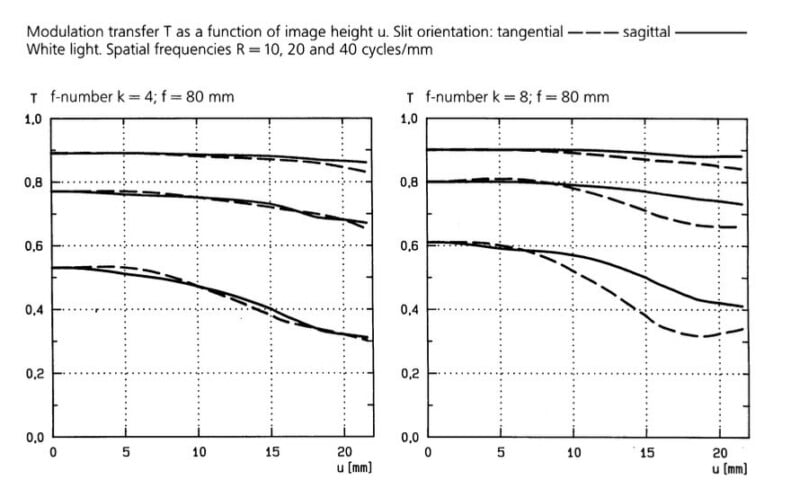
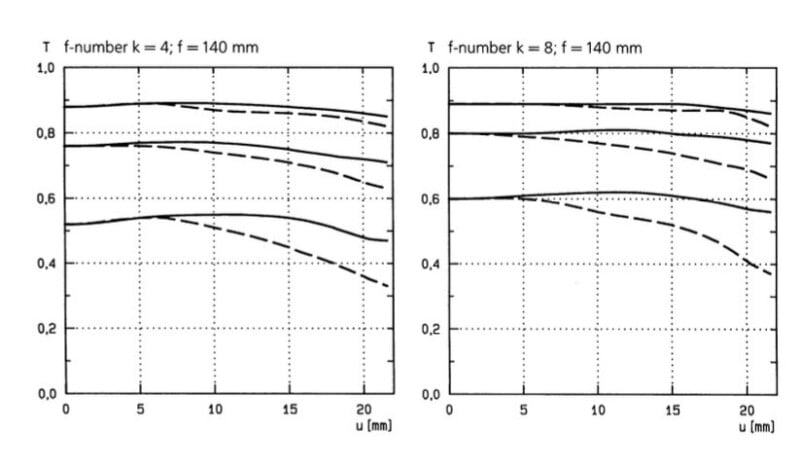
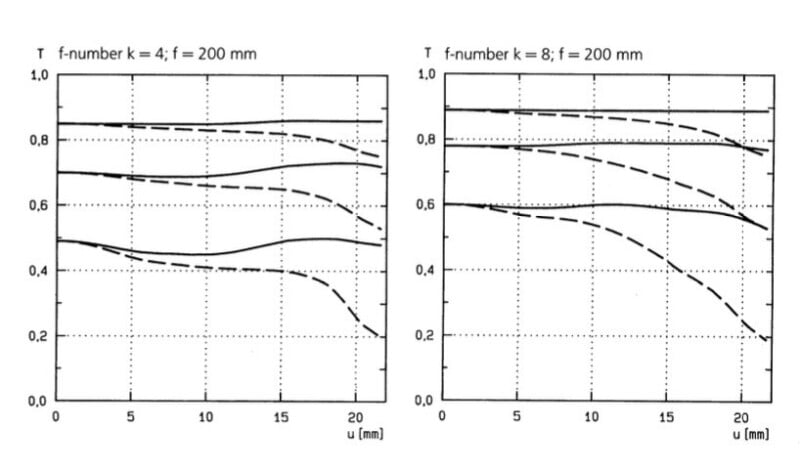
The mechanical feel of this lens is typical of Contax-era Zeiss glass, robust and precise. Its reward is a telephoto zoom that produces images with unusually convincing contrast and color for its age. It exhibits a clarity often termed "Zeiss pop," combining sharpness, contrast, and tonal separation to create images where transitions from in-focus to out-of-focus areas are remarkably clean and well-defined, free from distracting optical maladies. Measured MTF charts from Zeiss confirm its high overall performance, impressive consistency across the frame, and minimal variation throughout its zoom range. This lens represents a significant optical investment at a fraction of the cost of comparable modern glass, typically available for around $200-$250.
7. Tokina AT-X 90mm f/2.5 Macro ("Bokina")
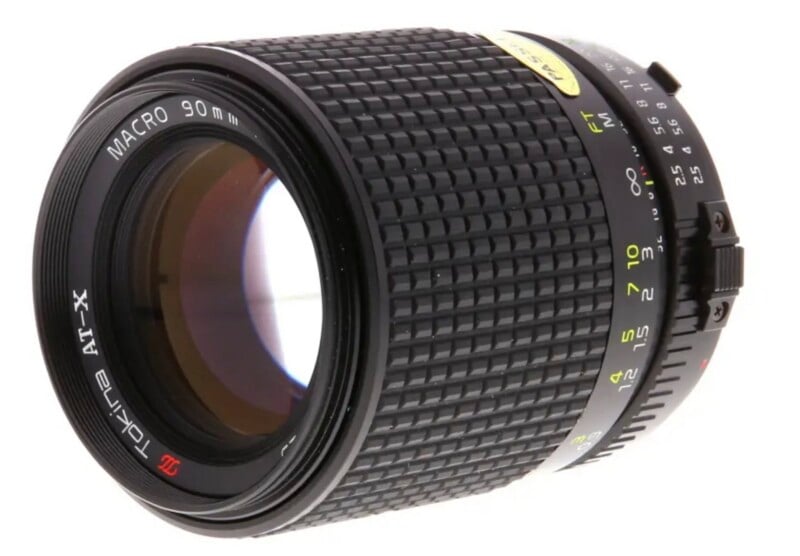
Affectionately known as the "Bokina," the Tokina AT-X 90mm f/2.5 Macro is celebrated for its unique blend of attributes: razor-sharp resolution and exceptionally smooth out-of-focus rendering. Unlike many macro lenses that prioritize technical sharpness at the expense of background aesthetics, the Bokina excels in both, making it an outstanding choice for both macro and portrait photography. Its specifications are impressive: 90mm focal length, f/2.5 aperture, manual focus, and 1:2 macro capability on its own, extending to true 1:1 macro with its dedicated matched extender. This versatility makes it more adaptable than many vintage short telephotos.
The Bokina’s resolution wide open is highly respectable, but its true magic lies in its rendering. Backgrounds tend to melt into a creamy blur rather than appearing nervous or distracting. Subject isolation is strong yet natural, avoiding a brittle or harsh look. Colors and contrast are pleasing, with a slightly rich rendering that beautifully complements subjects like flowers, intricate nature details, close-up still life, and portraits. While not a compact lens—it possesses substantial mass, and the 1:1 extender adds length—its robust handling contributes to its appeal. The long focus throw allows for precise adjustments, encouraging a deliberate and thoughtful shooting process. The Bokina’s ability to combine close-up detail with exquisite background rendering has firmly cemented its status as a cult favorite among photographers.
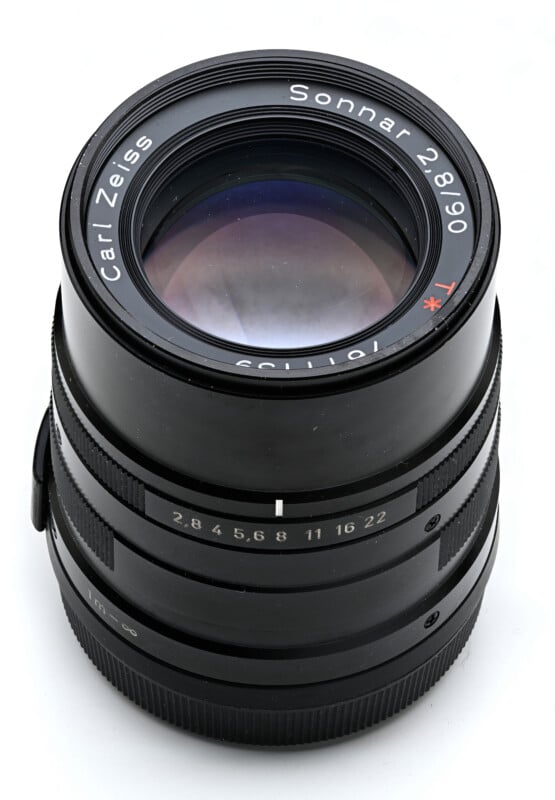
8. Contax G 90mm f/2.8 Sonnar
The Contax G 90mm f/2.8 Sonnar is an optical marvel, offering classic Sonnar virtues: potent central sharpness, high contrast, saturated colors, and remarkably smooth background rendering. It functions brilliantly as a portrait lens, a landscape detail lens, a travel telephoto, and a compact companion to other Contax G primes like the 45/2 Planar or 28/2.8 Biogon. However, its primary practical challenge lies in its design for an autofocus rangefinder system, meaning it lacks a conventional manual focus ring. Focusing is achieved via a screw mechanism on the lens mount, necessitating a specialized adapter with its own focusing ring for use on mirrorless cameras.
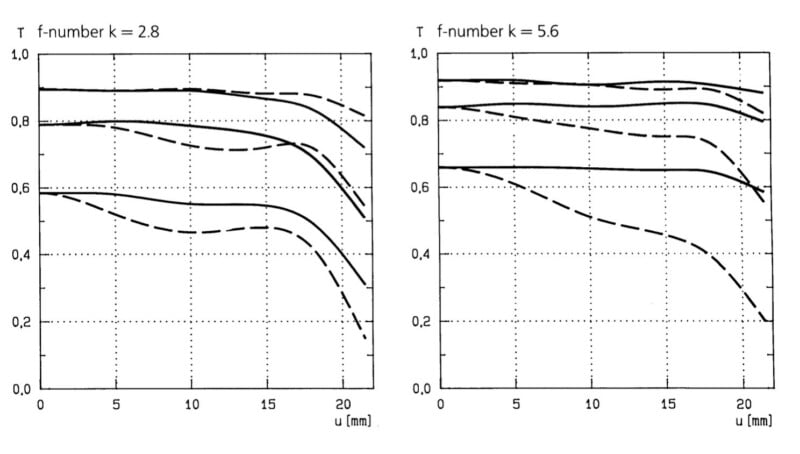
The quality of the focusing experience is therefore heavily dependent on the adapter. Variations in tolerance precision and subjective feel can lead to vague, stiff, or overly short focus throws. Higher-quality adapters from manufacturers like Metabones, Shogun, or Kipon (which offers a particularly compact design) can significantly improve the experience. Techart even produces an autofocus adapter for these lenses. Despite these ergonomic considerations, the lens’s exceptional optical performance, as evidenced by Zeiss’s MTF charts, makes it a compelling value. Its compact size relative to its performance, especially for a Zeiss optic, often sees it priced between $150-$250, making it an attractive proposition for those willing to navigate the adaptation nuances.
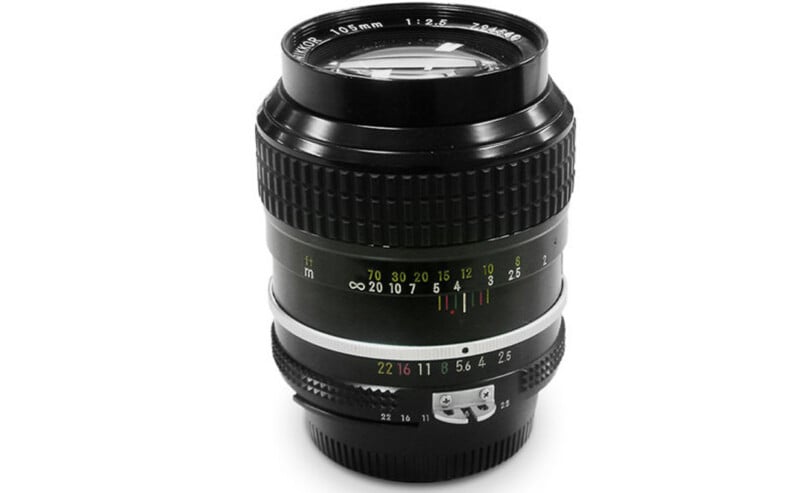
9. Nikon Nikkor 105mm f/2.5 (non-AI, AI, or AI-S)
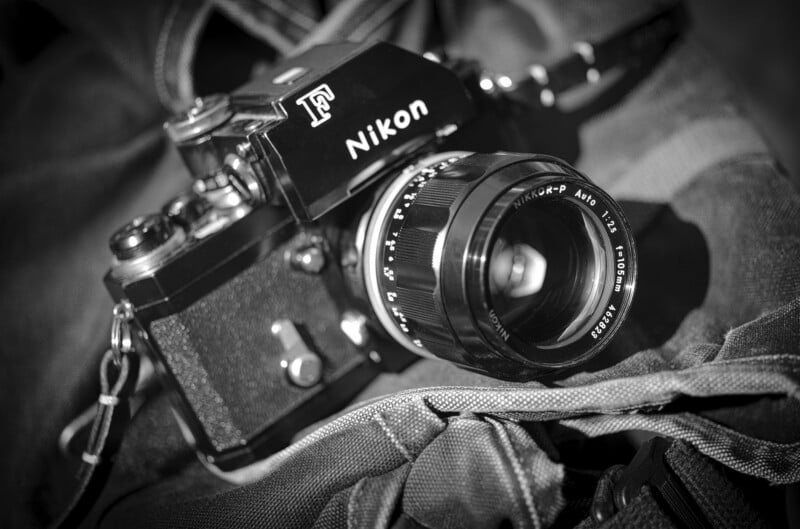
The Nikon Nikkor 105mm f/2.5 stands as a testament to the enduring value of vintage glass for portraiture. Produced for an astonishing 47 years, with over 600,000 units sold, its abundant supply keeps prices reasonable, typically ranging from $100 to $180 depending on the version and condition. Widely considered one of the finest short telephotos ever made for 35mm photography, its legendary status was solidified by iconic images such as Steve McCurry’s "Afghan Girl," captured with an FM2 and the AI-S version.
Crucially, there are two distinct optical designs sharing this name. The original NIKKOR-P (1959-1971) is a five-element, three-group Sonnar derivative, known for its excellent flare resistance (due to fewer air-glass surfaces), beautiful tonal gradation, warmer color, and a gentle, flattering softness wide open. These single-coated versions offer a distinct character, particularly appealing for skin tones. The second design, introduced in 1971, is a five-element, four-group Xenotar-type (often colloquially called "Gauss"). This version, identifiable by a visibly larger rear element, was carried through the multicoated NIKKOR-P.C (1973), K (1974), AI (1977), and AI-S (1981 variants). The Gauss version is better corrected, delivering firmer contrast wide open and superior performance at closer focusing distances where Sonnar derivatives typically weaken. Multicoated variants handle backlight more effectively. While the Sonnar offers a forgiving character, the Gauss version provides a more modern-feeling, crisp rendering. Beyond f/2.8, the two designs converge in performance. A further distinction lies in aperture blades: earlier pre-AI barrels feature rounded blades, while AI-S versions use straight seven-blade construction, affecting the rendering of stopped-down highlights. The AI-S is also the lightest, slimmest, and features a built-in sliding hood. For mirrorless use, all versions adapt trivially, with non-AI copies incurring no penalty. The choice often comes down to desired rendering character and condition rather than strict version hierarchy.
10. Contax Zeiss C/Y 135mm f/2.8 Sonnar
The 135mm f/2.8 category is a treasure trove of value in the vintage lens market, with many manufacturers producing excellent, affordable options. Among these, the Contax Zeiss C/Y 135mm f/2.8 Sonnar stands out, combining classic telephoto utility with the renowned Zeiss transparency. While not the cheapest 135mm f/2.8 available, its optical quality, robust mechanical feel, and consistent rendering justify its slightly higher, yet still very affordable, price point. This lens often sells between $100 to $125 in good condition.
A 135mm focal length, while not as universally applicable as a 50mm or 85mm, excels in specific scenarios. It is superb for portraits, offering excellent subject isolation and flattering compression. It also shines in compressed landscapes, close-up still life, capturing distant textures, and isolating subjects without requiring an extremely fast aperture. The Zeiss 135mm f/2.8 distinguishes itself by rendering images with remarkable neutrality and transparency, imparting very little of its own "signature" beyond exceptional clarity. This level of optical purity and tonal separation is highly valued by photographers who prioritize accurate and uncolored reproduction. Its strong performance, coupled with its accessible price, makes it a compelling choice for those seeking premium telephoto quality without the premium cost.
A Few Personal Runners-Up
The depth of quality in vintage lenses means a comprehensive list could be exhaustive. The following lenses represent excellent budget choices that nearly made the main list, often due to overlapping focal lengths or slight variations in market price and condition:
- Nikon 24mm f/2.8 (in any of the AI, AI-S, or AF-D variants)
- Pentax SMC Takumar 28mm f/3.5
- Minolta MD 45mm f/2 Rokkor-X
- Contax Zeiss C/Y 45mm f/2.8 Tessar
- Minolta M-Rokkor 90mm f/4
The Broader Implications: Artistry, Affordability, and Sustainable Photography
The enduring appeal and practical utility of vintage lenses carry significant implications for the photographic community. Economically, these optics democratize access to high-quality imaging tools, empowering photographers with limited budgets to achieve professional-grade results that might otherwise be out of reach. This affordability fosters experimentation and creativity, encouraging photographers to explore diverse visual styles without substantial financial commitment.
Artistically, engaging with manual-focus vintage lenses often necessitates a more deliberate and thoughtful approach to photography. The absence of autofocus compels photographers to hone their manual focusing skills, leading to a deeper understanding of depth of field and composition. The unique rendering characteristics—be it the "swirl" of a Helios, the "glow" of a Tokina, or the "transparency" of a Zeiss—offer distinct artistic palettes that diverge from the often clinically perfect, yet sometimes sterile, output of modern, digitally optimized lenses. This allows for a conscious choice between technical perfection and a more emotive, "character-driven" aesthetic.
Furthermore, the rediscovery and reuse of these legacy optics contribute to a more sustainable photographic practice. By giving new life to existing equipment, photographers can reduce their reliance on new manufacturing, thus lessening the environmental impact associated with electronics production and waste. In an era of rapid technological cycles, embracing vintage gear represents a mindful step towards circular economy principles within the photography industry.
Conclusion: A Timeless Investment for Creative Vision
The market for vintage lenses is far more than a nostalgic niche; it is a vibrant ecosystem offering tangible value and distinct creative opportunities. The lenses highlighted in this article exemplify how thoughtful selection can yield exceptional optical performance for portrait photography and beyond, all within a budget that makes high-quality glass accessible to a broader audience. As mirrorless camera technology continues to evolve, the symbiosis between cutting-edge digital sensors and time-honored optical designs will only strengthen, ensuring that these classic lenses remain a timeless and invaluable investment for any photographer’s creative journey.