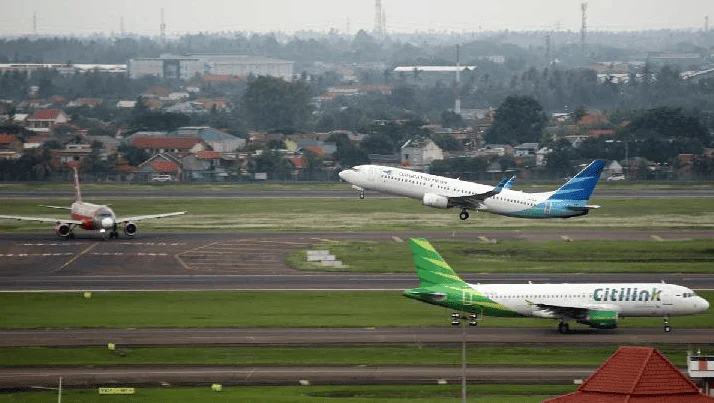
The aviation industry in Indonesia is bracing for a significant surge in activity as the annual Eid al-Fitr home-bound travel season, locally known as Mudik, approaches its projected zenith. According to latest industry forecasts and historical data analysis, the peak movement of aircraft during the Lebaran 2025 period is expected to occur on two critical dates: March 22 and March 28, 2025. These dates represent the bookends of a massive mobilization of the Indonesian population, as millions of citizens utilize air travel to reunite with family across the archipelago. This period is not merely a seasonal spike but a logistical marathon that tests the limits of the nation’s transportation infrastructure, necessitating months of coordination between government bodies, airport operators, and commercial airlines.
The first projected peak on March 22, 2025, is identified as the primary departure surge. This date aligns with the beginning of the collective leave period and school holidays, prompting an early exodus from major urban centers like Jakarta, Surabaya, and Medan. Conversely, March 28, 2025, is anticipated to be the second peak, representing a combination of late-departing travelers and those beginning their return journeys. As the primary gateway for international and domestic travel, Soekarno-Hatta International Airport in Tangerang is expected to bear the brunt of this volume, with estimates suggesting the facility will handle over 23,000 aircraft movements throughout the holiday window.
Chronology of the 2025 Lebaran Aviation Surge
The timeline for the 2025 Lebaran aviation surge begins well before the peak dates in March. Preparation phases typically commence in late 2024, involving fleet maintenance schedules and slot allocation reviews by the Ministry of Transportation. By early March 2025, airlines are expected to begin the implementation of "extra flights" to accommodate the overflow of passengers who were unable to secure seats on regularly scheduled routes.
As the calendar moves toward March 22, the intensity of operations at major hubs increases incrementally. The "Mudik" flow traditionally moves from the capital and industrial centers on Java toward the outer islands and rural provinces. Following the first peak, there is a brief stabilization in flight frequency before the second peak on March 28. This second surge is often more complex for air traffic controllers and ground handlers, as it involves high-density two-way traffic: those rushing to reach their destination before the Eid prayer and those starting the "Arus Balik" or the return flow to the cities.
Statistical Projections and Infrastructure Capacity
The forecast of 23,000 aircraft movements at Soekarno-Hatta International Airport underscores the immense scale of the 2025 holiday season. To put this in perspective, this figure represents a significant percentage increase over daily averages, requiring the airport to operate at near-maximum capacity for its three runways. Data from previous years indicates that during the peak of Lebaran, the frequency of take-offs and landings can reach up to 80 or 90 movements per hour during daylight hours.
Supporting this volume requires more than just runway space. PT Angkasa Pura, the state-owned airport operator, must ensure that Terminal 1, 2, and 3 are fully staffed and that automated systems—such as baggage handling and digital check-in kiosks—are functioning at 100% efficiency. Beyond the capital, secondary hubs such as Juanda International in Surabaya, Ngurah Rai in Bali, and Sultan Hasanuddin in Makassar are also projecting 10% to 15% increases in aircraft movements compared to the previous year. This growth is attributed to a stabilizing economy and an increasing preference for the speed and convenience of air travel over maritime or land-based alternatives.
Strategic Preparations by Airlines and Regulators
In anticipation of the Puncak Pergerakan Pesawat Lebaran 2025, the Ministry of Transportation’s Directorate General of Civil Aviation has issued directives to all domestic carriers. Airlines including Garuda Indonesia, Pelita Air, and the Lion Air Group are required to conduct rigorous "ramp checks" on their fleets to ensure airworthiness. Given the high utilization rates during this period, the risk of mechanical delays is heightened, making pre-season maintenance a critical safety priority.
To manage the surge, airlines have requested hundreds of additional flight slots. These extra flights are strategically timed to utilize off-peak hours, including late-night and early-morning departures, to distribute the passenger load more evenly and prevent terminal overcrowding. Furthermore, the government has been in active dialogue with fuel providers like Pertamina to ensure that aviation turbine fuel (Avtur) supplies are bolstered at all regional airports, preventing any logistical bottlenecks that could ground aircraft during the peak dates.
Safety, Security, and Public Health Protocols
While the immediate focus of the Lebaran season is often on volume and efficiency, safety and security remain the paramount concerns for aviation authorities. During the peak movement dates of March 22 and 28, security presence at airports is traditionally doubled. This includes the deployment of additional aviation security (Avsec) personnel, as well as coordination with the Indonesian National Police (Polri) and the military (TNI) to monitor high-traffic areas.
Moreover, although the global health landscape has stabilized, airport authorities continue to maintain high standards of hygiene. Thermal scanners and sanitation stations remain integrated into the terminal architecture to mitigate the spread of seasonal illnesses, which can easily proliferate in crowded indoor environments. The "Integrated Lebaran Transport Post" (Posko Terpadu) will be established at every major airport, serving as a centralized command center to monitor flight data in real-time, handle passenger complaints, and respond to any emergency situations that may arise during the peak periods.
Socio-Economic Factors Driving the Aviation Boom
Several factors contribute to the projected record-breaking aircraft movements in 2025. A primary driver is the government’s continued commitment to infrastructure development, which has improved the connectivity of regional airports, making air travel a viable option for a larger segment of the population. Additionally, the 2025 holiday calendar features a favorable alignment of public holidays and collective leave days, encouraging citizens to travel further distances that necessitate flying rather than driving.
The economic impact of this aviation surge is substantial. The increased movement of people facilitates a massive transfer of wealth from urban centers to rural provinces, boosting local tourism, hospitality, and retail sectors. For the airlines, the Lebaran season is a vital period for revenue generation, though it comes with the challenge of managing operational costs—such as overtime pay for crew and increased fuel consumption—while adhering to government-mandated price ceilings (Tarif Batas Atas) intended to keep tickets affordable for the general public.
Analysis of Operational Implications
The concentration of 23,000 movements at a single hub like Soekarno-Hatta carries significant implications for the national air traffic management system. AirNav Indonesia, the country’s air navigation service provider, plays a pivotal role during the peak dates. Controllers must manage narrower separation windows between aircraft while accounting for the unpredictable weather patterns often seen in late March, which can include sudden tropical thunderstorms.
Delays are an inherent risk during such high-volume periods. A single "knock-on" effect—where one delayed flight causes a chain reaction of delays for subsequent flights using the same aircraft—can disrupt the schedules of thousands of passengers. To mitigate this, airlines are encouraged to have "standby" aircraft positioned at key hubs to step in should a primary vessel experience a technical fault. Furthermore, ground handling agencies must increase their turnaround efficiency, aiming to deplane, clean, refuel, and board aircraft within the tightest possible windows to maintain the integrity of the holiday flight schedule.
Essential Guidance for Passengers
For the millions of Indonesians planning to fly during the Puncak Pergerakan Pesawat Lebaran 2025, early preparation is the key to a stress-free journey. Aviation experts and airport authorities offer several recommendations to navigate the crowds on March 22 and 28:
- Advance Booking and Digital Check-in: Passengers are urged to secure their tickets months in advance to avoid the inevitable price hikes as the peak dates approach. Utilizing mobile check-in apps 24 hours before departure can significantly reduce the time spent in terminal queues.
- Early Arrival: Given the anticipated traffic congestion on roads leading to airports and the longer lines at security checkpoints, arriving at least three to four hours before a domestic flight is considered a necessary precaution during the Lebaran peak.
- Baggage Compliance: To speed up the boarding process, travelers should strictly adhere to airline cabin baggage policies. Overweight or oversized bags at the gate can cause significant delays in the departure sequence.
- Monitoring Flight Status: With the high frequency of movements, schedule adjustments are possible. Passengers should stay updated via airline apps and official airport social media channels for real-time information regarding their flight status.
Future Outlook and Conclusion
The Puncak Pergerakan Pesawat Lebaran 2025 serves as a barometer for the health and resilience of Indonesia’s aviation sector. The ability of the nation’s airports and airlines to handle over 23,000 movements during the March peak will demonstrate the success of recent investments in digital technology and physical infrastructure. As the industry moves toward more sustainable and efficient operations, the lessons learned from the 2025 surge will likely inform future strategies for handling the world’s most complex seasonal migration.
In conclusion, the peak aircraft movements on March 22 and 28, 2025, represent a monumental task of coordination and execution. Through the combined efforts of PT Angkasa Pura, AirNav Indonesia, the Ministry of Transportation, and various commercial airlines, the goal remains a safe, smooth, and efficient travel experience for all. For the passengers, the journey home is a cherished tradition, and the aviation industry stands ready to ensure that this tradition continues to be supported by a world-class transportation network. Successful management of this period will not only satisfy millions of travelers but also reinforce Indonesia’s position as a leading aviation market in Southeast Asia.