The shift toward video-first B2B marketing is driven by a critical change in buyer psychology. In 2026, the average professional decision-maker is inundated with AI-generated content, leading to a heightened "trust deficit." Consequently, the most successful B2B ads are those that prioritize authenticity and immediate value over high-gloss, over-produced aesthetics. This evolution has placed stock media at the center of the creative workflow, as platforms like Shutterstock provide the essential building blocks for agile, high-performing campaigns that can be deployed across multiple channels in real-time.
The Evolution of B2B Video: A 2026 Perspective
To understand why stock media has become the engine of B2B conversions in 2026, one must look at the timeline of the industry’s digital maturation. Between 2020 and 2023, B2B brands began experimenting with video primarily for top-of-funnel awareness. By 2024, the rise of short-form platforms like TikTok and Instagram Reels forced professional services to adopt more "humanized" content. Entering 2026, the market has reached a point of "Operational Velocity," where the ability to test, iterate, and scale video content is the primary indicator of a campaign’s Return on Ad Spend (ROAS).
Current market data indicates that B2B buyers now consume an average of 12 to 15 pieces of video content before engaging with a sales representative. This high volume of consumption means that brands cannot rely on a single, expensive "hero" video produced once a year. Instead, they require a continuous stream of scenario-based content that addresses specific pain points in real-time. This necessity has driven a 40% increase in the utilization of premium stock footage libraries among enterprise marketing teams since 2024.
Core Characteristics of High-Converting B2B Visuals
In the current fiscal year, high-converting B2B visuals share three non-negotiable traits: problem-solving clarity, authenticity, and platform-specific optimization. The 2026 buyer is notoriously time-poor; they do not click on ads to be entertained in the traditional sense, but to find solutions.
Trust Over Aesthetics
In previous years, B2B ads often suffered from being "too perfect." Overly polished, cinematic shots of glass office buildings and smiling models in suits often triggered a skeptical response from savvy buyers. In 2026, the trend has shifted toward "Trust Signals." Authenticity—achieved through candid-style clips, realistic office environments, and diverse, relatable talent—outperforms traditional corporate videography by nearly 30% in click-through rates. The goal is to signal transparency. When a viewer sees a scenario that mirrors their actual work life, the psychological barrier to entry is lowered.

Immediate Value Delivery
The "first three seconds" rule has become even more stringent. Data from major ad networks suggests that 65% of B2B viewers drop off if the value proposition isn’t established within the first 1.5 seconds of a video. High-performing stock media allows editors to lead with "the hook"—a visual representation of a specific business challenge—immediately followed by a clear, visual solution.
Operational Velocity and Scaling
For a B2B campaign to succeed in 2026, it must be agile. Marketing teams are now expected to cycle-test creative assets weekly. If a particular visual scenario is not resonating with a target demographic (e.g., mid-level IT managers in Northern Europe), the team must be able to swap that footage for a new scenario within hours, not weeks. This is where the depth of a library like Shutterstock becomes a strategic asset, providing thousands of variations of a single theme to allow for granular A/B testing.
Platform-Specific Optimization Strategies
The modern B2B buyer is cross-platform. A CFO might see a brand on LinkedIn during work hours, encounter a retargeting ad on Instagram during a break, and watch a detailed product breakdown on YouTube in the evening. Each of these touchpoints requires a different visual language.
Meta Ads: The Power of the Vertical Lifestyle
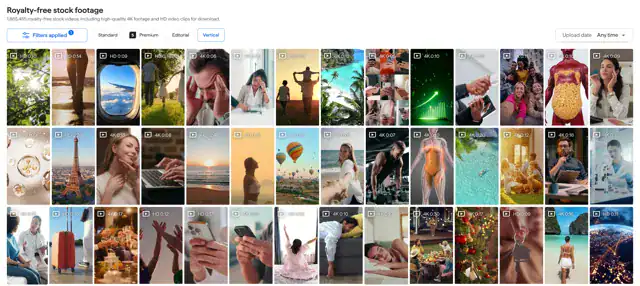
On Facebook and Instagram, B2B ads must blend into the user’s organic feed to avoid "ad blindness." The most effective stock media for Meta in 2026 is short-form, vertical-format lifestyle clips. These videos often feature real-life scenarios—such as a remote worker troubleshooting a software issue or a team collaborating in a modern, non-traditional workspace. Shutterstock’s vertical-first collections have become the go-to resource for these campaigns, as they offer the "UGC-style" (User-Generated Content) look that feels native to the platform while maintaining professional technical standards.
YouTube: Narrative and Scenario-Based Storytelling
YouTube remains the king of mid-to-long-form B2B content. In 2026, "Scenario-based storytelling" is the dominant trend here. Ads that visualize a chronological business problem—starting with the frustration of inefficiency and ending with the relief of a solved problem—see the highest conversion rates. Marketing teams use stock footage to build these narratives without the cost of a full production crew, layering voiceovers and data visualizations over high-quality, scenario-specific clips.
Short-Form Campaigns: TikTok and LinkedIn Shorts
LinkedIn’s introduction of its own "Shorts" style feed in late 2024 changed the B2B game. By 2026, this format has become the fastest-growing segment for B2B lead generation. These videos require high-energy, fast-paced editing and "snackable" visuals. The ability to pull trendy, high-resolution stock clips that can be overlaid with bold text and rapid transitions is essential for capturing the attention of the "scroll-heavy" professional.

The Role of Licensing and Legal Security
As B2B brands scale their video production, a significant but often overlooked bottleneck is legal compliance. In 2026, the risks associated with copyright infringement and improper usage rights have intensified due to the proliferation of AI-scraping and digital rights management (DRM) automation.
A major reaction from corporate legal departments in the last 18 months has been a move away from "free" or "unverified" media sources. The industry has seen a shift toward "Licensing Clarity." When a B2B brand uses a clip from Shutterstock, they are not just buying a visual; they are buying indemnity. This includes:
- Worry-Free Commercial Use: Ensuring that all models have signed releases and all properties are cleared for global advertising.
- Digital and Social Media Coverage: Guaranteeing that the license extends across all current and emerging platforms.
- Perpetual Rights: Ensuring that a successful campaign doesn’t have to be pulled down after six months due to an expiring license.
This legal security translates directly into marketing efficiency. Teams can move from "concept to live" without waiting for weeks of legal vetting, which is a critical advantage in a high-velocity market.
Authenticity in the Age of Generative AI
The year 2026 marks a turning point in the relationship between human-shot media and Generative AI. While AI tools are used extensively for editing and background expansion, there has been a notable "flight to quality" regarding the core human elements of B2B ads.
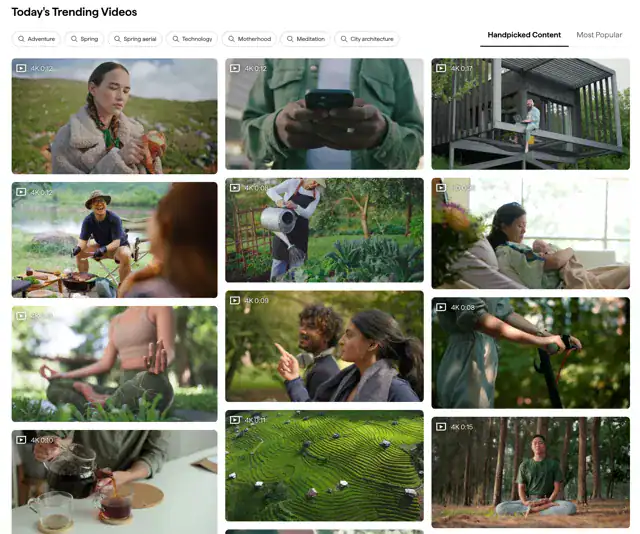
The "uncanny valley" effect of fully AI-generated humans has, paradoxically, made high-quality stock footage of real people more valuable. Buyers in 2026 use "realness" as a proxy for the legitimacy of a company. If a brand uses obvious, poorly rendered AI avatars, the perceived risk of their product increases. Industry analysts note that B2B brands using authentic, human-centric stock media see a 22% higher "Brand Trust Score" compared to those relying solely on synthetic media.
Shutterstock has addressed this by ethically integrating AI. Their platform allows marketers to use AI to search for, edit, or slightly modify authentic footage, ensuring the final product remains grounded in reality while benefiting from the speed of automation.
Conclusion: Performance Over Perfection
As we look toward the remainder of 2026 and into 2027, the mandate for B2B marketers is clear: prioritize performance over perfection. The ads that drive conversions are those that are delivered at the right time, on the right platform, with a message of clear value and a visual tone of undeniable authenticity.
The reliance on premium stock media libraries has evolved from a cost-saving measure to a strategic necessity. By providing a vast, legally secure, and technically superior foundation of visual assets, platforms like Shutterstock enable B2B brands to meet the demands of a high-speed, video-first world. In the competitive landscape of 2026, the winner is not the brand with the biggest production budget, but the brand that can tell the most authentic story the fastest.