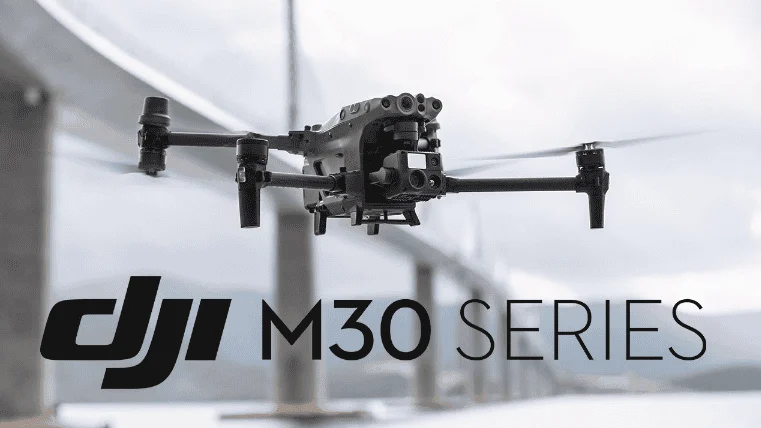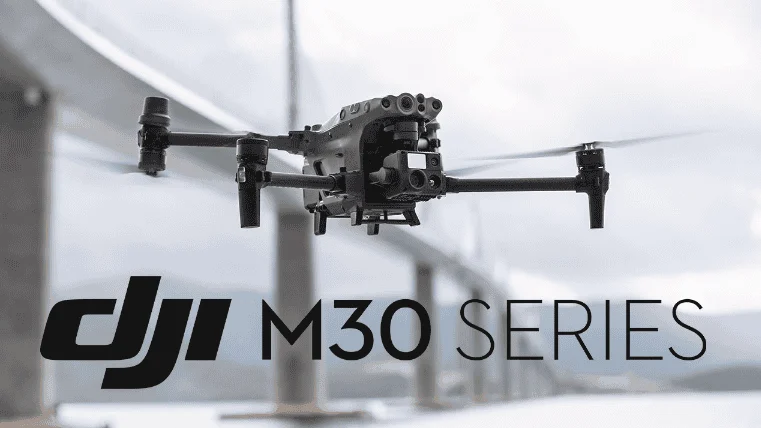
The commercial drone industry has reached a significant regulatory and safety milestone as the DJI Matrice 30 (M30) series achieves the capability to operate over people through the integration of the AVSS PRS-M30 parachute system. This development addresses one of the most stringent challenges in unmanned aerial vehicle (UAV) operations: the mitigation of kinetic energy in the event of a critical system failure. By combining DJI’s enterprise-grade flight platform with Aerial Vehicle Safety Solutions (AVSS) technology, operators in the public safety, infrastructure, and emergency response sectors can now deploy drones in densely populated urban environments with a level of safety that meets international regulatory standards.
For years, flying over crowds was a restricted activity, often requiring complex waivers and rigorous safety demonstrations. The introduction of a reliable, third-party parachute system specifically tailored for the DJI M30 series represents a shift from experimental operations to standardized, safe industrial workflows. This integration is not merely a hardware addition; it is a comprehensive safety solution that includes flight termination systems, automatic deployment triggers, and data logging to ensure that if a drone loses power or control, it descends at a speed that minimizes the risk of injury to people on the ground.
The Regulatory Landscape and the Need for Kinetic Energy Mitigation
To understand the significance of the DJI M30’s capability to fly over crowds, one must examine the regulatory framework established by aviation authorities like the Federal Aviation Administration (FAA) in the United States and the European Union Aviation Safety Agency (EASA). Under FAA Part 107 rules, specifically the "Operations Over People" amendment, drones are categorized based on the risk of injury they pose.
The DJI M30, while highly advanced, falls into a weight class that generally prohibits sustained flight over open-air assemblies of people without specific safety mitigations. The primary concern is the "kinetic energy transfer" upon impact. A drone falling from several hundred feet can be lethal. However, the ASTM F3322-18 standard—a rigorous testing protocol for UAV parachutes—provides a pathway for compliance. The AVSS PRS-M30 was designed to meet this specific standard, allowing the DJI M30 to be classified as a safe option for complex urban missions. By reducing the terminal velocity of the drone during a fall, the parachute system ensures that the impact energy remains below the thresholds required for legal flight over crowds.
Technical Specifications of the AVSS PRS-M30 System
The PRS-M30 is a "plug-and-play" safety solution that integrates seamlessly with the DJI M30’s onboard systems. It consists of several key components: a parachute pod, an electronic module, and a flight termination system (FTS).
The core of the system is the automatic trigger mechanism. Using independent sensors, the PRS-M30 can detect an abnormal flight attitude or a free-fall state in milliseconds. Once a failure is detected, the system executes two simultaneous actions: it triggers the Flight Termination System to cut power to the drone’s motors—preventing the parachute from becoming entangled in spinning propellers—and it deploys the parachute using a high-energy spring or CO2 charge.
The system is also equipped with a manual trigger on the pilot’s remote controller. This allows the operator to initiate a deployment if they observe a structural failure or an uncontrollable flight pattern that the automated sensors might not yet have flagged. Furthermore, the PRS-M30 features an independent power supply, ensuring that the parachute can deploy even if the drone’s primary flight battery suffers a total failure.
The DJI Matrice 30: A Powerhouse for Industrial Operations
The DJI M30 itself is a compact yet powerful enterprise drone, bridging the gap between the portable Mavic 3 Enterprise and the heavy-lift Matrice 300 RTK. Its design is inherently focused on reliability, which complements the AVSS parachute system.
360-Degree Obstacle Avoidance
Safety is reinforced by the M30’s comprehensive sensor suite. It features dual-vision and ToF (Time-of-Flight) sensors on all six sides of the aircraft, providing a 360-degree shield against obstacles. This is particularly vital in urban environments where power lines, building overhangs, and temporary structures like cranes present constant hazards. When flying over crowds for event security or traffic monitoring, this sensor array ensures the drone maintains a safe distance from all surrounding objects.
Advanced Multi-Sensor Imaging
The M30 series comes in two primary versions: the M30 and the M30T. Both feature a 48-megapixel 1/2" CMOS zoom camera capable of 5x to 16x optical zoom and up to 200x digital zoom. They also include a 12-megapixel wide-angle camera and a laser rangefinder that can provide coordinates of objects up to 1,200 meters away. The M30T (Thermal) adds a 640×512 radiometric thermal camera, which is indispensable for search and rescue operations at night or for detecting hotspots during structural fires.
Environmental Resilience and Durability
With an IP55 rating, the M30 is built to withstand adverse weather conditions, including heavy rain and wind speeds up to 15 m/s (approx. 33 mph). Its ability to operate in temperatures ranging from -20°C to 50°C ensures that it remains functional in both arctic and desert environments. For public safety agencies, this means the drone can be deployed immediately during a storm or heatwave, providing critical situational awareness when it is needed most.
Applications in Public Safety and Emergency Response
The ability to fly over crowds legally and safely transforms how public safety agencies operate. In the past, a drone monitoring a large festival or a protest might have had to remain on the periphery, limiting its viewing angles and effectiveness.
Search and Rescue (SAR) in Crowded Areas
In scenarios involving missing persons in large urban parks or during massive public gatherings, the DJI M30 can now fly directly over the area of interest. The thermal imaging on the M30T allows rescuers to distinguish human heat signatures from the environment, even in low-visibility conditions. The parachute provides the legal and safety assurance that if a technical failure occurs, the drone will not become a secondary hazard to the people it is trying to help.
Drone as a First Responder (DFR)
Many police departments are adopting the "Drone as a First Responder" model, where a drone is dispatched to a 911 call before ground units arrive. These drones often have to transit over residential neighborhoods and busy intersections. The integration of the PRS-M30 allows these agencies to scale their DFR programs by meeting the safety requirements for flight over uninvolved persons, thereby reducing response times and providing live video feeds to officers en route.
Impact on Infrastructure Inspection and Urban Planning
Beyond public safety, the industrial applications are vast. Inspecting bridges, high-rise buildings, and telecommunications towers in the middle of a city often involves flying near or over sidewalks and roadways.
Minimizing Operational Downtime
Previously, infrastructure inspections in urban centers might have required closing off streets or sidewalks to comply with safety regulations. With the DJI M30 and its parachute system, these inspections can often be conducted with significantly less disruption. The parachute serves as a certified mitigation strategy that satisfies the risk assessment requirements of both corporate safety officers and city permit offices.
High-Resolution Mapping and Digital Twins
For urban planners and construction firms, the M30 can be used to create detailed 3D models or "digital twins" of city blocks. The high-resolution zoom camera allows for the inspection of minute structural details—such as cracks in concrete or loose bolts on a transmission tower—from a safe distance, while the parachute system ensures that the flight complies with urban flight safety protocols.
Economic and Operational Implications for the Drone Industry
The collaboration between DJI and AVSS is a clear indicator of the maturing drone ecosystem. It highlights a move toward specialized, interoperable components designed to solve specific regulatory hurdles. For drone service providers, the primary benefit is a reduction in liability and an increase in operational flexibility.
Insurance providers are more likely to offer favorable rates to operators using certified safety systems like the PRS-M30. Furthermore, having an ASTM F3322-18 compliant system simplifies the process of applying for complex operational authorizations from aviation authorities. This reduces the administrative burden on companies, allowing them to focus on data collection and mission execution rather than paperwork.
Analysis: The Future of Urban Air Mobility
The DJI M30’s ability to fly over crowds is a precursor to the broader adoption of Urban Air Mobility (UAM). As we move toward a future where delivery drones and even passenger eVTOL (electric Vertical Take-Off and Landing) aircraft become common, the technologies being pioneered today on platforms like the M30 will serve as the foundation.
Redundancy is the "golden rule" of aviation. The M30 features redundant flight controllers, dual batteries, and redundant transmission links. The addition of a parachute system adds a final layer of "passive redundancy." This multi-layered approach to safety is what will eventually build public trust in autonomous systems. When the public sees that these devices are equipped with failsafes that prevent catastrophic falls, the social acceptance of drones in daily life will increase.
Conclusion
The integration of the DJI M30 with the AVSS PRS-M30 parachute system represents a landmark achievement in the field of unmanned aviation. By combining cutting-edge aerial robotics with a proven, certified safety mechanism, this solution addresses the critical need for safe flight over human crowds. Whether it is used by a police department to manage a large-scale public event, a fire department to scout a burning building, or an engineer to inspect a city bridge, the DJI M30 now offers a level of safety and regulatory compliance that was previously difficult to achieve.
As technology continues to evolve, the focus will remain on the harmony between capability and safety. The DJI M30 is no longer just a tool for capturing data; it is a symbol of how the drone industry is evolving to meet the highest standards of public safety and operational excellence. This innovation ensures that the benefits of drone technology can be realized in the heart of our most populated cities, paving the way for a more efficient and better-informed world.