For three decades, photographer Paul Nicklen has navigated the dense wilderness of Vancouver Island, an area renowned for its high cougar population, yet his encounters with these elusive felines have been limited to mere fleeting glimpses. This profound scarcity of direct observation, despite living in proximity to such formidable predators, underscores the inherent stealth and masterful camouflage that define big cats. Their powerful, supple musculature, silent padded paws, and meticulously planned movements enable them to melt into their natural environments, solidifying their status as nature’s apex hunters. This persistent feeling of being observed, a constant undercurrent during his walks and bike rides, fueled a deep-seated yearning to finally witness these magnificent creatures up close.
The Journey to Chilean Patagonia
The opportunity to photograph the famed pumas of Chilean Patagonia presented itself, a prospect tinged with both immense anticipation and a healthy dose of reserved expectation. The journey, however, was not without its initial hurdles. A significant setback involving a lost passport and an unexpected detour to a Brazilian embassy in a neighboring country tested the photographer’s resolve before he could even set foot in Chile. Upon arrival, his accommodation was a converted estancia, a traditional Patagonian ranch, situated on the fringes of the iconic Torres del Paine National Park. This working ranch, still equipped with functional farming and livestock apparatus, offered a unique immersion into the region’s cultural and ecological tapestry.
Ecotourism’s Ascendancy and Coexistence
The region surrounding Torres del Paine National Park has experienced a surge in visitor numbers, drawn by the breathtaking, pristine granite peaks that dominate the skyline. This influx has catalyzed a burgeoning ecotourism industry, transforming landscapes and economies. The owners of the estancia where Nicklen stayed are emblematic of this shift, having embraced a philosophy of living in harmony with the very wildlife that was once perceived as a threat to their livestock. This evolving relationship between humans and nature is further personified by the estancia’s staff, a vibrant team of local residents who proudly uphold the values of gaucho culture. This heritage is deeply rooted in principles of honesty, diligent work, and profound generosity, values that extend to their interactions with the natural world.
In the Shadow of the Andes: The Quest for Petaka
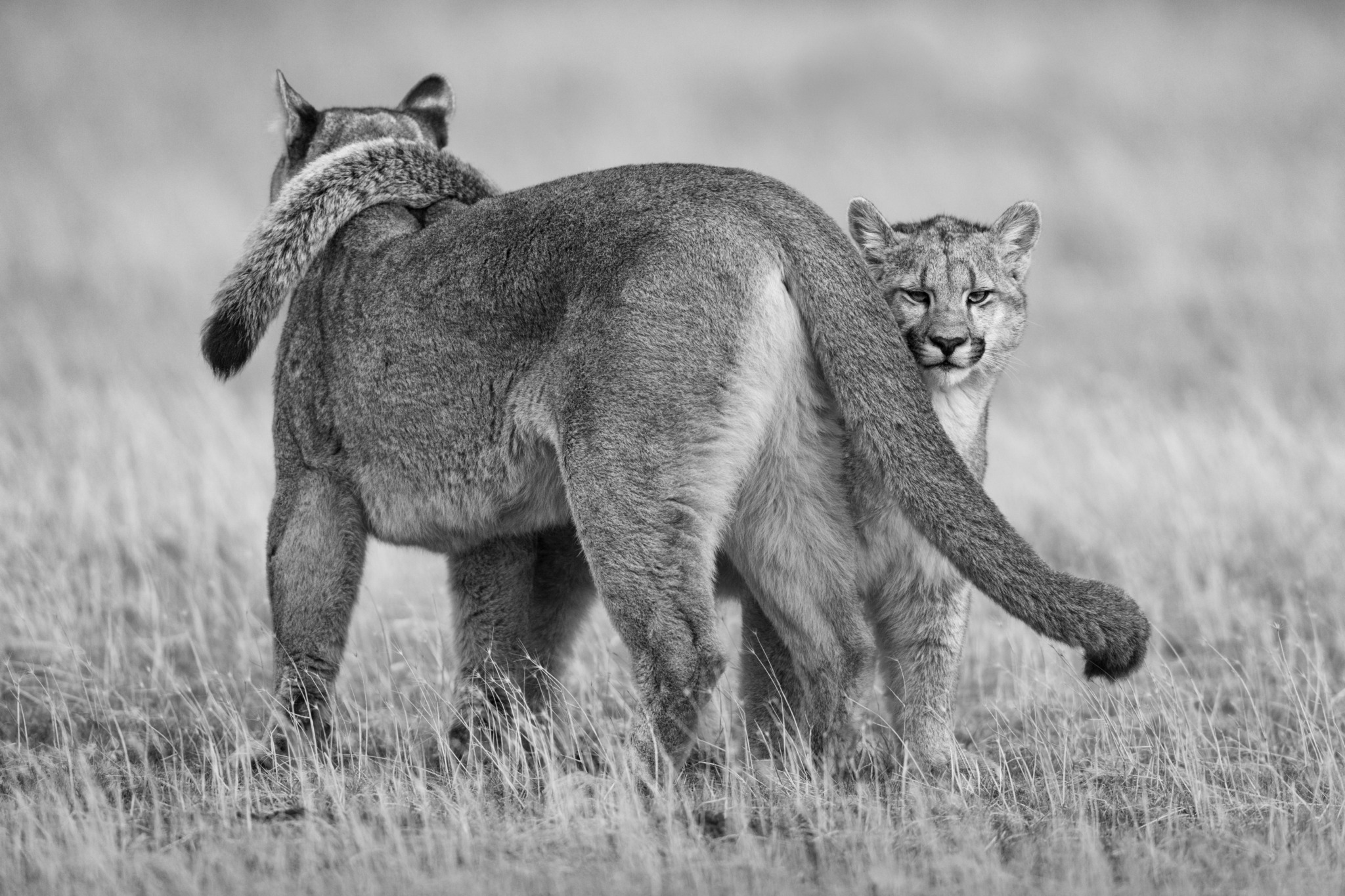
Central to Nicklen’s photographic pursuit was Rodrigo, a guide renowned for his expertise in puma tracking and his intimate knowledge of the local feline population, whom he seemed to know as well as his own family. Under Rodrigo’s expert guidance, Nicklen ventured deep into the heart of puma territory. The transition was palpable: cultivated farmlands gradually receded, replaced by dramatic rock formations, crystalline lakes fed by glacial meltwater, and expansive grasslands known as pampas. As they traversed deeper into this wild expanse, the towering granite peaks of the Andes loomed ever larger, forming a majestic backdrop to their quest. It was within this awe-inspiring landscape, in the imposing shadow of these mountains, that they encountered their first puma – a female of considerable renown known affectionately as Petaka, accompanied by her two young kittens.
Petaka: A Symbol of Adaptation and Protected Status
Petaka is not merely a puma; she has become a legend among those who frequent the mountains and surrounding areas of Torres del Paine. Her demeanor is characterized by a serene, commanding presence, coupled with a remarkable and complete indifference to human observers. This learned behavior is a direct consequence of the conservation efforts in place. Unlike in neighboring Argentina, where puma populations have faced different pressures, pumas in Chile are recognized as a protected species, with hunting largely prohibited. This protective status has allowed certain populations of pumas, like Petaka and her family, to adapt to the increasing presence of humans, often simply ignoring them as they go about their daily lives. For Nicklen, witnessing this peaceful coexistence was profoundly moving, a testament to the beauty of wild animals at ease in their environment, unperturbed by human presence. The quiet hours spent in the company of such a creature, observing its natural behavior without causing distress, represented a deeply fulfilling experience.
A Mother’s Devotion and a Photographer’s Reverence
Nicklen had the profound privilege of observing Petaka as she meticulously cared for her kittens. He sat in silent reverence, his heart swelling with emotion as he watched the playful antics of the young cubs as they tumbled and frolicked in the grass, their mother a watchful, yet relaxed, guardian. This intimate glimpse into the maternal bonds of a wild predator was a moment of profound connection, a quiet affirmation of the natural order.
The Fury of the Patagonian Storm and an Unforeseen Encounter
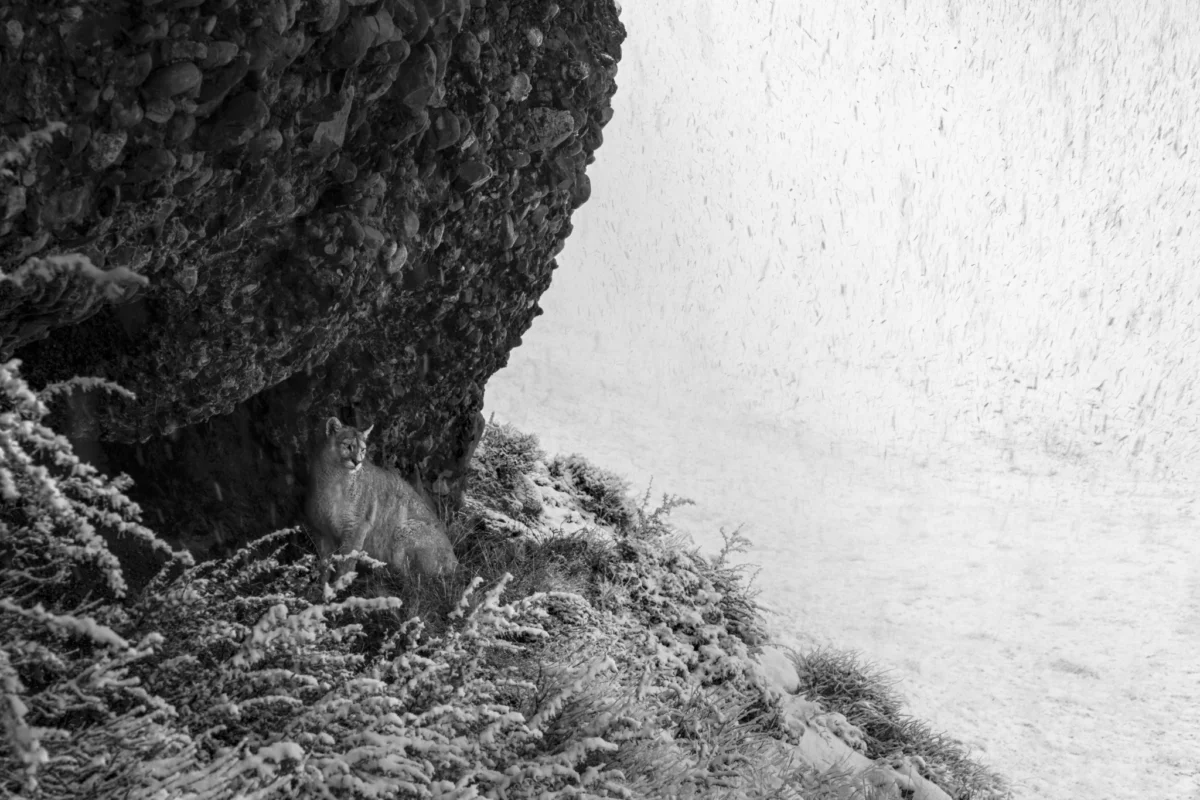
Shortly after these deeply resonant encounters with Petaka and other resident pumas within the park, the notoriously unpredictable Patagonian weather took a dramatic turn. Winds intensified, heralding the arrival of a snowstorm that descended rapidly, blanketing the landscape and muffling all sound. Seeking refuge from the blizzard, Nicklen found shelter within the natural confines of mountainside caves. It was during this enforced period of waiting that an extraordinary event unfolded. A large puma, emerging from the swirling snow, materialized and settled just a few feet away, apparently seeking the same respite from the elements.
A Shared Sanctuary in the Snow
Instinctively, Nicklen held his breath, his primary focus on steadying his camera lens, the sheer excitement of the moment a palpable force within him. For an extended period, an almost surreal silence permeated the cave. The two beings, a human and a wild cat, shared an unlikely sanctuary, the world outside consumed by the relentless fall of snow that drifted over the distant willow thickets. The puma, exhibiting the same remarkable indifference that had characterized Petaka, never once acknowledged Nicklen’s presence, its keen eyes remaining fixed on the surrounding environment, ever vigilant. It was only after the storm abated, and the landscape was transformed into a pristine white canvas, that the puma quietly departed. Only then did Nicklen allow himself to release the pent-up emotion of the extraordinary encounter.
Nature’s Resilience and the Wildness Within
This profound experience served as a powerful reminder of the profound beauty and resilience of nature when allowed the space to recover and thrive. Witnessing such an intimate moment of shared solitude with a wild animal, particularly in the raw, untamed grandeur of the Patagonian wilderness, offered a glimpse into the Earth’s original, unadulterated state. It was a powerful testament to life as it was always meant to be experienced: wild, raw, and utterly beyond the confines of human imagination.
The Enduring Gift of Wild Encounters
For Paul Nicklen, the fleeting moments of quiet camaraderie with a wild puma, amidst one of the planet’s most breathtaking ecosystems, represented an immeasurable gift. This encounter, born from patience, respect, and a touch of serendipity, underscored the profound rewards of venturing into wild spaces with an open heart and a keen eye. It is a testament to the enduring allure of the natural world and the deeply moving connections that can be forged when humans tread lightly and observe with humility. The photographer’s enduring hope is that such wild spaces and the magnificent creatures they harbor will continue to be protected and cherished for generations to come, allowing for future encounters that inspire awe and a deeper appreciation for the planet’s biodiversity. The statistical rarity of such direct observations, even in areas known for their puma populations, highlights the critical importance of conservation efforts in maintaining the integrity of these wild habitats and the elusive creatures that call them home. This experience, etched in memory and captured through his lens, serves as a powerful narrative of coexistence and the profound, often silent, beauty of the wild.