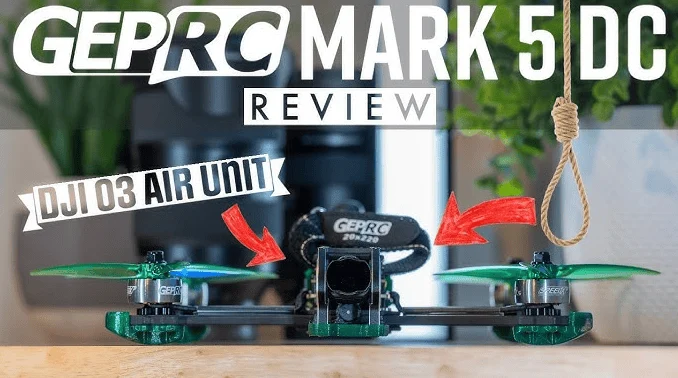
The world of First Person View (FPV) drones has undergone a radical transformation over the past decade, evolving from a niche hobby for electronics enthusiasts into a sophisticated tool for professional filmmakers and high-speed sports broadcasting. At the forefront of this evolution is the GEPRC MARK5 DC HD O3 FPV, a quadcopter that represents the culmination of years of iterative engineering in the 5-inch drone category. Designed to bridge the gap between aggressive freestyle capabilities and stabilized cinematic output, the MARK5 DC (DeadCat) variant specifically addresses the needs of content creators who require an unobstructed field of view. By integrating the DJI O3 Air Unit into a refined carbon fiber chassis, GEPRC has established a new benchmark for "Bind-N-Fly" (BNF) performance that rivals custom-built racing rigs.
The Evolution of the MARK Series and the DeadCat Configuration
The GEPRC MARK series has long been regarded as a reliable workhorse in the FPV community. The transition from the MARK4 to the MARK5 marked a significant shift in structural philosophy, focusing on crash resilience and electronic protection. However, the introduction of the "DC" or DeadCat configuration was a strategic response to the demands of high-definition digital transmission. Unlike traditional "X" or "Squashed X" frames where the propellers are positioned symmetrically and often appear in the camera’s peripheral view, the DeadCat layout pushes the front arms outward and backward.
This structural adjustment ensures that the high-resolution lens of the DJI O3 Air Unit captures nothing but the landscape ahead, even at low camera tilts. For professional videographers, this eliminates the need for aggressive cropping in post-production, preserving the full 4K resolution and the expansive 155-degree field of view. The frame itself is constructed from high-strength T700 carbon fiber, featuring a 5mm arm thickness that provides the rigidity necessary to handle the torque of modern high-KV motors while maintaining a weight-to-strength ratio optimized for 6S power systems.
Technical Integration of the DJI O3 Air Unit
The centerpiece of the GEPRC MARK5 DC HD is the DJI O3 Air Unit, a component that has effectively disrupted the FPV industry by merging the flight transmission system with a high-end action camera. Historically, pilots were required to carry a secondary camera, such as a GoPro, to record high-quality footage, which added weight and compromised flight dynamics. The O3 Air Unit features a 1/1.17-inch CMOS sensor capable of recording 4K video at 60 frames per second with a massive 50Mbps bitrate.
Beyond raw resolution, the integration provides pilots with a low-latency (as low as 28ms) digital feed that is essential for navigating complex environments at high speeds. The inclusion of the D-Cinelike color profile allows for professional-grade color grading, ensuring that FPV footage can be seamlessly integrated into big-budget commercial productions. Furthermore, the O3 system supports RockSteady digital stabilization, which works in tandem with the MARK5’s vibration-dampened camera mount to produce buttery-smooth footage without the mechanical complexity of a gimbal.
Powertrain and Flight Dynamics
To support the advanced electronics and the DeadCat frame geometry, GEPRC has equipped the MARK5 with a high-performance powertrain designed for 6S (22.2V) lithium-polymer batteries. The SPEEDX2 2107.5-1960KV motors are the primary drivers of the aircraft’s agility. These motors are engineered for efficiency and heat dissipation, providing the "punch-out" power required to recover from dives or perform high-G maneuvers during freestyle sessions.
The flight control system is anchored by the GEP-F722-45A AIO (All-In-One) or the GEP-F722-BT-HD stack, depending on the specific production batch. The use of an F7 processor is critical for modern FPV drones, as it allows for higher PID loop frequencies and the simultaneous processing of multiple sensors and peripheral data. This results in a drone that feels "locked in" to the pilot’s inputs. The 45A-50A ESCs (Electronic Speed Controllers) utilize BLHeli_32 firmware, supporting bidirectional DShot, which enables the flight controller to communicate with the motors with microsecond precision, effectively filtering out electronic noise and vibrations.
Thermal Management and Structural Durability
One of the primary challenges with high-performance digital FPV drones is the heat generated by the transmission hardware. The DJI O3 Air Unit is known to throttle its performance or shut down if it exceeds thermal limits while stationary. GEPRC addressed this by incorporating a CNC-machined aluminum alloy camera mount that doubles as a heat sink. This "aluminum parts" design not only protects the expensive O3 camera lens but also facilitates airflow across the unit’s internal components.
The structural integrity of the MARK5 DC is further enhanced by independent side plates and a reinforced "tail" section that houses the video transmitter and receiver antennas. In the event of a high-speed collision—a common occurrence in freestyle flight—the frame is designed to distribute the force of impact away from the sensitive internal electronics. The use of 7075-grade aluminum in the camera cage provides a level of protection that exceeds standard carbon-only frames, ensuring that the drone can withstand the rigors of professional field use.
Market Analysis and Industry Implications
The release of the GEPRC MARK5 DC HD O3 comes at a time when the FPV industry is shifting toward "Cinewhoops" and "Cinematic Freestyles." Industry analysts suggest that the demand for pre-built, high-performance drones has increased by over 40% in the last two years, as professional filmmakers seek to bypass the steep learning curve of building and tuning their own aircraft.
By providing a factory-tuned experience that works "out of the box," GEPRC has positioned the MARK5 as a primary competitor to other industry giants like iFlight and Team BlackSheep. The inclusion of the O3 Air Unit specifically targets the high-end enthusiast and the professional creator, moving the market away from the analog systems that dominated the previous decade. This shift has also prompted regulatory discussions, as the increased capabilities of these drones require pilots to be more aware of local aviation laws, including Remote ID requirements in regions like the United States.
Operational Guidelines for Maximum Performance
For pilots looking to extract the full potential of the GEPRC MARK5 DC HD O3, operational discipline is paramount. Technical experts recommend the following configurations:
- Battery Selection: While the drone is capable of flying on various capacities, a 6S 1300mAh to 1500mAh LiPo battery offers the ideal balance of flight time (approximately 5-8 minutes) and power-to-weight ratio.
- Software Tuning: Although the drone comes pre-tuned, utilizing the Betaflight "Presets" for the O3 Air Unit can further optimize the OSD (On-Screen Display) and link quality.
- ND Filters: To achieve the "cinematic motion blur" required for professional video, the use of Neutral Density (ND) filters is essential. These filters allow pilots to maintain a 180-degree shutter rule (e.g., 1/120s shutter speed for 60fps) even in bright daylight conditions.
- Maintenance: The high-torque motors can cause screws to loosen over time due to micro-vibrations. Regular inspections of the motor bolts and the arm-locking mechanism are necessary to prevent mid-air failures.
Safety, Regulation, and the Future of FPV
As drones like the MARK5 become more accessible, the importance of safety and legal compliance grows. The GEPRC MARK5 is a high-kinetic-energy device, capable of reaching speeds in excess of 100 mph (160 km/h). Pilots are encouraged to operate under the guidelines of organizations such as the Academy of Model Aeronautics (AMA) and to utilize spotters when flying with goggles to maintain situational awareness.
The future of the MARK series likely involves further miniaturization of components and the potential integration of AI-assisted flight modes to assist in obstacle avoidance during cinematic shoots. For now, the MARK5 DC HD O3 stands as a testament to how far the industry has come, offering a sophisticated blend of raw power and refined visual capture.
Conclusion
The GEPRC MARK5 DC HD O3 FPV is more than just a recreational quadcopter; it is a precision instrument designed for the modern era of digital content creation. By combining the "no-props-in-view" DeadCat geometry with the industry-leading DJI O3 video system, GEPRC has delivered a platform that satisfies the aggressive requirements of freestyle pilots while meeting the stringent quality standards of professional cinematographers. As the FPV landscape continues to expand into mainstream media and competitive sports, the MARK5 series will likely be remembered as the catalyst that made high-definition, cinematic FPV flight accessible to the broader creative world. Whether used for capturing high-speed automotive chases or performing intricate acrobatic maneuvers, this drone offers a level of versatility and reliability that makes it a definitive choice for the next generation of aerial storytellers.