The digital landscape of 2026 is defined by an unprecedented saturation of content and an increasingly sophisticated consumer base that demands immediate visual gratification and authentic brand storytelling. As enterprises across the globe prepare for comprehensive website relaunches, the strategic integration of high-quality imagery has transitioned from a stylistic preference to a foundational requirement for commercial viability. In an era where user attention is the most contested currency, the visual components of a website serve as the primary drivers of trust, engagement, and ultimately, conversion. This shift is fueled by the evolution of generative artificial intelligence, the maturation of high-speed mobile networks, and a psychological shift in how users perceive digital credibility.

The Critical Role of Visual First Impressions
Research in web usability consistently demonstrates that users form an initial opinion of a website within approximately 50 milliseconds. This "gut reaction" is almost entirely driven by visual aesthetics rather than textual content. In the context of a 2026 relaunch, the stakes are significantly higher; as internet speeds and device resolutions have peaked, users have zero tolerance for visual friction. High-quality imagery acts as a non-verbal cue that signals professionalism and stability. Conversely, a site featuring low-resolution assets or mismatched visual styles triggers an immediate "trust deficit," leading to high bounce rates and diminished brand authority.
Supporting data from user experience (UX) studies indicate that websites utilizing professional, high-resolution imagery see a 40% higher engagement rate than those relying on text-heavy layouts or amateur photography. Furthermore, the "Picture Superiority Effect"—a well-documented psychological phenomenon—suggests that people are likely to remember 65% of information three days after exposure if it is presented with a relevant image, compared to only 10% for information presented as text alone. For businesses, this means that the choice of imagery is the single most influential factor in brand recall.

Common Pitfalls in Website Redesign and Relaunch
Despite the clear benefits of high-quality visuals, many organizations undermine their own relaunch efforts by falling into predictable traps. One of the most pervasive mistakes is the use of generic hero images. In the early 2020s, abstract cityscapes and "people in a boardroom" shots were ubiquitous; by 2026, these have become invisible to the savvy user. A hero image must answer the visitor’s immediate question—"Am I in the right place?"—within a fraction of a second. If the visual does not explicitly reflect the brand’s identity or the specific problems it solves, the user’s cognitive load increases, leading to frustration and exit.
Visual inconsistency is another critical error. Brand fragmentation occurs when a company uses corporate-style photography on its homepage while utilizing artistic illustrations on product pages or amateur snapshots on its blog. This lack of cohesion disrupts the user journey, making the site feel disjointed and unreliable. For a successful 2026 relaunch, every asset must align in terms of lighting, color palette, mood, and composition to foster a sense of continuity.

Furthermore, the "cliché trap" remains a threat to conversion. Modern audiences have developed a keen eye for "stocky" stock photos—staged handshakes, exaggerated facial expressions, and sterile office environments. These visuals are often perceived as dishonest. The industry trend has moved toward "authentic stock," which features relatable people in natural settings, reflecting the diversity and reality of the global workforce.
The Evolution of Stock Imagery: 2026 Context
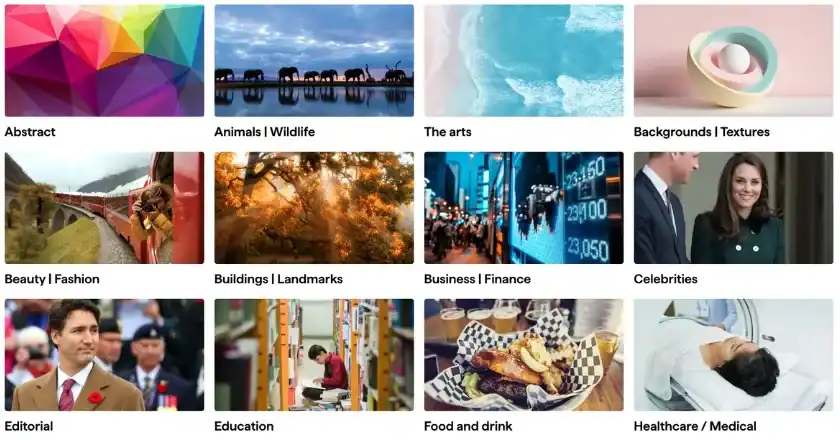
The role of stock image providers has undergone a radical transformation leading into 2026. Platforms like Shutterstock have integrated generative AI tools that allow designers to customize stock assets in real-time, ensuring that a licensed image can be perfectly tailored to a brand’s specific color scheme or layout requirements without the need for a separate photo shoot. This hybrid approach—combining the reliability of professional photography with the flexibility of AI—has become the gold standard for rapid website development.

Industry experts note that the move toward "intelligent sourcing" is now a standard operating procedure. "The conversation has shifted from ‘should we use stock’ to ‘how can we leverage stock to scale our visual identity,’" states Marcus Thorne, a leading digital strategist. "In 2026, the speed of the market doesn’t allow for six-week photo shoots for every minor update. Stock media provides the agility required to maintain a modern web presence."
A Chronological Approach to Image Integration in a Relaunch
A successful website relaunch requires a structured timeline for visual asset management. This process typically spans several months and involves multiple stakeholders:

- The Visual Audit (Months 4-5 Before Launch): Organizations must evaluate their existing library. Any imagery that is more than three years old, low-resolution, or non-inclusive is flagged for removal. This phase identifies the "visual gaps" that need to be filled.
- Brand Identity Mapping (Month 3 Before Launch): Designers establish the "visual North Star." This includes defining the color harmony, the tone (e.g., empathetic, clinical, high-energy), and the specific demographics that the imagery must represent.
- Sourcing and Licensing (Month 2 Before Launch): Using professional platforms, the creative team curates a shortlist of assets. In 2026, this involves checking for licensing safety to ensure that all images have the necessary model releases and commercial rights, protecting the company from future litigation.
- Technical Optimization (Month 1 Before Launch): Images are converted into modern formats like WebP or AVIF to ensure lightning-fast load times. Alt-text is generated not just for accessibility, but for AI-driven search crawlers that now "read" images to determine site relevance.
- A/B Testing and Deployment (Launch Week): High-traffic pages often undergo split testing where different hero images are rotated to see which visual drives the highest click-through rate (CTR).
The Economic Impact: Custom Photography vs. Professional Stock
The financial implications of imagery choice are significant. While custom photography offers the highest degree of uniqueness, the costs associated with hiring photographers, booking locations, securing models, and post-production can range from $10,000 to over $100,000 for a comprehensive site overhaul. For many enterprises, this is neither scalable nor cost-effective.
Professional stock photography provides an affordable alternative that does not sacrifice quality. With subscription models and image packs, companies can source hundreds of high-caliber assets for a fraction of the cost of a single day of custom shooting. In 2026, the quality of top-tier stock is often indistinguishable from custom work, especially when curated with a specific brand guide in mind. This allows businesses to reallocate their budget toward other critical relaunch areas, such as backend security, SEO, and user interface (UI) development.

SEO and Technical Implications of Visuals
In 2026, search engine algorithms have become highly visual. Search engines now utilize sophisticated computer vision to analyze the content of images, meaning that a relevant, high-quality stock photo can directly improve a page’s search ranking. Furthermore, "Core Web Vitals"—the metrics Google uses to measure user experience—are heavily influenced by how images load.
Strategic image use involves more than just selection; it requires technical precision. Large, unoptimized files can cause "Layout Shift," where content moves as images load, a major deterrent for mobile users. Professional stock providers now offer assets that are pre-optimized for various breakpoints, ensuring that a site remains fast and stable across all devices, from foldable smartphones to ultra-wide desktop monitors.

Broader Implications for Brand Trust and Global Reach
As businesses expand into global markets, the imagery used in a website relaunch must reflect a diverse and inclusive worldview. In 2026, a brand that fails to represent its global audience visually is seen as out of touch. Stock libraries have responded by significantly expanding their collections to include a vast array of ethnicities, age groups, and physical abilities in various cultural contexts. This allows a company relaunching its site to localize its visual appeal effortlessly, fostering trust in different geographic regions simultaneously.
Furthermore, the rise of "deepfake" technology has made users more skeptical of digital content. Using verified, licensed imagery from reputable sources acts as a "seal of authenticity." When a user sees a high-quality, professionally produced image, it provides a psychological anchor of reality in an increasingly synthetic digital world.

Conclusion: Visual Strategy as a Business Imperative
The relaunch of a website in 2026 is a complex undertaking that serves as a pivotal moment for any brand. While backend architecture and copywriting are essential, it is the imagery that serves as the bridge between a company and its audience. Strategic image selection—prioritizing quality, consistency, and authenticity—directly correlates with increased dwell time, higher trust scores, and improved conversion metrics.
By utilizing professional stock resources, businesses can achieve a level of visual excellence that was once reserved for only the largest corporations. As the digital economy continues to evolve, those who treat imagery as a core component of their business strategy rather than a decorative afterthought will be the ones who successfully capture and retain the modern consumer’s attention. The transition to a 2026-ready website is not merely a technical update; it is a visual rebirth that defines the future of the brand’s relationship with its global community.