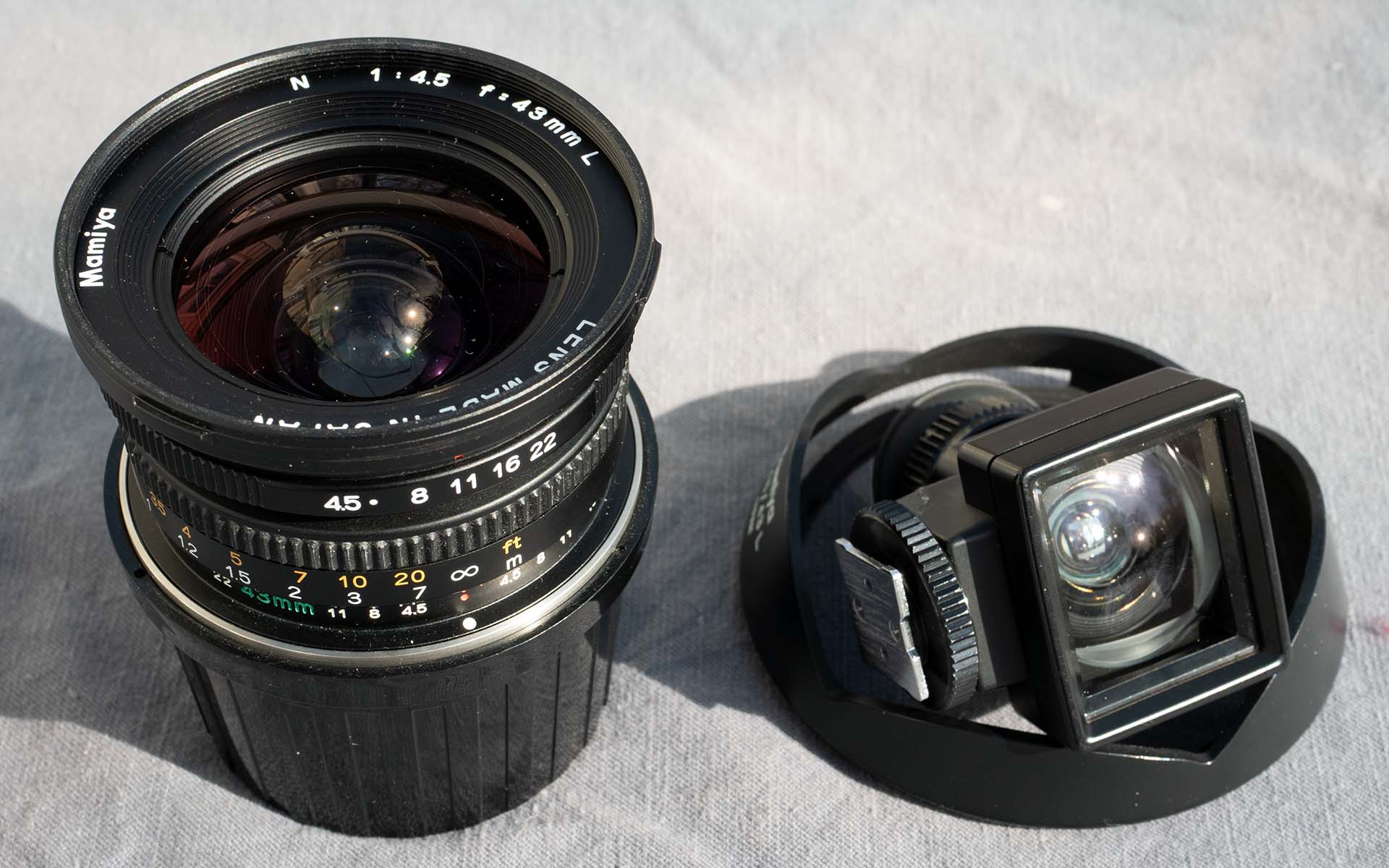
The Mamiya N 43mm f/4.5 L lens remains a cornerstone of the Mamiya 7 and 7II medium format rangefinder systems, representing a pinnacle of analog optical engineering that continues to challenge the capabilities of modern digital alternatives. As a non-retrofocal wide-angle lens, its design philosophy is rooted in a 1951 Zeiss Biogon patent, utilizing a symmetrical arrangement of 10 elements in 6 groups. This configuration allows the rear element of the lens to sit exceptionally close to the film plane, a feat only possible in rangefinder systems lacking a mirror box. While the photographic industry has largely migrated to high-resolution mirrorless digital sensors, the Mamiya 43mm persists as a specialized tool for practitioners seeking a specific aesthetic characterized by low geometric distortion and a perceived "transparency" that many argue is missing from contemporary complex lens designs.
Historical Context and the Biogon Inheritance
To understand the significance of the Mamiya 43mm, one must look back to the mid-20th century and the innovations of Ludwig Bertele. The Biogon design, patented in 1951 for Zeiss, revolutionized wide-angle photography by minimizing the "fish-eye" distortion common in early wide lenses. Unlike retrofocal lenses—which are essentially telephoto designs mounted backward to provide clearance for an SLR’s flapping mirror—the Biogon is nearly symmetrical.
When Mamiya introduced the 7-series rangefinder in 1995, they leveraged this design to create the 43mm f/4.5. Because the Mamiya 7 is a rangefinder, there is no mirror between the lens and the film. This allowed Mamiya’s engineers to place the rear optical element mere millimeters from the 6x7cm film gate. The result was a lens that provided a 92-degree diagonal angle of view (roughly equivalent to a 21mm lens on a 35mm full-frame camera) with almost zero curvilinear distortion. In the world of architectural and landscape photography, this level of rectilinear perfection is rarely matched by modern zooms or even many digital primes, which often rely on software profiles to correct "barrel" or "pincushion" effects.
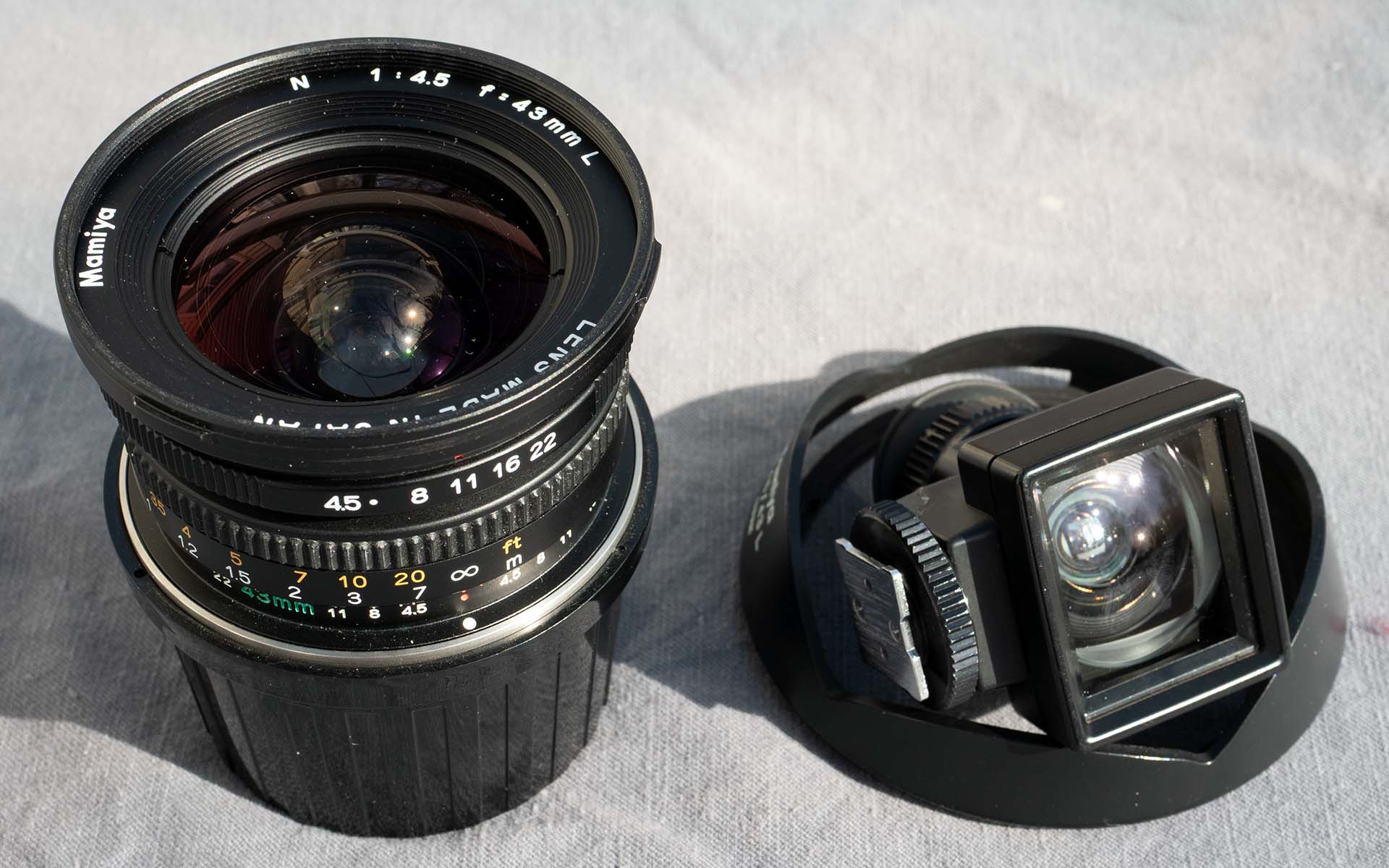
Technical Specifications and Optical Characteristics
The Mamiya N 43mm f/4.5 L is a specialized instrument with a specific set of operational requirements. It features a leaf shutter capable of flash synchronization at all speeds (up to 1/500th of a second) and requires an external optical viewfinder that slides into the camera’s hot shoe, as the camera’s internal rangefinder window does not provide a wide enough field of view.
One of the lens’s most documented traits is its significant light fall-off, or vignetting. Due to the physics of non-retrofocal wide-angle designs and the "cosine fourth law," light hitting the corners of the 6×7 frame travels a greater distance and strikes the film at a more oblique angle than light hitting the center. In traditional darkroom workflows, this was often corrected using a dedicated center filter—a graduated neutral density filter that is darker in the middle than at the edges. However, in contemporary hybrid workflows involving high-resolution scanning, this fall-off is frequently mitigated during the post-processing phase, allowing photographers to bypass the expensive and light-reducing center filter.
Despite its f/4.5 maximum aperture, which may seem slow by modern standards, the lens is prized for its "transparency." This subjective quality is often attributed to the relatively low number of lens elements compared to modern ultra-wide-angle lenses, which may feature 15 or more elements to compensate for the limitations of retrofocal designs. Fewer glass-to-air surfaces result in higher micro-contrast and a distinct "gestalt" that captures the atmosphere of a scene with startling clarity.
Performance Analysis: Field Reports and Case Studies
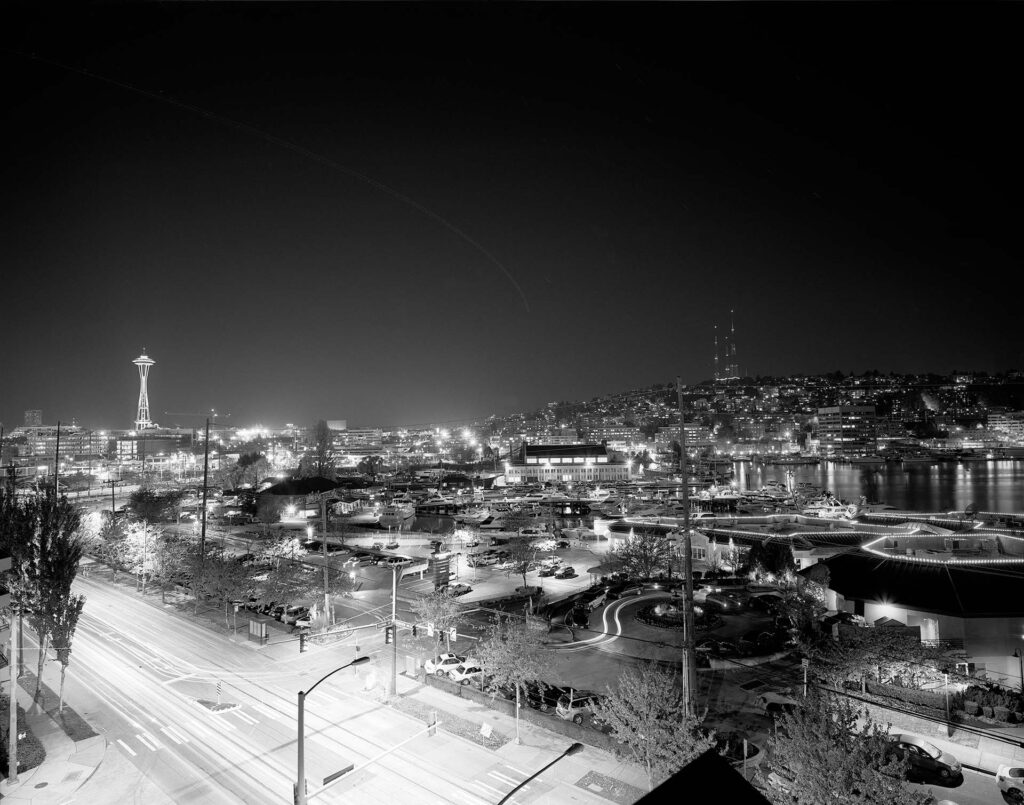
The practical application of the Mamiya 43mm across various global environments illustrates its versatility and its quirks. Recent field tests conducted in diverse locations—ranging from the urban architecture of Seattle and Los Angeles to the historic vistas of Granada and the rugged terrain of Mont Blanc—reveal several critical insights for the modern user.
Architectural Precision in Granada and Los Angeles
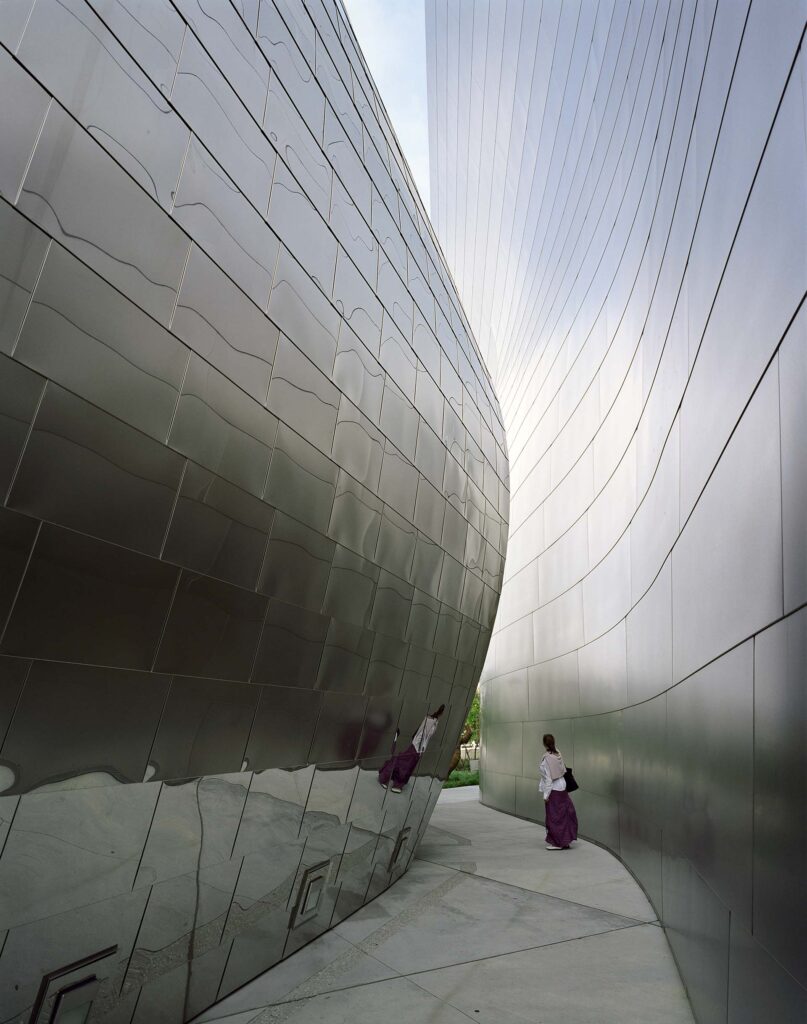
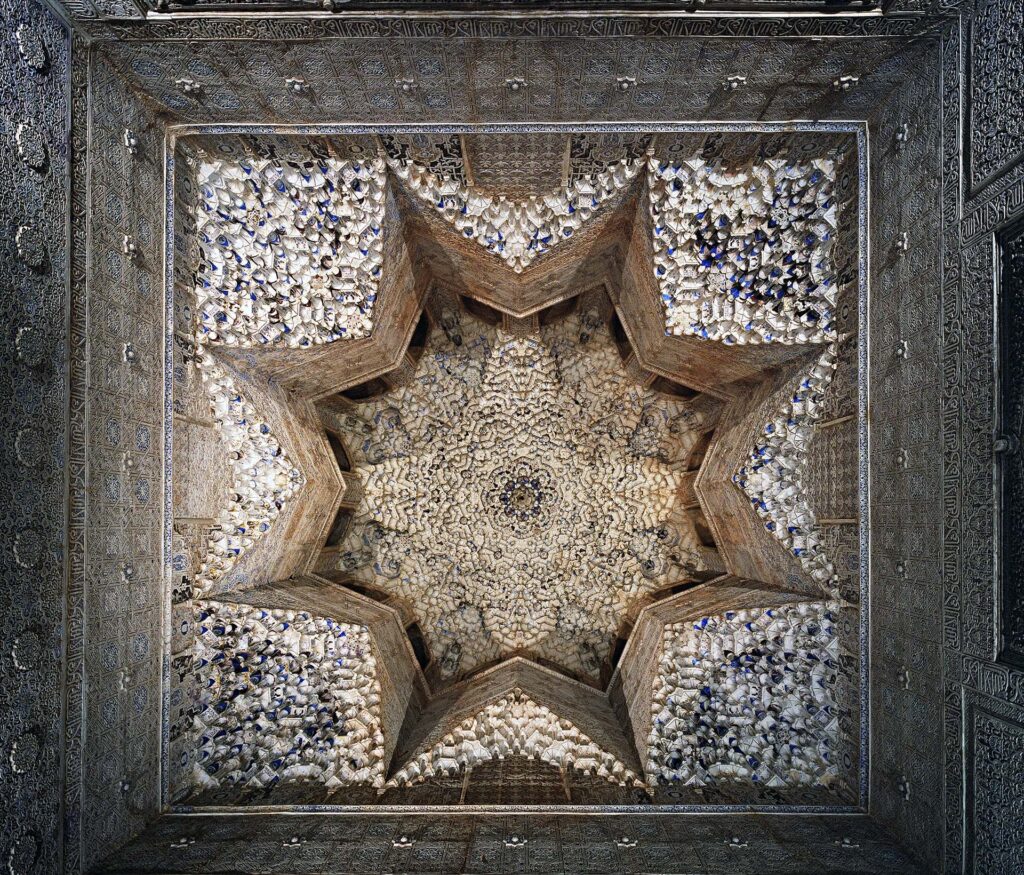
In shots taken at the Alhambra in Granada, Spain, the lens demonstrates its hallmark trait: the reproduction of straight lines. Even when the camera is placed on the floor to capture expansive interior geometries, the resulting images show no discernible bowing of architectural pillars or horizons. This is a direct result of the symmetrical Biogon-inspired layout. Similarly, at the Walt Disney Concert Hall in Los Angeles, the lens handles the complex, curving stainless steel surfaces without introducing optical artifacts, maintaining a sharp rendering from corner to corner when stopped down.
Environmental Challenges: Seattle and Mont Blanc
In high-contrast environments, such as the Seattle skyline or the snow-capped peaks of Mont Blanc, the lens’s interaction with film stocks like Ilford Delta 100 and Fuji Pro 160C becomes evident. The 6×7 negative provides a massive surface area—roughly 4.5 times larger than a standard 35mm frame—which, when paired with the 43mm’s resolving power, produces images with immense detail. At Mont Blanc, the lens captures the subtle textures of ice and rock, benefiting from the high micro-contrast inherent in its design.
Low Light and Long Exposures
While the f/4.5 aperture limits handheld use in low light, the lens excels on a tripod. Night-time photography, such as cityscapes, benefits from the leaf shutter’s lack of vibration. Because there is no focal-plane shutter moving across the film, and no mirror slapping upward, long exposures remain tack-sharp even at critical shutter speeds.
Operational Considerations: Depth of Field and Diffraction
A recurring point of discussion among Mamiya 7 users is the accuracy of the depth of field (DOF) markings on the lens barrel. Historically, Mamiya calculated these scales using a relatively generous "circle of confusion." By modern standards, where negatives are often scanned at 4000 dpi or higher, these markings are considered overly optimistic.
Professional consensus suggests that to achieve acceptable sharpness across a deep landscape, a photographer should close the aperture at least two stops beyond what the lens’s scale indicates. For instance, if the scale suggests f/8 is sufficient for a given range, setting the lens to f/16 is advisable. Fortunately, the Mamiya 43mm maintains exceptional performance even at f/22. While diffraction—the blurring of light as it passes through a small opening—eventually limits sharpness, users report that the 6×7 format’s sheer size masks these effects better than smaller formats, making f/22 a viable option for maximum depth of field.
The Hybrid Workflow: Analog Capture to Digital Output
The modern relevance of the Mamiya 43mm is inextricably linked to the hybrid workflow. The process typically involves:
- Capture: Utilizing professional-grade film stocks (such as the now-discontinued Fuji Pro series or Ilford’s black and white emulsions).
- Digitization: Using high-end scanners like the Nikon Coolscan 9000 ED, which can capture 16-bit/channel files at 4000 dpi.
- Refinement: Adjusting for light fall-off and color balance in software like Adobe Photoshop.
This workflow allows the photographer to retain the unique optical signature of the 1950s-era design while utilizing the precision of 21st-century digital tools. The resulting 16-bit files offer a dynamic range and color depth that rival high-end digital backs, providing a "best of both worlds" scenario for fine art photographers.
Broader Impact and Market Implications
The enduring popularity of the Mamiya 43mm lens has contributed to the sustained high market value of the Mamiya 7 system. While many medium format film cameras saw their prices plummet during the digital transition of the mid-2000s, the Mamiya 7II and its 43mm lens have seen a resurgence in value.
The lens represents a specific branch of optical evolution that has largely reached a dead end in the digital era due to sensor technology. Digital sensors are "telecentric," meaning they prefer light to hit the photodiodes at a perpendicular angle. The extreme angles at which light exits the rear of a non-retrofocal lens like the 43mm cause significant issues for digital sensors, such as color shifting and smearing in the corners. Consequently, modern digital wide-angle lenses are almost all retrofocal and significantly larger than the Mamiya 43mm.
Conclusion: The Persistence of "Ancient" Design
The Mamiya N 43mm f/4.5 L stands as a testament to the idea that "newer" is not always "better" in the realm of optics—only different. By adhering to a classic, symmetrical design, Mamiya created a lens that offers a level of geometric purity and "transparency" that remains difficult to replicate with the complex, software-dependent lenses of the mirrorless era.
For the architectural photographer, the landscape artist, or the film enthusiast, the cost and "hassle" of a film-based workflow are offset by the unique visual character of the 6×7 negative and the uncompromising rectilinearity of the 43mm optics. As long as film remains available and scanners continue to bridge the gap between analog and digital, this lens of "ancient design" will likely remain a prized tool for those who value the specific gestalt of medium format rangefinder photography.