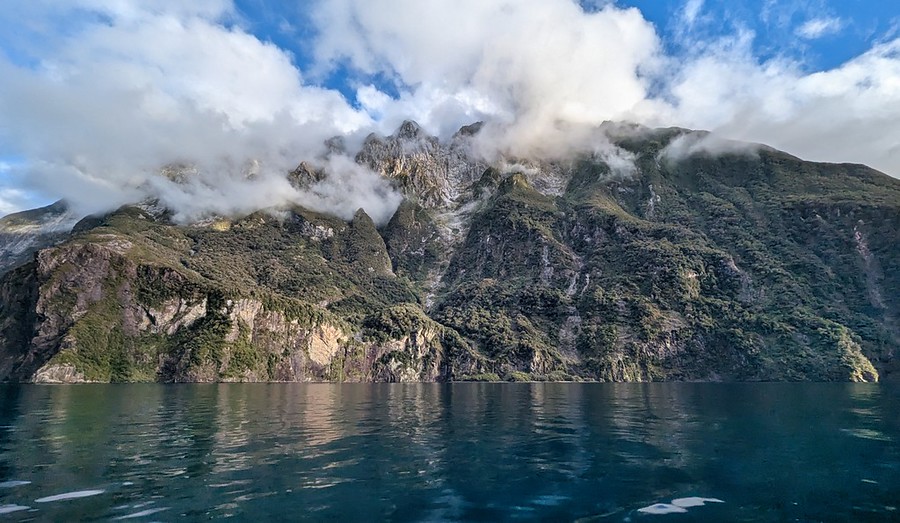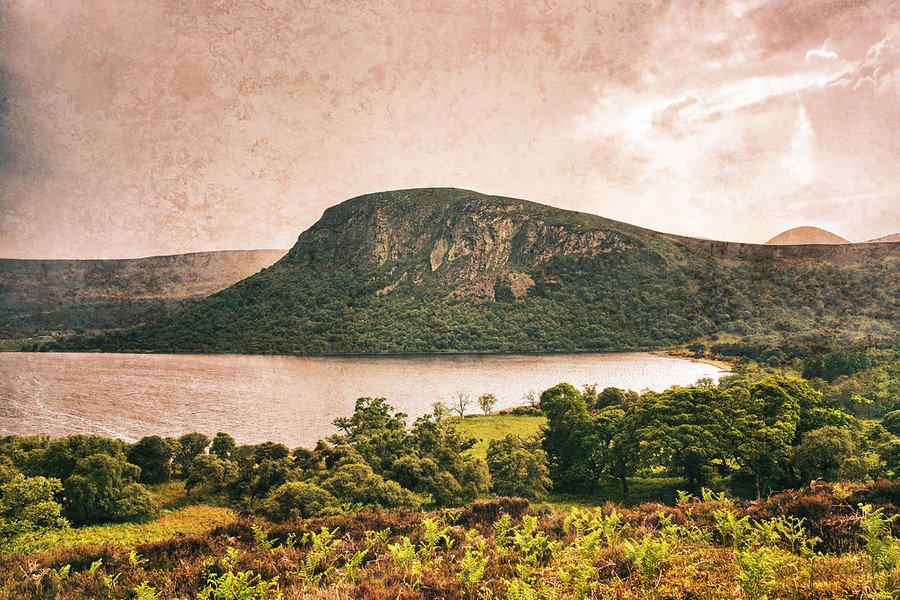
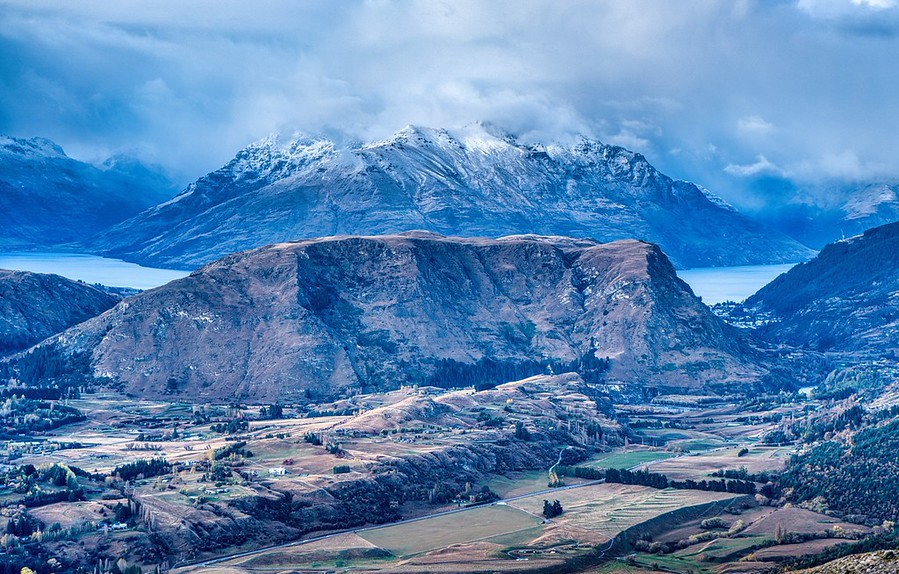
The image, titled "Mountain Layers," captures a familiar vista, a series of mountain ranges receding into the distance, a testament to the enduring grandeur of natural landscapes. The accompanying description notes that the photograph was taken as spring begins to emerge, hinting at the seasonal transformation of the environment, where snow cover is soon to dissipate. While the exact geographical location remains unspecified, the visual narrative evokes a sense of expansive natural beauty and the cyclical nature of the seasons.
The Art of Capturing Landscape: A Deeper Look at "Mountain Layers"
The photograph, "Mountain Layers," presents a visually striking depiction of successive mountain ranges, each layer contributing to a sense of depth and vastness. The composition likely employs principles of atmospheric perspective, where distant objects appear less distinct and bluer due to the scattering of light through the atmosphere. This visual cue accentuates the sheer scale of the landscape, drawing the viewer’s eye through multiple planes of topography. The photographer’s choice of perspective, likely from a vantage point offering an unobstructed view, emphasizes the undulating contours of the earth.
The descriptive text accompanying the image, "A familiar view from one range to another. It’s heading into spring here now (in reverse season land) so not long until all signs of snow are gone," provides crucial contextual information. The phrase "reverse season land" is particularly intriguing, suggesting the photographer is located in the Southern Hemisphere, where seasons are opposite to those in the Northern Hemisphere. This detail, while seemingly minor, grounds the image in a specific geographical and temporal context. As spring commences in this region, the visual narrative shifts from a potentially snow-laden winter scene to one of burgeoning life and the gradual re-emergence of verdant landscapes. The impending disappearance of snow signifies a transition, a herald of warmer temperatures and renewed ecological activity.
The absence of detailed EXIF (Exchangeable Image File Format) data in the provided snippet prevents a technical analysis of the photographic process. Typically, EXIF data would include information such as the camera model, lens used, aperture, shutter speed, ISO, and focal length. This data would offer insights into the photographer’s technical choices and the specific conditions under which the image was captured. For instance, a wide aperture might suggest a desire for a shallow depth of field, blurring the background to emphasize a foreground subject, while a narrow aperture would ensure greater sharpness across the entire scene, ideal for landscapes. Similarly, shutter speed would indicate how motion, if any, was handled, and ISO would reveal the sensitivity of the sensor to light.
The Significance of Landscape Photography
Landscape photography, as exemplified by "Mountain Layers," plays a vital role in documenting and appreciating the natural world. These images serve multiple purposes:
- Artistic Expression: They are a medium for artists to convey their personal interpretation of the sublime beauty of nature, evoking emotions and fostering a connection between the viewer and the environment.
- Documentary Value: Over time, repeated photographic surveys of the same locations can provide invaluable data on environmental changes, such as glacial retreat, deforestation, or the impact of climate change.
- Conservation Advocacy: Powerful landscape images can raise awareness about the fragility of natural ecosystems and inspire efforts towards their preservation. They can highlight areas of exceptional beauty that warrant protection.
- Educational Tools: They can be used to teach about geology, botany, meteorology, and the diverse ecosystems that characterize different regions of the world.
The specific "Mountain Layers" image, by its very nature, speaks to the geological processes that have shaped our planet over millennia. The formation of mountain ranges is a complex geological phenomenon involving tectonic plate movements, volcanic activity, and erosion. The visible stratification and varied topography in the photograph are direct results of these forces.
The Cyclical Nature of Seasons and its Impact
The mention of spring’s arrival and the impending disappearance of snow is a powerful reminder of Earth’s natural cycles. In regions experiencing distinct seasons, these transitions are marked by significant ecological and environmental shifts:
- Biodiversity: As temperatures rise and snow melts, dormant plant life awakens, and migratory animals return. This period is crucial for reproduction and growth across many species.
- Water Resources: Snowmelt is a vital source of freshwater for many ecosystems and human populations, particularly in mountainous regions. The timing and volume of snowmelt can have profound implications for agriculture, hydropower, and natural water availability.
- Economic Activities: Seasonal changes directly influence industries such as tourism, agriculture, and outdoor recreation. The transition to spring often signals the reopening of hiking trails, the start of planting seasons, and the return of warmer weather activities.
The photographer’s reference to being in "reverse season land" implies a location in the Southern Hemisphere, which includes countries like Australia, New Zealand, South America (southern parts), and southern Africa. These regions experience spring from approximately September to November and autumn from March to May. This temporal distinction is critical for understanding the broader context of global environmental patterns.
The Unseen Forces Behind the Scenery
While the photograph presents a static image, the landscape it captures is dynamic and constantly evolving. The mountains themselves are products of immense geological forces:
- Tectonic Plate Movement: The collision of Earth’s tectonic plates is a primary driver of mountain formation. As plates converge, the crust can buckle, fold, and fault, thrusting rock upwards to create mountain ranges. Examples include the Himalayas, formed by the collision of the Indian and Eurasian plates, and the Andes, resulting from the subduction of the Nazca plate beneath the South American plate.
- Volcanic Activity: Volcanic mountains, such as Mount Fuji or Kilimanjaro, are formed by the eruption and accumulation of molten rock.
- Erosion: Over millions of years, forces like wind, water, and ice sculpt mountains, carving valleys, canyons, and peaks. Glacial erosion, in particular, plays a significant role in shaping alpine landscapes.
The "layers" visible in the photograph could represent different geological strata, each telling a story of ancient depositional environments, volcanic events, or periods of uplift and erosion. Geologists often study these layers to understand the Earth’s history, reconstruct past climates, and identify mineral resources.
Broader Implications of Landscape Appreciation
The appreciation of images like "Mountain Layers" extends beyond mere aesthetic enjoyment. In an era of rapid urbanization and increasing disconnection from the natural world, such photographs serve as vital reminders of the planet’s inherent beauty and ecological significance. They can foster a sense of stewardship and encourage individuals to engage with conservation efforts.
Furthermore, the context provided by the photographer about the changing seasons in a "reverse season land" subtly highlights the global nature of environmental phenomena. Climate change, for instance, is a global issue, and understanding seasonal variations across different hemispheres is crucial for comprehending its complex impacts. The timing of snowmelt, for example, has far-reaching consequences, affecting water availability for ecosystems and human societies on a global scale.
The act of capturing and sharing such images also contributes to a collective visual archive of our planet. This archive is invaluable for tracking environmental changes over time and for informing future conservation strategies. As human activities continue to impact natural landscapes, the documentation of their current state becomes increasingly important for understanding what we stand to lose and for guiding efforts to protect these precious environments. The simple act of observing "Mountain Layers" can thus be a gateway to understanding complex geological processes, ecological cycles, and the critical importance of preserving our natural heritage.