The photographic landscape has seen a significant shift over recent years, with a notable increase in professional engagement within motorsport photography. This demanding field necessitates specialized long lenses capable of accurately capturing subjects moving at high speeds, often across considerable distances, and under rapidly changing light conditions. While versatile zoom lenses such as the Fujifilm XF100-400mm f/4.5-5.6 have proven to be indispensable tools, offering broad coverage and adaptability for trackside assignments at venues like the Circuit of the Americas, a growing segment of professional photographers are seeking tools that offer uncompromising performance and optical excellence. This pursuit has led to the emergence of specialized prime lenses, epitomized by the Fujifilm XF200mm f/2, a lens that has garnered significant acclaim for its exceptional capabilities across various photographic systems. This article delves into the technical prowess, design philosophy, real-world performance, and strategic implications of this formidable lens.
Engineering Excellence and Technical Specifications
The Fujifilm XF200mm f/2 is a super-telephoto prime lens designed to meet the rigorous demands of professional photography. It delivers an angle of view equivalent to approximately 305mm on a full-frame sensor, providing substantial reach for isolating subjects and compressing perspectives. A key feature of its design is the inclusion of a dedicated XF 1.4x TC WR teleconverter, which extends the effective focal length to roughly 427mm full-frame equivalent. Crucially, when the teleconverter is engaged, the maximum aperture remains a highly respectable f/2.8, demonstrating a sophisticated optical design that maintains both light-gathering capability and shallow depth of field even with extended reach. Performance assessments indicate that the use of this teleconverter has no discernible impact on either optical clarity or autofocus speed and accuracy, a testament to its advanced engineering.
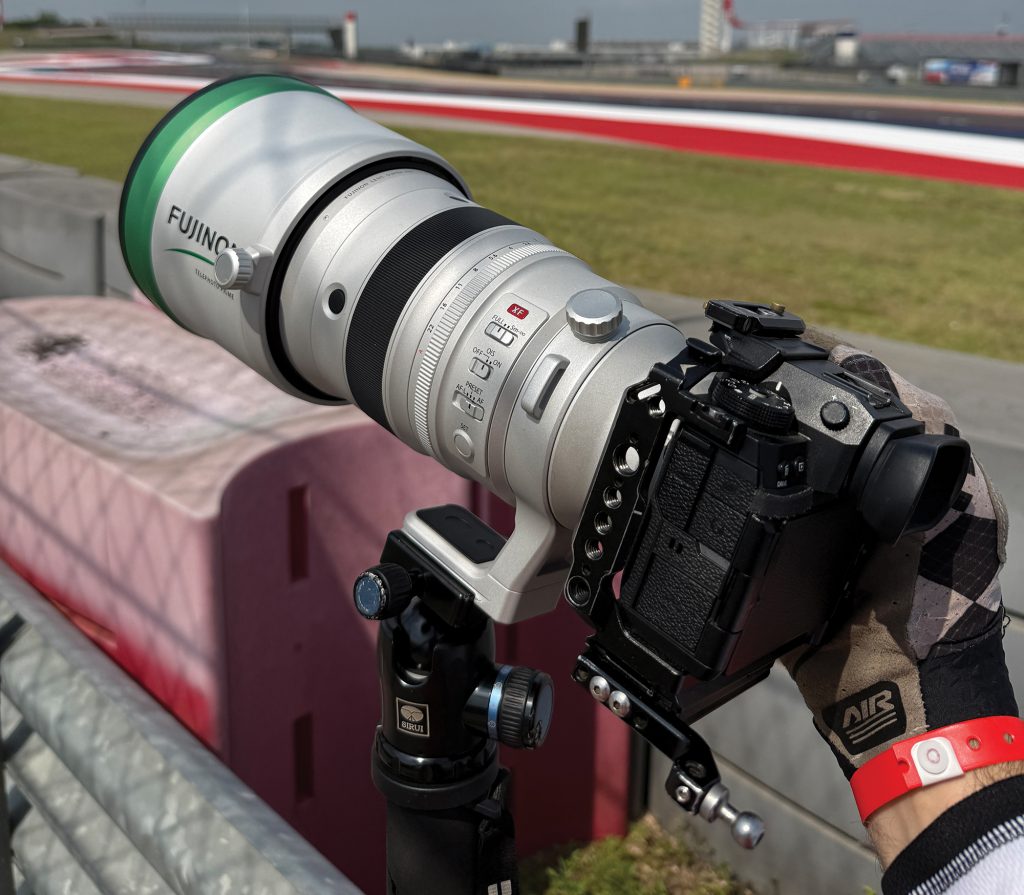
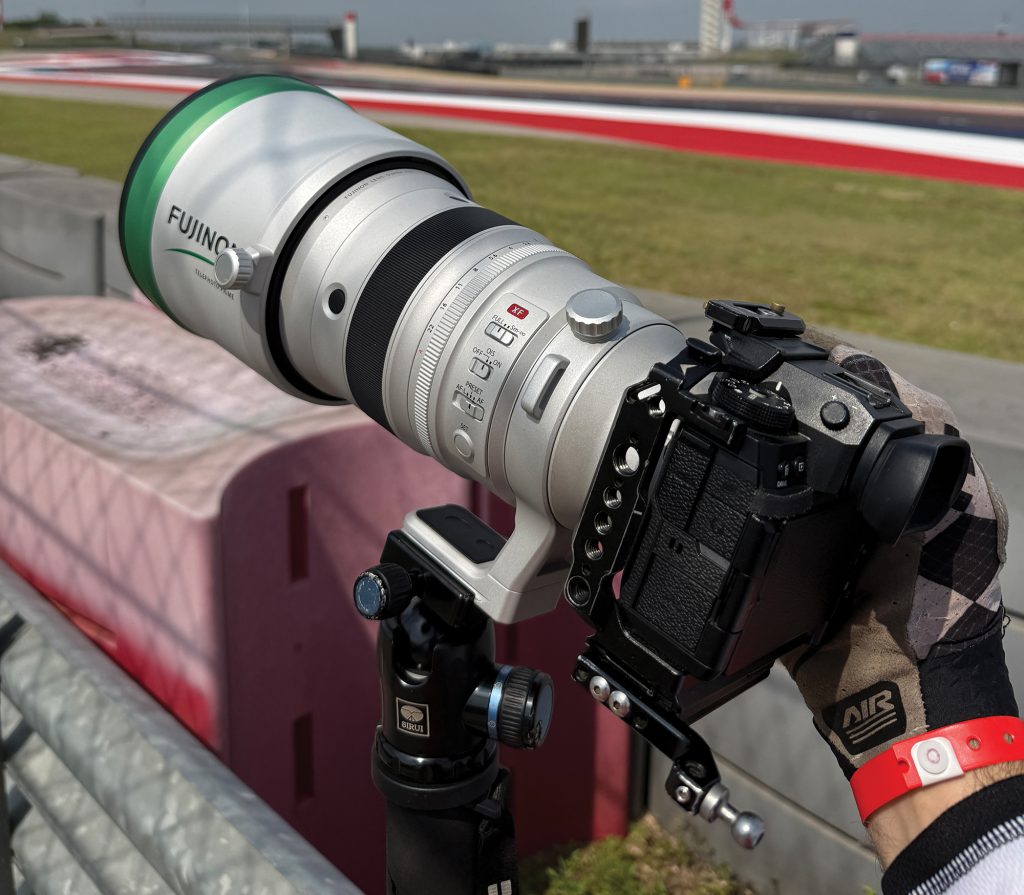
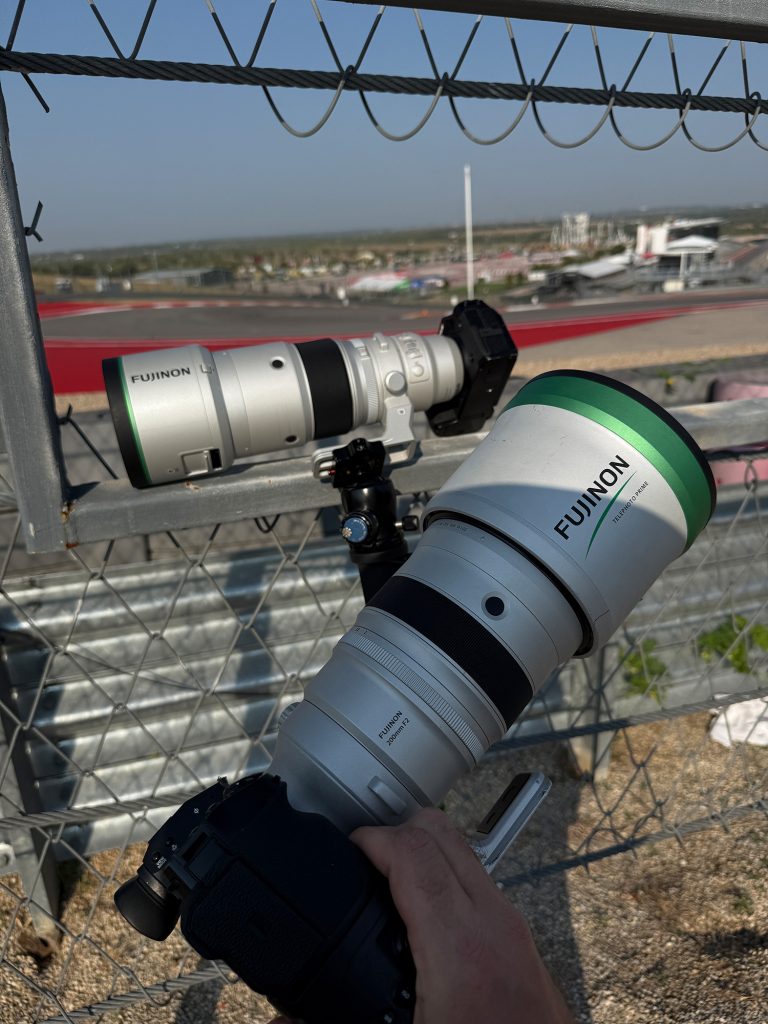
Physically, the XF200mm f/2 makes an immediate statement regarding its professional intent and robust construction. It features an all-metal build, signaling durability and resilience in challenging environments. Notably, it is the first Fujinon lens to be finished with a matte silver coating. This is not merely an aesthetic choice but a practical innovation designed to minimize heat absorption during prolonged sessions in direct sunlight, thereby reducing the risk of heat-induced image degradation and ensuring consistent performance.
The autofocus system is powered by a twin linear motor, engineered for both exceptional speed and near-silent operation. This is a critical attribute for tracking erratic and fast-moving subjects, where rapid and precise focus acquisition is paramount. Complementing this is a built-in optical image stabilization (OIS) system, rated at an impressive five stops of compensation. This robust stabilization allows for significantly slower shutter speeds when shooting handheld, expanding creative possibilities and improving low-light performance without sacrificing sharpness.
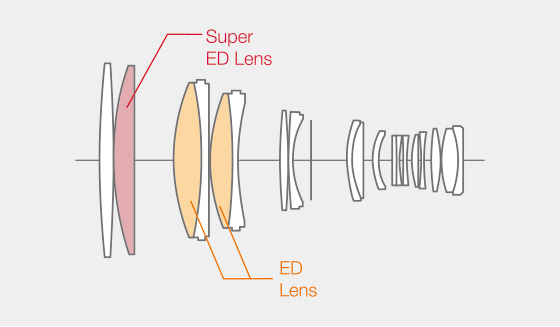
Optically, the XF200mm f/2 embodies a no-compromise design philosophy. Its complex optical formula comprises 19 elements arranged in 14 groups, incorporating one Super ED (Extra-low Dispersion) element and two ED elements. These specialized glass types are strategically employed to effectively control chromatic aberration, ensuring images are rendered with exceptional color fidelity and minimal fringing, even in high-contrast situations. The lens is fully weather-sealed, providing robust protection against dust and moisture, making it suitable for outdoor use in adverse conditions. The front element is further protected by a fluorine coating, which repels water, dirt, and grease, simplifying cleaning and maintaining optical integrity. The aperture mechanism features nine rounded blades, meticulously designed to produce exquisitely smooth and circular bokeh, allowing for stunning subject isolation and artistic background blur. Precise exposure control is facilitated by a one-third EV step aperture ring, offering fine adjustments. The integrated rotating tripod collar, complete with multiple strap attachment points, further underscores the lens’s professional orientation, providing stability and ergonomic handling during extended shooting periods.

Performance in High-Demand Environments: The Motorsport Application
For professional photographers operating in the high-stakes environment of motorsport, the choice of equipment is paramount. The Fujifilm XF200mm f/2, particularly when paired with high-performance bodies like the Fujifilm X-H2S, represents a synergy that delivers uncompromising results. The X-H2S, with its stacked BSI CMOS sensor and advanced subject-tracking autofocus capabilities, perfectly complements the XF200mm f/2’s speed and optical precision. This combination consistently delivers high-resolution images with remarkable clarity and sharpness, even when subjects are hurtling past at triple-digit speeds, where the margin for error is non-existent.
Comparative analyses with other Fujifilm X-series bodies, such as the X-H2, indicate that while the XF200mm f/2 produces usable results across the board, the autofocus acquisition and consistency are demonstrably superior when coupled with the X-H2S. This difference in performance can be critical in dynamic situations, where the ability to reliably acquire and maintain focus on fast-moving, unpredictable subjects directly impacts the success rate of capturing decisive moments.

The initial deployment of a dedicated long prime lens like the XF200mm f/2 often entails an acclimation period. Photographers transitioning from zoom lenses may spend time identifying optimal vantage points and refining their technique to fully leverage the prime’s specific focal length. However, once this rhythm is established, the capabilities of the lens become profoundly evident. The optical quality, particularly the separation between the subject and background, is consistently described as exceptional. When shot wide open at f/2, the bokeh exhibits a rich, creamy texture, providing a painterly backdrop that allows the critically sharp subject to stand out with striking dimensionality. This aesthetic quality is a hallmark of premium fast primes and is highly sought after in professional photography.
Several design elements contribute significantly to the lens’s utility in daily professional use. The programmable autofocus buttons integrated into the lens barrel offer genuinely useful tactile control, especially when shooting handheld, providing additional stable points of interaction and quick access to critical functions. The lens hood is another noteworthy component: large, rigid, and secured firmly with a pressure screw, it offers robust protection against flare and impact. The practice of cupping the edge of the hood, a common technique among professional motorsport photographers using monopods, further enhances stability and control.
Practical Considerations and Investment
Despite its impressive performance, the XF200mm f/2 presents certain practical considerations for professional users. Weighing approximately 2,265 grams (around 5 pounds), it is a substantial piece of equipment. While manageable for short periods, prolonged handheld shooting, especially combined with speed panning techniques, can lead to significant physical strain. Consequently, a monopod often becomes a welcome and often necessary companion for extended shooting days, alleviating fatigue and enhancing stability.
Another significant practical consideration is the size of the lens’s massive front element, which necessitates the use of specialized 105mm filters. Given that the lens retails for approximately $6,000 new, the acquisition of a comprehensive filter kit represents a non-trivial additional investment. Professional users typically build a small collection early on, including a UV filter for constant protection of the front element, a circular polarizer for managing reflections and enhancing contrast in bright trackside conditions, and a variable neutral density filter. The 3-to-2-stop variable neutral density filter, in particular, is crucial for allowing photographers to shoot wide open at f/2 even in intense daylight, preserving the lens’s signature shallow depth of field and creamy bokeh without overexposing the image.

Strategic Positioning and Market Impact
While reviews of high-end telephoto lenses frequently address their utility in commercial and wildlife photography, the XF200mm f/2 has carved out a unique and significant niche within the motorsport genre. It offers a distinctive aesthetic quality, often described as an "umami" flavor for images, a characteristic not easily replicated by other lenses within the Fujifilm lineup. This lens is not typically an initial purchase for photographers building their kit, nor is it positioned as the most versatile option. Instead, it strategically becomes a third essential lens, reserved for specific scenarios where its unique strengths are paramount.
In situations demanding flexibility, such as navigating the paddock or capturing a broad range of trackside action, the more versatile Fujifilm XF50-140mm f/2.8 or the XF100-400mm f/4.5-5.6 zoom lenses remain the workhorses, handling the majority of coverage requirements. However, when ambient light levels diminish, when exquisite background separation is desired, or when absolute clarity and sharpness are the overriding priorities, the XF200mm f/2 asserts its dominance as the heavyweight champion.

The introduction and successful adoption of the XF200mm f/2 by professional photographers underscore Fujifilm’s commitment to developing a comprehensive and highly capable X-series system that can compete at the highest echelons of professional imaging. While it may not be a lens that every photographer "needs" in their kit, its impact on the visual output of those who embrace its specialized capabilities is undeniable. For professional Fujifilm shooters deeply entrenched in motorsport or other demanding fields, the XF200mm f/2 represents the pinnacle of what the system can offer in terms of optical performance, speed, and distinct image quality, establishing itself as an indispensable tool that elevates their craft. Its presence in a professional’s bag signifies a deliberate choice for uncompromising quality and a distinct photographic signature.