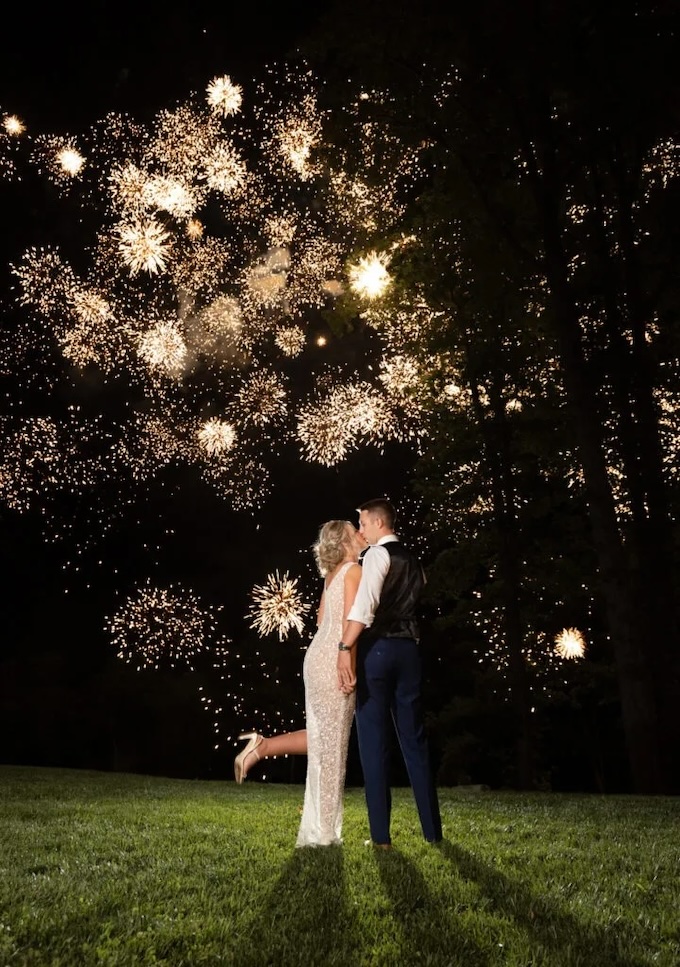
Fireworks are no longer confined to the Fourth of July; their dazzling spectacle now graces theme parks, sporting events, and, perhaps most surprisingly, the romantic backdrop of weddings. For photographers, fireworks present an extraordinary opportunity to craft epic couples portraits, imbuing them with a unique and unforgettable ambiance. This guide delves into the essential techniques and creative considerations required to master capturing these fleeting moments, ensuring your photographs possess the same flash and excitement as a grand finale.

The Art of the Fireworks Couple Portrait: A Photographer’s Guide
The ephemeral nature of fireworks, often lasting a mere five to eight minutes, demands efficiency and meticulous planning. To achieve breathtaking results, photographers must anticipate every element, from location scouting to technical settings. This article provides a comprehensive breakdown of strategies for integrating the explosive beauty of fireworks into couples’ photography sessions, transforming ordinary portraits into extraordinary visual narratives. The images featured herein are graciously provided by photographers from Wedding Maps and are used with their express permission.

Strategic Location Scouting: Setting the Stage for Spectacle
When a wedding timeline includes a fireworks display, early identification of the display’s origin and trajectory is paramount. Proactive communication with the couple, wedding planner, and venue staff is crucial for scouting optimal vantage points. The "best" angle is subjective and depends on the desired aesthetic. A wide, open vista might be ideal for capturing the fireworks filling the sky with the couple as contemplative observers. Conversely, incorporating foreground elements like trees or buildings can create a more intimate and framed composition, adding depth and context to the scene. Meticulous scouting is not merely a preparatory step; it is fundamental to the successful composition of fireworks-infused couples portraits.
Mastering Dynamic Range: The Power of RAW and Precision Exposure
Photographing fireworks presents a significant challenge due to extreme lighting contrasts. The ambient light is diminished, while the explosive bursts can easily overexpose highlights if exposure settings are not carefully managed. To preserve critical details in both the dark environment and the brilliant pyrotechnics, capturing images in RAW format is imperative. This format offers far greater flexibility in post-production for recovering shadow and highlight detail compared to the compressed data of JPEG files.

RAW vs. JPEG: The Foundation of Detail Retention
The decision to shoot in RAW is a cornerstone of professional photography, especially in high-contrast scenarios. RAW files retain all the unprocessed data captured by the camera’s sensor, allowing for extensive adjustments to exposure, white balance, and color during editing. JPEG files, on the other hand, undergo in-camera compression and processing, which can lead to a loss of detail, particularly in the brightest and darkest areas of an image. For fireworks photography, where the dynamic range is exceptionally wide, RAW is not merely preferable; it is essential for achieving a polished and professional final product.
Exposure Settings: A Starting Point for Success
While specific settings will vary based on camera model and ambient conditions, a general guideline for photographing fireworks with couples can be established. A starting point often involves an aperture between f/8 and f/11 to ensure adequate depth of field for both the couple and the distant fireworks. Shutter speeds typically range from 5 to 10 seconds to allow sufficient light to enter the sensor and capture the trails of the fireworks. The ISO should be kept as low as possible, generally between 100 and 400, to minimize digital noise.

Crucially, photographers must utilize their camera’s histogram to monitor exposure. The histogram displays the distribution of tonal values in an image. An ideal histogram for fireworks photography will show data distributed across the spectrum without excessive spikes at either the far right (blown-out highlights) or far left (crushed blacks). The goal is to balance the exposure so that the fireworks are rendered with detail, and the couple remains visible and well-exposed.
Harmonizing White Balance: Achieving Color Accuracy and Artistic Vision
The selection of white balance plays a critical role in the final aesthetic of fireworks portraits. The "Tungsten" white balance setting (often around 3200 Kelvin) is a common starting point, as it effectively counteracts the warm, orange tones often emitted by fireworks, rendering them in a more neutral or vibrant hue. If supplemental lighting is used for the couple, such as a flash with a CTO (Color Temperature Orange) gel, the white balance can be adjusted to approximately 3200 Kelvin to harmonize with the gelled light, ensuring a consistent color temperature across the entire image. Fine-tuning will be necessary to match the photographer’s artistic vision.

Lens Selection: Framing the Spectacle
The choice of lens is dictated by the desired composition and the available space. For expansive shots encompassing the couple and the full grandeur of the fireworks, a wide-angle lens is often preferred. However, when working with a zoom lens for a wide shot, maintaining communication with the couple can be challenging due to the broad field of view. If the shooting environment is confined, a zoom lens might be impractical.
Conversely, a zoom lens can be advantageous for tighter shots, effectively compressing the scene and making the fireworks appear larger and more impactful within the frame. Wide-angle lenses excel at capturing the dramatic scale of the fireworks alongside the couple, emphasizing the vastness of the night sky. It is also a valid strategy to shoot slightly wider than necessary and crop the image in post-production to refine the composition.

The Art of Long Exposure: Capturing Motion and Light Trails
To effectively capture the ephemeral beauty of fireworks, a slower shutter speed is generally required. Longer exposures, typically ranging from 5 to 10 seconds, allow more light to register on the sensor, resulting in brighter fireworks and visible light trails that trace their paths across the sky. Shorter exposures, in the 2 to 5-second range, will reveal less detail and may not capture the full dramatic effect of the pyrotechnics.
Given the necessity of long exposures, a sturdy tripod is indispensable for preventing camera shake and ensuring sharp images. Additionally, employing a cable release, remote control, or the camera’s self-timer (a 2-second delay is usually sufficient) further minimizes any vibration caused by pressing the shutter button, guaranteeing the integrity of the long exposure.

Illuminating Your Subjects: Balancing Flash and Ambient Light
While traditional fireworks photography often focuses solely on the sky, couples portraits necessitate deliberate illumination of the subjects. The advantage here is that, when time permits before the display begins, photographers can meticulously set up their lighting. The fundamental approach is to light the couple as one would for any other portrait session, carefully balancing flash power with ambient light.
A common lighting setup involves placing the light source at approximately a 45-degree angle to the couple and the camera, positioned slightly above and facing them. This creates a flattering, somewhat top-down illumination. For added dimension, a backlight can be introduced to separate the subjects from the background. Creative use of modifiers like snoots or grids can help control light spill, ensuring the light is precisely focused on the couple, thereby preventing unwanted illumination of the surrounding environment or distractions from the fireworks themselves. The specific lighting configuration will ultimately depend on the photographer’s creative direction and artistic intent.

The Reliability of Manual Focus: Eliminating Autofocus Fumbles
Autofocus systems can be notoriously unreliable in low-light conditions and when faced with the rapid, unpredictable movement of fireworks. Therefore, switching to manual focus is a critical step. If the camera offers a live view function, it can be used to precisely focus on the couple (autofocus can be used for this initial focus before the fireworks commence). Once the couple is in sharp focus, it is essential to engage manual focus mode and keep it there throughout the shooting process, ensuring consistent sharpness.
The Power of Compositing: Layering for Perfection
For ultimate control and to overcome the challenges of a fleeting fireworks display, creating a composite image is a highly effective strategy. This technique involves capturing a perfectly lit and posed portrait of the couple separately from the fireworks themselves. A sturdy tripod is essential for this process.

Crafting the Composite in Lightroom
The initial stage of compositing begins in photo editing software such as Adobe Lightroom. It is crucial to apply identical edits to all the images intended for the composite to ensure color and tonal consistency. A streamlined workflow involves editing the portrait of the couple first, then using Lightroom’s batch editing capabilities to apply these same adjustments to the series of fireworks images. This ensures a cohesive base for the subsequent layering process.
Assembling the Masterpiece in Photoshop
The edited images are then imported into Adobe Photoshop, where they are stacked within a single document. The key to revealing the fireworks while retaining the couple’s portrait lies in utilizing blend modes. Setting the blend mode of the fireworks layers to "Lighten" will reveal the brightest pixels, effectively overlaying the fireworks onto the couple’s portrait. Layer masks are then used to meticulously edit out any unwanted portions of each layer, refining the composition and seamlessly integrating the fireworks with the couple’s portrait. This method allows for precise control over the placement, intensity, and overall impact of the fireworks, ensuring a flawless final image.

Beyond Fireworks: Photographing Sparkler Exits
While not technically pyrotechnics in the same vein as a fireworks display, sparklers are a popular and visually engaging element at many weddings, particularly during grand exits. Their inclusion in couples’ sessions warrants specific technical considerations.
The Advantage of Larger Sparklers
When advising couples on sparkler purchases for photography, recommending the larger 36-inch sparklers over their 10-inch counterparts is a practical tip. The extended burn time of larger sparklers provides photographers with a more generous window of opportunity to pose the subjects, capture multiple shots, and create dynamic visual effects, such as light trails or "writing" with the sparklers.

Adjusting ISO and Aperture for Sparkler Illumination
Sparklers, as a light source, are relatively dim. To compensate, photographers may need to increase the ISO sensitivity of their camera and utilize a wider aperture. These adjustments help achieve a brighter exposure, especially when subjects are moving or the ambient light is low.
- Moving Subjects: For dynamic shots where subjects are in motion, a higher ISO (e.g., 800-1600 or higher, depending on camera capabilities) and a wider aperture (e.g., f/2.8-f/4) are often employed. Shutter speeds will need to be fast enough to freeze motion, typically around 1/100th of a second or faster.
- Static Subjects: For stationary subjects, such as during a sparkler exit, lower shutter speeds can be used (e.g., 1/30th to 1/60th of a second) in conjunction with a higher ISO and wider aperture to achieve a well-exposed image. This allows for more light capture while still maintaining sharpness. Experimentation with these settings will be key to achieving the desired look.
Safety First: The Importance of a Safety Bucket
Handling sparklers involves open flames, and safety must be a paramount concern. A readily accessible bucket of water is essential for safely extinguishing used sparklers, preventing any potential hazards and ensuring a secure environment for the couple and guests. This simple yet crucial step underscores the responsibility that accompanies creative photographic endeavors involving fire.

Conclusion: Elevating Couples Photography with Explosive Visuals
Photographing couples against the backdrop of fireworks or sparklers offers a unique opportunity to create truly memorable and visually stunning images. By meticulously planning, understanding the technical nuances of low-light and high-contrast photography, and employing creative post-production techniques, photographers can transform fleeting moments into timeless portraits. The examples provided throughout this guide offer further inspiration, showcasing the diverse and breathtaking possibilities when love meets the explosive artistry of fireworks.
The following images, provided by esteemed photographers, serve as a testament to the power of combining romantic couples portraits with the dazzling spectacle of fireworks:

[Insert Placeholder for Image Gallery with Captions and Photographer Credits]
The strategic application of these techniques, from careful location scouting and precise exposure settings to thoughtful lighting and effective post-processing, will enable photographers to capture the magic of a couple’s special moments illuminated by the vibrant, ephemeral glow of fireworks, creating a narrative that is both romantic and exhilarating.