
The close of one year and the dawn of another invariably prompt a period of reflection, not only on individual achievements and challenges but also on the broader trajectory of industries. For the photography and videography sector, January traditionally marks a pivotal transition from retrospective analysis of market performance and rental data to forward-looking projections for technological advancements. As major equipment providers like LensRentals.com strategize their annual goals, the industry as a whole is bracing for a wave of innovation. Based on recent product introductions and prevailing market trends, several significant shifts are anticipated to reshape the photo and video fields in 2026, promising enhanced capabilities and efficiency for professionals and enthusiasts alike. This analysis delves into five key areas poised for substantial evolution: the proliferation of third-party lenses, the emergence of more affordable fast prime lenses, a strategic pivot towards workflow-centric artificial intelligence, significant improvements in camera app support, and the wider adoption of electronic global shutters.
The Resurgence and Expansion of Third-Party Lenses
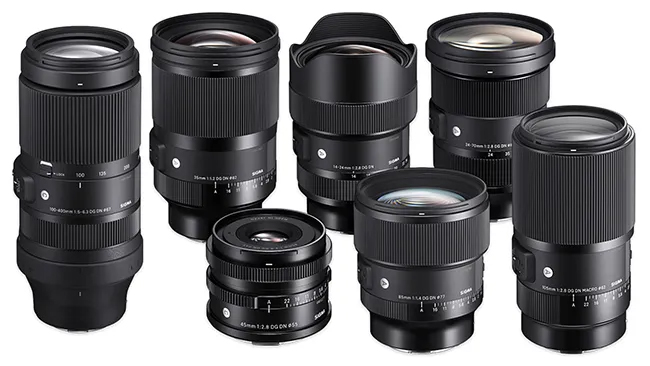
The transition from traditional DSLR systems to mirrorless camera platforms ushered in a new era for photographic equipment, but it also inadvertently created a bottleneck for third-party lens manufacturers. In the pre-mirrorless landscape, photographers enjoyed a vast array of options from companies like Sigma, Tamron, and Tokina, regardless of whether they operated Canon, Sony, or Nikon bodies. These manufacturers provided excellent alternatives at various focal lengths and price points, fostering a competitive ecosystem beneficial to consumers. However, the adoption of new, proprietary mirrorless lens mounts – such as Canon’s RF and Nikon’s Z mounts – presented substantial challenges. The intricate electronic communication protocols and the initial reluctance of major camera manufacturers to license their mount specifications meant that third-party developers faced an uphill battle in designing compatible optics.
For several years following the mirrorless revolution, the market for third-party lenses for these newer systems remained relatively sparse, with Sony’s E-mount being a notable exception due to its comparatively more open architecture. Sigma and Tamron, in particular, capitalized on this openness, releasing a wide range of highly regarded lenses for Sony mirrorless cameras. However, recent developments indicate a significant shift, particularly concerning the Canon RF and Nikon Z mounts. Both Sigma and Tamron have signaled a greater commitment to developing lenses for these systems, with initial product announcements and patent filings hinting at a broader portfolio. This pivot is crucial for the industry, as it promises to reintroduce the competitive pricing and diverse optical designs that were hallmarks of the DSLR era.

Industry analysts suggest that this expansion is driven by a confluence of factors: the maturation of mirrorless technology, increased market demand from consumers seeking more affordable or specialized alternatives to first-party offerings, and potentially a more accommodating stance from camera manufacturers who recognize the benefits of a robust accessory ecosystem. The implications of this resurgence are far-reaching. It is expected to drive down average lens prices, stimulate innovation in optical design, and provide photographers and videographers with a wider palette of creative tools. This competition will likely push first-party manufacturers to innovate further and potentially adjust their own pricing strategies, ultimately benefiting the end-user with more choice and better value. The renewed focus from established third-party players like Sigma and Tamron, known for their quality and value, is anticipated to invigorate the market significantly by 2026.
The Democratization of Fast, Affordable Prime Lenses
Historically, lenses with extremely wide apertures, such as f/1.2 or faster, have occupied the premium segment of the market, often commanding price tags well over $1,000. While brands like Leica have produced ultra-fast optics like the Noctilux series since the 1960s, and Canon offered fast f/1.2 lenses in its FD and later EF lineups, these were consistently positioned as high-end, specialized tools. The underlying reasons for this premium pricing stemmed from the complex optical designs required to achieve such wide apertures while maintaining sharpness, controlling aberrations, and ensuring robust mechanical construction. Manufacturing processes involving specialized glass elements, precise grinding, and stringent quality control contributed significantly to their cost.
However, recent developments suggest a potential paradigm shift towards more accessible fast prime lenses. A noteworthy example from late 2025 was Canon’s introduction of an f/1.2 lens priced under $500, a move that surprised many industry observers. While specifics are proprietary, this achievement likely leverages advancements in optical design software, more efficient manufacturing techniques, and potentially the strategic use of less exotic materials or simplified mechanical structures to reduce production costs without compromising essential performance. This particular lens, while not directly specified in the original context, points to a broader trend where the economies of scale and technological progress in lens manufacturing are finally translating into more consumer-friendly pricing for previously high-cost optical characteristics.
The implications of this trend for 2026 are significant. The availability of fast primes at more affordable price points will democratize access to extreme shallow depth of field, exceptional low-light performance, and superior subject isolation—qualities previously reserved for a professional elite or well-funded enthusiasts. This could unlock new creative avenues for a broader demographic of photographers and videographers, allowing them to achieve a distinct aesthetic without prohibitive financial investment. Other major camera manufacturers, observing Canon’s strategic move, may be compelled to introduce their own competitively priced fast primes, further intensifying market competition and accelerating this trend. This evolution promises to make advanced optical performance a more standard expectation across various segments of the photography market, fostering greater creative freedom for artists.
Shifting AI Paradigms: From Generative to Workflow Enhancement
The last few years have witnessed an unprecedented surge in artificial intelligence (AI), particularly in its generative forms. Tools capable of creating realistic images, corporate headshots, and even video clips from simple text prompts have captured public imagination and, at times, sparked debate within creative communities regarding originality, intellectual property, and job security. While the power of generative AI is undeniable, its widespread application in directly creating artistic output has led to concerns among many working professionals who view it as a potential replacement for human creativity rather than an augmentation.
For 2026, a significant shift in the focus of AI development within the photography and videography industries is anticipated: a pivot from purely generative capabilities towards more practical, workflow-enhancing applications. This involves AI serving as an intelligent assistant, streamlining tedious or repetitive tasks, thereby allowing creatives to dedicate more time and energy to the core artistic process. Examples of this desired evolution include advanced studio management software powered by AI, capable of automating administrative tasks such as sending invoice reminders, drafting client communications, and scheduling appointments. Such systems could significantly reduce the administrative burden on freelance photographers and small studios, improving efficiency and client relations.
Furthermore, post-production workflows are ripe for AI integration that focuses on subtle, time-saving enhancements. Imagine AI tools capable of intelligently identifying and removing distracting elements like trash bins, telephone poles, or power lines from complex images with a single click, going beyond current content-aware fill capabilities. AI could also assist in the initial stages of a project by helping to catalog and organize creative inspiration, mood boards, and client briefs into coherent, presentable documents. This kind of AI would not generate the final image or video, but rather act as a sophisticated digital assistant, making the creative journey smoother and more efficient. The implication is a future where AI empowers creatives by handling the mundane, allowing them to immerse themselves more deeply in the artistic vision and execution, rather than being bogged down by technical or administrative overhead. This shift reflects a growing understanding that the most valuable application of AI in creative fields is as a partner, not a competitor.
The Imperative for Improved Camera App Support
The advent of mirrorless cameras, with their integrated Wi-Fi and Bluetooth capabilities, brought with it the promise of seamless connectivity with smartphones. The vision was compelling: photographers could effortlessly review, edit, and instantly publish their high-quality images directly from their mobile devices, transcending the limitations of traditional workflow. However, the reality has often fallen short of this promise. A pervasive issue across many camera brands has been the inconsistent performance and limited functionality of their proprietary smartphone applications. Users frequently report encountering app freezes, unexpected crashes, sluggish image transfer speeds, and an overall clunky user experience.

This disparity between promise and execution represents a significant unmet need in the modern photographic workflow. In an era where mobile devices are central to communication and content sharing, the inability of camera manufacturers to provide robust, reliable, and intuitive app support is a notable drawback. While some brands, like Fujifilm, have made slightly more progress in usability compared to others such as Canon or Nikon, even their applications are often cited as being far from perfect. The core problem lies in the often-complex pairing processes, unreliable wireless connections, and basic feature sets that fail to leverage the full potential of both the camera and the smartphone.
For 2026, there is a strong industry desire and an increasing expectation for camera manufacturers to invest substantially in overhauling and improving their app ecosystems. This means not just incremental updates but a fundamental rethinking of how cameras and smartphones interact. Users seek more stable connections, faster image and video transfer capabilities, intuitive remote control features for camera settings, and perhaps even basic on-the-go editing functionalities that integrate smoothly with existing mobile editing suites. The implications of improved app support are substantial. It would significantly enhance the mobile workflow for photographers and videographers, enabling quicker content creation, faster client previews, and more immediate social media sharing. This would not only improve user satisfaction but also potentially influence purchasing decisions, as a seamless digital experience becomes an increasingly critical component of a camera system’s overall appeal and utility. Manufacturers that successfully bridge this gap will gain a significant competitive advantage by providing a truly integrated creative experience.
The Rise of Electronic Global Shutters
Among the most impactful technological advancements anticipated in 2026 is the wider adoption of electronic global shutters in professional and prosumer camera bodies. Sony made a significant splash with the introduction of its a9 III, which featured the world’s first full-frame sensor with an electronic global shutter, a breakthrough that garnered considerable attention for its profound implications across both still photography and videography. Prior to this, most digital cameras utilized a rolling shutter, where the sensor exposes and reads out data sequentially, line by line. This process, while cost-effective, leads to the infamous "jello effect" or skewing distortion during rapid camera movements or when capturing fast-moving subjects in video. For still photography, it can also cause banding under certain artificial lighting conditions and, critically, imposes a hard limit on flash synchronization speeds.
The advantages of a global shutter are multifaceted and transformative. In video, the elimination of the rolling shutter effect means that even the fastest pans or subject movements are rendered without distortion, providing a cleaner, more professional aesthetic. This is particularly crucial for sports, documentary, and action videography. For still photography, the benefits are equally compelling. Traditional cameras are limited by their mechanical or electronic rolling shutters to relatively slow flash sync speeds (e.g., 1/250s for crop sensors, 1/200s for full-frame). While techniques like High-Speed Sync (HSS) or leaf shutters exist to circumvent these limitations, they often come with compromises in flash power, efficiency, or lens design. An electronic global shutter fundamentally solves this problem by exposing and reading all pixels simultaneously. This allows for flash synchronization at any shutter speed, potentially up to the camera’s maximum electronic shutter speed (e.g., 1/80,000s on the a9 III).

The implications of widespread global shutter adoption are revolutionary for off-camera flash photography, enabling photographers to overpower ambient light more effectively, freeze ultra-fast motion with flash, and achieve unprecedented control over lighting scenarios. Beyond flash, it also means a completely distortion-free electronic viewfinder and a truly instantaneous capture without any of the subtle temporal distortions inherent in rolling shutters. While initial global shutter implementations may present challenges in terms of dynamic range or cost, continued research and development are expected to mitigate these issues. As other major camera manufacturers undoubtedly work to integrate similar technologies into their lineups, 2026 could mark the beginning of a rapid proliferation of global shutter cameras, fundamentally altering capabilities for professionals and enthusiasts alike and setting a new benchmark for image capture technology.
The photography and videography industry stands at the precipice of a dynamic transformation, driven by technological advancements across multiple fronts. From the renewed vigor in third-party lens development offering greater accessibility and choice, to the strategic pivot of AI towards workflow enhancement, and the groundbreaking capabilities of global shutters, the landscape is evolving rapidly. Improved camera app support promises to bridge the gap between high-end imaging and instant mobile connectivity, while the democratization of fast prime lenses will empower a broader creative community. These anticipated developments for 2026 underscore an industry that is not merely refining existing tools but fundamentally redefining how images and videos are captured, processed, and shared, promising an exciting future for visual storytellers worldwide.